
Scandals and rivals
1982 was interesting not only for the situation—the scandal—around SPI's acquisition, but also for the appearance of D&D in French. Gygax saw an opportunity to exploit the franchise and headed to Hollywood to sell film and television rights, resulting in an animated series. 1983 was important in many respects. This was when TSR's roleplaying range truly became complete. The full set of AD&D first-edition books appeared in a uniform presentation, recognisable by their orange spines. Another Basic Set, the Red Box, also appeared, alongside another Expert Set, the Blue Box, and the Companion Set, the Teal Box, for levels fifteen to twenty-five. A few other things happened that year too. Several Avalon Hill RPGs appeared: James Bond 007, Lords of Creation, Powers and Perils, and RuneQuest's third edition.
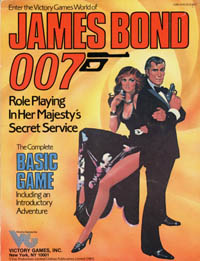 RuneQuest's original developer, however, was not Avalon Hill but Chaosium. Its system's successor was BRP, on which Call of Cthulhu was based, among others. That still lies ahead, and we will return to it a little later. The point is that the RuneQuest rights were sold and went to Avalon Hill. This let the company expand its player base from two directions, including in roleplaying, while also strengthening its traditional wargame line. The essential point is that the now-legendary Red Box, whose visual identity D&D Essentials inherited, for example, had RuneQuest as its principal rival. RuneQuest landed precisely where the SPI developers fleeing TSR had gone, very likely accompanied by many Strategy & Tactics readers, among the wargame community's best customers. Although D&D remained the roleplaying market leader, TSR surely lost many wargame customers and was therefore forced to focus primarily on roleplaying.
The publicity generated by the row strengthened more than Avalon Hill. RuneQuest remained strong, while James Bond 007 remained the leading espionage RPG until its licence expired, far outstripping TSR's Top Secret. Chaosium also grew stronger, establishing another powerful brand in the roleplaying market. Yes: players considered RuneQuest competitive, saw BRP as the successor to its system, and could clearly see that this system could be applied to many settings and separate games. Many have experimented with that since, including TSR with the d20 System. Unsurprisingly, some players alienated at this point became Chaosium customers, and they were not particularly inclined to buy the d20 version of Call of Cthulhu. The traditional BRP game's thirtieth-anniversary edition is appearing this very year, in thick, sturdy leather binding, sewn, with gold foil and paper reminiscent of art books.
Competition was therefore intensifying, but TSR responded partly by expanding its range and partly by moving in many other directions. Tournaments and events kept the C-series tournament modules busy, and scoring systems for many competitions developed. By then, however, D&D was visible enough that the group "Bothered About Dungeons and Dragons" was founded in 1982 by an anti-occult activist. The organisation's claims have since been disproved, but its founder tried to connect fantasy games with both Satanism and suicide. By gaining publicity for years, sometimes disregarding the law, she shaped D&D and AD&D. Many recommendations about player-character alignments and the renaming of certain creatures can be traced to this.
This spokesperson against roleplaying published until her death, and many people cited her. Even when rebuttals appeared, many continued taking their information from her successive articles. It is true that Patricia A. Pulling's son shot himself. It is unlikely, however, that this was connected with his D&D character being cursed: that was probably far from a one-off event and occurred in many adventures... Removing a curse placed on a character was also the basis of many adventures. In any case, her lawsuits against the school and TSR alleging a connection between the D&D curse and the suicide were dismissed.
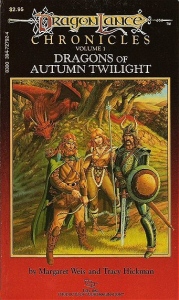 What TSR gained from its fuller range, it lost through competitors appearing and growing stronger. That was hardly a good position. The BADD controversy worsened matters by targeting the company's reputation too. A company whose reputation was disputed even among players, and which faced many attacks, did not become especially popular. Parents also knew less about many other books or preferred seeing them in their children's hands. Expansion continued, however. Dragonlance Chronicles appeared in 1984, accompanied by the DL module series, a model of roleplaying more closely connected to literature. The book became a bestseller, making TSR the world's largest and strongest fantasy and science-fiction publisher and consolidating D&D's market position. Interestingly, the book's Hungarian publication in 1992 also strongly influenced Hungary's roleplaying market. There has since been another Hungarian edition, published by Delta Vision in 2009.
1984 also saw the Master Set, the Black Box, with rules for adventures at levels twenty-six to thirty-six, making this revised D&D edition nearly complete. The system developed in many respects. The SPI scandal had been survived, along with several other disputes. Success seemed complete, the road towards the system's later fame uninterrupted. Two roughly complete systems with many supplements, a relatively large market, two strong settings—Greyhawk and Dragonlance—and a market-leading position in novels. What more could one want? But there was bad news: TSR's business footing was growing weak, soon leading to another scandal. Suffice it to say that Gygax learned at this point that the company was one and a half million dollars in debt and that Blumes, entrusted with management, was seeking an investor.
Remember that separating AD&D from D&D had also mattered partly because of rights, and that worlds had changed. A debt like this is not necessarily good news, and whose investor or ally resolves the crisis matters too. Who brings the rescuer to the company, and to whom that rescuer will be loyal, are important.
Gygax turned to business associate Flint Dille, with whom he had written a few Fighting Fantasy-style gamebooks and a screenplay for an unmade D&D film, hoping Dille's sister, a certain Lorraine Williams, would invest in TSR. That did not happen, but Gygax hired her, trusting her business-management experience. How serious the debt was in this situation is a good question, but it was almost certainly enough to frighten both Gygax and Blumes. This was no small sum. Frightened or not, though, they really did need an investor.