
Fleeing towards the precipice
Was the growth sustainable, or an uncontrolled rush towards the edge of a precipice? We do not know, but the peak was already in sight. Revenue grew rapidly, yet costs grew faster. The chance to break out of geek subculture, brought by hugely successful fantasy novels, generated rapid growth, but nobody was there to finance it. Until Lorraine arrived, the team lacked a real businessperson able to manage growth, opportunities, the situation, customer relations and many other things. Without these, even steady growth became a suicidal charge. And an appointed manager with a clearer view of the company and an opportunity to buy it could easily become a Trojan horse.
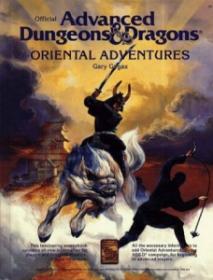 1985 was another strange year for TSR, with further expansion of the range. Oriental Adventures was a huge success, giving reasons to pursue new games and publications; enthusiasm and momentum lasted a while longer. Its success substantially expanded the range, offering a new world and a new kind of play. Management, however, still could not keep pace with rapid growth. Alongside lingering echoes of earlier problems, new conflicts arising from accumulated debt poisoned the atmosphere. To an outsider, of course, this was TSR's golden age, the period when AD&D first edition was truly successful, remembered by many players as the golden age. Perhaps not without reason. Nor was it perhaps accidental that this golden age could not last. Excessively rapid growth cannot continue forever. Escaping conflicts by charging forwards eventually runs out of steam, and a company sized for growth struggles with the new situation. The peak approached, while TSR's roller coaster raced towards it at breakneck speed...
Another interesting book belongs to 1985: Unearthed Arcana. Many regard it as legendary, and Hungarian players loved many rules appearing in it. But much of the material was not new: supplements, ideas and rules previously published in The Dragon had been compiled together. A book with everything in one place is naturally far more convenient than carrying many magazines around, but we can see that reusing existing content was already fashionable. Whether that was good is hard to say. What is certain is that Oriental Adventures and Unearthed Arcana brought substantial revenue into TSR's coffers, making the debt look easily like an investment in the future. Investing in the future, though, requires money and an investor, and here the situation was largely unchanged. I know everyone is wise after the event, but TSR had plenty of opportunities. Its management did not see them that way, so solving the financial crisis probably really did require a leadership change. Most displaced leaders were naturally unhappy about that.
Still in that year, though attracting much less interest, D&D's Immortals Set, the Gold Box, appeared. It concerned characters of demigod-like power who had joined the ranks of the "immortals". For anyone uninterested in Advanced but fond of these higher levels, it was surely good. It was not a mass-market product, however. A core book or starter box targets the "masses" trying the game, while most supplements can count only on the established player base, often a narrow portion of it. The Immortals box targeted only players who reached very high levels, remained with classic D&D and were receptive to its new features. It was therefore not among the year's great successes.
One more little thing must be mentioned for 1985. Battlesystem appeared, intended as Chainmail's successor: partly a battle system for AD&D and D&D, partly a wargame based on them. There was a small return to wargaming roots. This was all well and good, and surely pleased many fans, though Battlesystem was less popular here. Hungary had not experienced a prior wargame craze, and importing lead miniatures would have been very difficult then; later, other wargames gained ground. Remember that our little country faced "multiple disadvantages" at the time: foreign-currency allowances were small and tied to travel. The country itself also had little foreign currency, and the average Hungarian had no need for the declining West's money; a passport valid worldwide was still only a distant dream. Yes, that document will matter in Hungarian roleplaying history, and when considering D&D's domestic market it will be worth discussing too. But, as I said, that is still some way off. Battle simulation with lead figures was not far from D&D or AD&D even then...
Having mentioned Battlesystem, we should also mention adventure module H1, originally intended as a standalone adventure but later becoming the opening instalment of a four-part series. It was initially setting-independent and intended to support Battlesystem, but H3 retroactively placed the entire series in the Forgotten Realms. Naturally, nobody knew that when the first module appeared. Indeed, most people were almost certain that its many battles were intended to fit, to some extent, the then-default worlds of AD&D and D&D. Battlesystem was mandatory at the start of the series; H2 did not use it; H3 recommended it; and H4 made it optional. Everyone can decide where to place the series. Its Battlesystem connection, however, is a fact.
Speaking of adventure modules... TSR launched another magazine in 1986: Dungeon Adventures. At this point it contained adventures for TSR's games. It later reached issue 150 in print before becoming an online magazine alongside Dragon, folded into the D&D Insider subscription. We will return to that affair and its surrounding controversy. It will be an interesting story too, but for now it is worth looking at Dungeon from another angle. Alongside separately published adventures, there was a bimonthly magazine with four or five adventure modules in every issue. This gave the community running written adventures in clubs a formidable resource. A game always available to try in clubs intertwined with shops could even underpin growth.
It was not a bad tactic. Dungeon's name is almost as venerable as Dragon's, and "losing" it is just as painful. Remember: online Dungeon no longer offers masses of selected adventures, and simple website support articles do not replace them. It looks more as though the publisher is money-hungry, charging even for what it should provide free and using a famous magazine's past as its shop sign. Yet its absence today is the clearest sign of what an enormous step forward Dungeon's launch was. Of course, the absence is debatable: Dungeon's adventures were not written by the system's creators, and the Internet is full of modules by outside writers. We can say all we like that holding the magazine, browsing new, selected ideas and running them without a computer at the table or a wish to print anything is different... We are left selecting and printing adventures hunted down online instead of buying good old Dungeon. It is true, though, that in an era of many freely available adventures, selling Dungeon in good numbers would surely be harder.
Many nevertheless say Dungeon's value was debatable. Undoubtedly useful and loved, it gave TSR stable subscription revenue and surely helped stabilise the company's finances. Yet it may have been a double-edged sword. Players no longer dropped into the local hobby shop "just for an adventure", browsed new stock and let a salesperson familiar with their group persuade them to buy more books. Their subscription delivered the adventure straight to their letterbox instead.