
The Second Edition Is Revamped
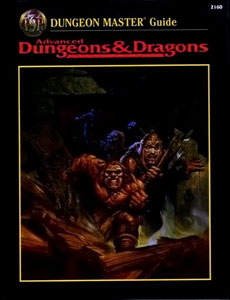 A revised version of AD&D's second edition appeared in 1995, and it was both attractive and good. Alongside it, the Player's Option series was supposed to begin modernising the system. The system really was promising, but there was one small snag. TSR at the time was busy trying to stabilise its position by racing forward at breakneck speed. Being the market leader in roleplaying guaranteed very little, since roleplaying games were retreating from American club life. The reasons are not difficult to guess: someone dropping into a club could quickly start playing cards, whereas assembling an AD&D group took time. If card games already in progress delayed that further, the situation became harder.
You could say the card games launched to repair the product range—Spellfire and Blood Wars—also slightly damaged AD&D's prospects. It was beginning to look like a situation in which almost every answer available to TSR's team was a bad one. And remember: 1995 made this a little worse. Yes, partly because of Windows 95. This was when computers became genuine competitors to tabletop games, since they could now spread faster than ever. Partly because of CD-ROM and CD-R, too. The Core Rules CD-ROM could still provide a response to that. But the spread of the Internet naturally made things worse. This was the period when many other games, many other book publishers and most print magazines all found themselves in trouble at once. That online bookshops later also undermined small shops and the clubs still supporting AD&D is merely an additional detail. But this was a major change.
In this struggle for the revenue sustaining the publisher and retailers, publications could not be tested thoroughly, slowly and expensively. That was no problem when revising the core books, but the Player's Option series, intended to renew the system, appeared untested, with books that sometimes contradicted one another. A good DM could easily fix these mistakes, allowing AD&D to promise and deliver a great deal, but there was one small snag: every DM fixed them differently, and the entire series was optional. A fragmented player base did nothing for the prospects of people seeking games at clubs. Bad luck. Considerable bad luck. Moreover, the visible problems accompanying mass publication soon undermined the authors' credibility. Anyone who checked a book's calculations and quickly discovered fundamental mistakes would thereafter have less faith in that author, the testers and the publisher's quality control. Sales figures reflected this.
The renewal of AD&D also included the two Core Rules CD-ROMs and the expansion for the second. Strangely, features demonstrated in the first CD's map editor were then absent from the second. And although the Player's Option rules were included in the Core Rules 2.0 expansion, its character generator was not prepared to handle a system riddled with contradictions. Yet we can see that AD&D needed renewal: by then it looked terribly outdated. While many systems were almost entirely skill-based, here the skill system was one optional rules variant among several contradictory ones. The idea that a character knows whatever the player knows seeped into Hungarian roleplaying too, promptly producing questions about how a wizard could make an atomic bomb in one system or another.
And that was only the beginning of the problems. The combat system barely distinguished between weapons. These supplements also shortened the combat round, originally one minute long. Of course, many GMs struggled even with that. The question was which direction to take. What is certain is that this edition still tried many ways of making characters more varied, while retaining the world's limitations; despite its tactical combat system, the game would have been more story-based. Several other boxed sets experimented with renewing the system too. Consider Requiem, for example: its treatment of AD&D's classic undead races as classes was interesting. But these early attempts were unsuccessful. Without success, the later efforts to return to the successful period were understandable.
Many things in the world had changed, however, fundamentally transforming competition between roleplaying systems.