
The Second Edition Arrives
The next major step is 1989—no, not because Hungary changed political systems. Remember that work on AD&D's second edition began back in 1987? And that Forgotten Realms became the default setting in connection with it? Well, 1989 was the year the second edition appeared. What made it different? Many things. They tried to rename demons and devils quickly, for example, while assassins and half-orcs disappeared. If that were not enough, dragons became stronger. If they are the monsters the game is named after, they should not be weak. At least, that was one of the stated motivations. The Monstrous Compendium consisted of a binder and loose-leaf pages, but the advantages of this arrangement were soon undermined by putting several monsters on one sheet, or spreading a single monster's description across several sheets. Moreover, the paper's quality meant it wore out quickly. In practice, the solution borrowed from Avalon Hill did not work, and a few years later the Monstrous Manual returned to book form.
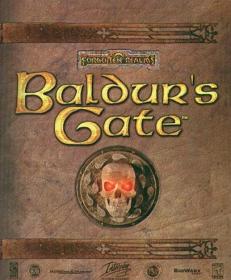 AD&D's second edition is the one most people know. Thanks to the growing number of computer games based on AD&D's system and worlds, even people playing other roleplaying games around a table came to know this edition. Fewer computer games used later editions. Why did computer game developers subsequently abandon the system? Good question. But AD&D's strengths certainly included interesting worlds and a somewhat story-centred game. And on computers too, this direction was the truly successful one, rather than the simple dungeon crawl. Although I do remember a game called Dungeon Hack, for example, which offered unlimited replayability.
We will discuss changes to the system separately on a later page, returning then to the second edition's innovations.
AD&D's second edition did not remain alone for long. D&D was renewed too, with a new edition comprising a single rulebook, published as the Rules Cyclopedia in 1991. Needless to say, it was not particularly successful and made few waves alongside AD&D's second edition, but that was not much of a problem. TSR was clearly the market leader at the time, and released many other successful games during this period. It looked like a new golden age. Numerous computer games adapted AD&D's second edition. Forgotten Realms novels were successful too; TSR seemed invincible. There is plenty of good news I could mention, yet what comes to mind is a quiet, uneventful period: AD&D was a well-functioning product from a well-functioning company.
It would be easy to end the successful part of the Williams era there, but I will not. This was when Drizzt was born, fortunately still without a publicly available character sheet. And the Dark Elf Trilogy was not written first: Salvatore tacked it on before the Icewind Dale Trilogy as a prequel. As so often happens, the original trilogy may be the series' high point, which certainly helped explain Drizzt's success. But once they had grown fond of the character, many readers failed to ask: why did he stubbornly send his family, including his father, to certain death? What they did to him when he defied them might not have seemed strange to Drizzt; these were accepted practices. And if the question did not arise then, few people would later raise an eyebrow at broken oaths or strangely interpreted opportunities. Drizzt established the archetype of the oath-breaking hero who sometimes kills indiscriminately in the name of good, without even considering other possibilities.
Here, alignment once again becomes little more than "which side's forces would he ally with", without really determining the character's personality. In many respects, that makes him a less than ideal example of roleplaying. And when roleplaying recedes into the background and we start looking for qualities that are not primarily tabletop roleplaying's strengths, we can reasonably ask: why choose tabletop roleplaying in pursuit of that quality? Once other kinds of games become competitors too, because "easy victories also draw the crowds", this can eventually backfire badly. For a long time AD&D tried to offer something wargames could not. Giving up some of its roleplaying soon put it in the same league as several older or newer types of games.
Internationally, however, the turning point came quickly. The arrival of Magic: The Gathering ushered in the period of decline. The following pages cover the Beginning of the End; I promise it will be instructive. And if that is not enough, the d20 era and modern history follow, then an overview of the major changes to the system... Along with a short detour concerning the frequently mentioned Avalon Hill.