
Simply returning
When characters return to an NPC or location, you generally need to consider four things. What specific aim brought them back, what new question do they want to ask, and is there reason for confrontation? How did the previous visit end? What additional information might they notice merely through visiting again? What new information does the living environment and the time of day provide? The answer to the first is entirely straightforward: the players have said what they want to check, and the clue pyramid tells you whether they can. In constructing the pyramid, this is a trivial detail. The fourth question is also settled by the clue pyramid and the adventure's physical and temporal structure. But two questions remain that we have not yet addressed: how the previous meeting ended, and new information arising naturally.
That was then; this is now
Someone who was irritable and very tired yesterday may apologize today. Or they may still be angry about being bothered at the wrong time. Consider the time elapsed, but also personality and psychology. How a character behaves in different situations can itself be a valuable clue. Repeated visits turn a snapshot into a moving picture, providing additional clues just through that. A repeat visit therefore gives the group new information beyond checking things they previously missed.
Consistent resolution and new information
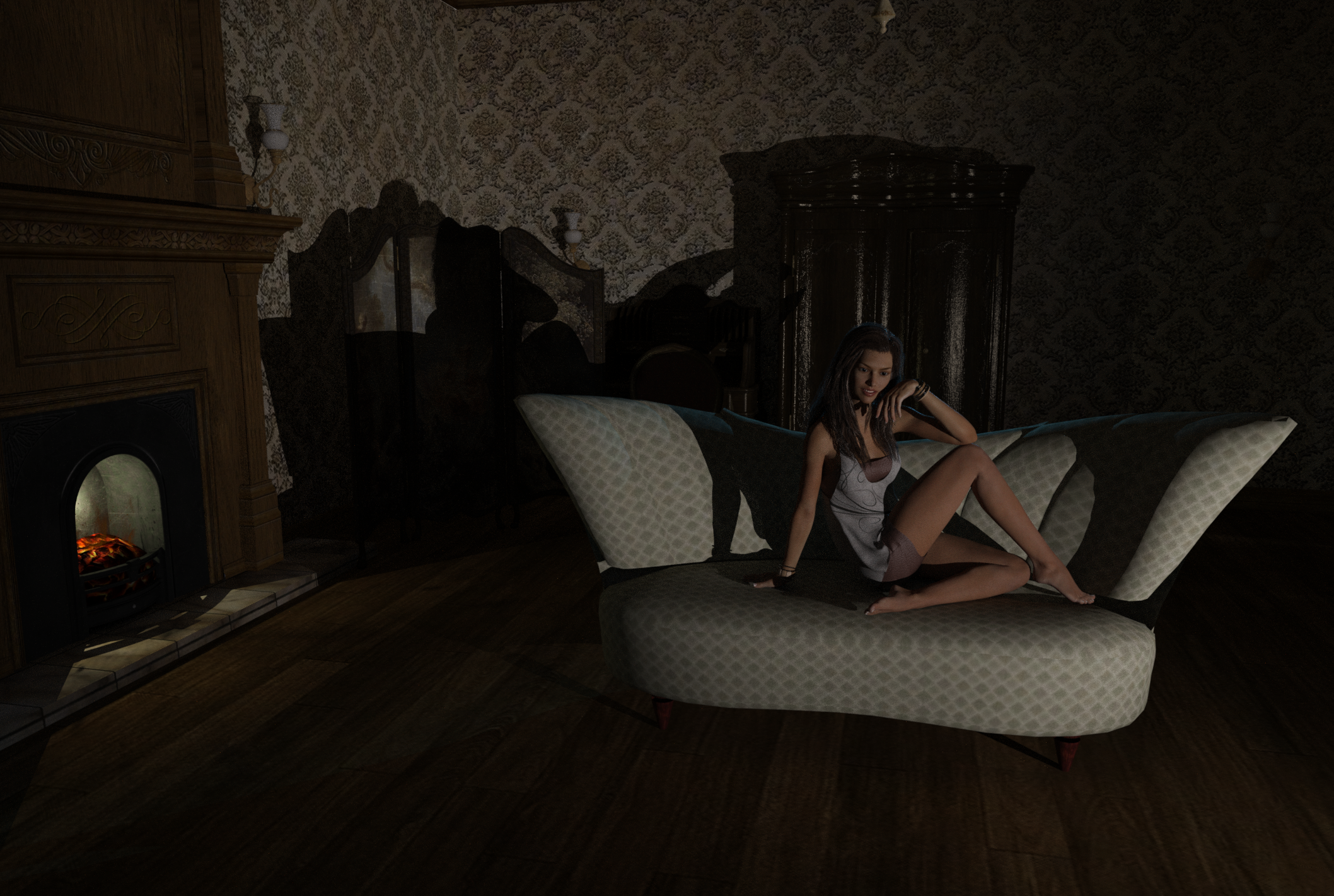 Obviously, you do not want to give players a clue merely by asking for a roll you would not normally request because a clue is present. Nor by describing something in greater detail than everything else. That is why consistent resolution matters. But characters also need to gain information and see many additional details when revisiting a location. Handling these two requirements together is one of the hardest tasks in investigative adventures.
What consistent resolution looks like naturally varies from person to person. Suppose you start from the idea that a player character is human and can handle roughly seven pieces of information in parallel at once. As GM, you therefore give them six to eight. What happens when they first enter the room in the picture on the left? What are the six to eight important pieces of information? Darkness or dimness, the fire still flickering in the fireplace, the darker brownish colors, the screen in the corner, the cabinet, the sofa. And finally, the person on the sofa, because after their first impression of the room they will focus on her.
The information about her is that she is a woman, white, tall, attractive, brown-haired, wearing comfortable clothing primarily intended for home that nevertheless reveals quite a lot, and sitting comfortably on the sofa. The next information you provide under your consistent six-to-eight rule concerns her behavior and what she says. We can guess that, out of those twenty-one pieces of information, players will deal with at most seven.
But when they return because they want to know what she saw of something, you will certainly describe the elongated shadows, where the light comes from, and which way she could see out, because that is the information important to the players. They will certainly notice the three switched-off lamps too. And the seven details about the woman can, with consistent resolution, include three old and four new ones. The color of her stockings, for example, or her jewelry. You can convey a little of her style and that day's plans.
At another meeting, the adjective sleep-deprived may appear because of the nearby murder. Once that improves a little, you may remember that one PC will probably be looking at her breasts, while another notices that she now appears in prettier, more elegant clothing. If the characters survey the room, you can go from left to right, giving six to eight details about every object and waiting to see where they stop you.
Want to make the players work? If you suspect seven pieces of information are just manageable for them, the consistent amount in the adventure can be eleven, making the selection of the seven they will actually process an additional task. Want to make things easier? Give them only six pieces of information, or a picture.
Who sees what matters
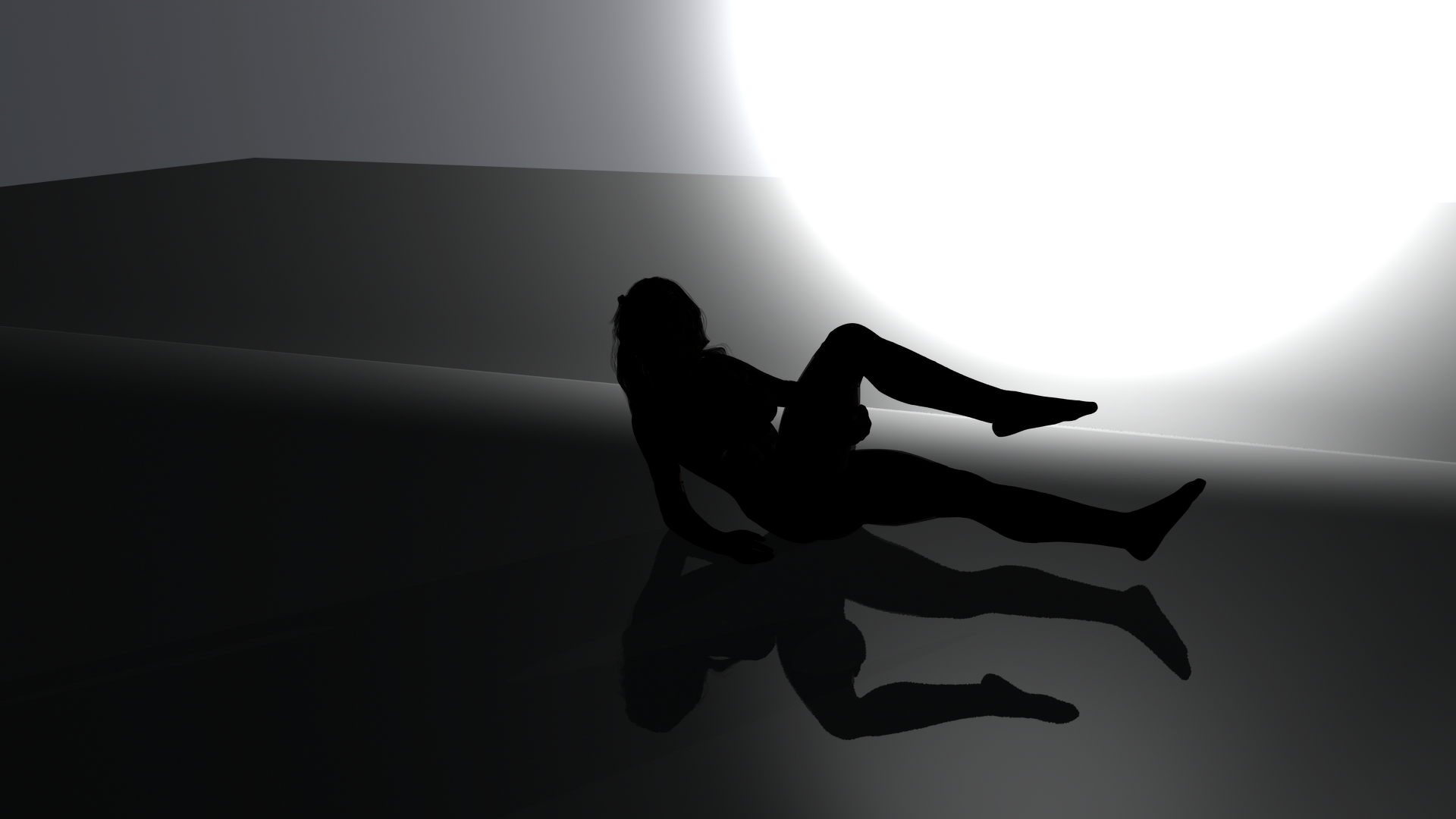
Now look at the other picture. An extremely simplified sketch with no surroundings, making the arguments easier to follow. As GM, you may know the woman in the image is adjusting a device hidden in her stocking. Someone who sees only a silhouette, however, may readily describe her as naked. Naked and posing for someone, meaning somebody else may have been there, a man in their opinion. Only four of the seven things they perceived may remain, and imagination can readily expand those to eight or ten: recognizing the woman, thinking they know who is hiding in the shadows, and naming a particular man. Naturally, the identification is mistaken too, and the man imagined by the NPC was never there.
It is also natural for some witnesses to give very different descriptions of the same NPC. One will emphasize that “she had nice breasts,” while another considers her hair or eyes among the most important details. Several descriptions therefore reveal increasing information about a person, but may easily include false information too. That brings us to filtering out false information, another interesting subject.