
Does Ibra k'dibra (אברא כדברא) sound familiar? How about “abracadabra”? Or the Avada Kedavra incantation in the Harry Potter books, for which the author cites this too? She should really cite its opposite. We all recognize a magic word. Some even know its origin and meaning. But if it really worked, a wizard would know not only that “abracadabra” is a magic word, and not only what it does, but at least how to use it. To research and discover new things, however, they would also need to know how it works, and perhaps why. At that level, magic is no longer something inexplicable and infinitely mysterious. If a practitioner does not understand how magic works, that too means much: the magic is not truly theirs. They may have received it, inherited it, or copied it by observation, but cannot truly master it.
They cannot master it because their spells may have side effects, consequences, or costs unknown even to them. They do not know precisely what their actions entail, only the effects they can see and recognize. We can understand this as a Faustian bargain: you receive power, but the price is unknown. Running a horror adventure, I would gladly use such bargains, and give things a further twist. Perhaps not even a small one: I would almost certainly connect the dark magic bestowed by evil to some good religion. An innocent priest could heal using an old prayer book. He would heal a sinner while transferring the disease to two innocents.
Miraculous recoveries would attract pilgrims, but increasing numbers of local children would fall fatally ill. Cancer cases would multiply inexplicably, yet many “rotten little brats” among them would recover. A CDC investigation, inquiries by investigators and lawyers hired by affected parents, the press sniffing out a story: all would present it from numerous perspectives. How? This could be a Call of Cthulhu adventure centered on Nyarlathotep's tricks. Without a single cultist, only a well-meaning priest at its center. A pleasant possibility? Where magic's source and workings are unknown, something similar is just as easy to run. Only decades or centuries might separate the spellcasting from its consequences, and someone on another continent might pay the price. Good luck investigating, or even recognizing the problem.
Is this really how we imagine heroic fantasy? Is this really characteristic of an adventuring wizard? Not even knowing whom their spells kill, yet neither asking nor trying to understand how magic works. Not caring about consequences, having already struck their little bargain. Receiving known power at an unknown price, without knowing who pays. A wizard therefore asks questions and tries to verify the answers. The knowledge they acquire and verify is precisely the magical theory we argue about so often. It determines how the wizard sees magic, what price they pay, what underpins their research, and why and how they behave. Magical theory is thus the foundation of roleplaying magic-users.
From here, “it is magic; it needs no explanation” is difficult to argue. Insisting magic should be mysterious rather than explicable unfortunately undermines roleplaying wizards. Making spellcasting mysterious and seemingly inexplicable while the wizard understands its relationships is very difficult. The two considerations seem hard to reconcile. Even if we say people's beliefs shape magical laws and much is difficult to explain, that fundamental law of magical theory—magic shaped by belief—already exists, and people's beliefs allow deductions.
We must accept that magical theory appears even at this level, and this is precisely why reasoning has a place in discussing spells. It is best to begin with a relatively simple question: how do we interpret spell descriptions? This matters beyond magical theory. There is a more important consideration: the integrity of the game and story. If the player imagines their character's capabilities and a spell's workings one way, while the game master imagines them another, a strange situation may arise. The character bases tactics on an option the game master considers nonexistent. Four basic possibilities follow:
The GM accepts the character's interpretation, is surprised by the tactic, but may adapt without a serious break in the story.
On the basis that the GM is right, the character's tactic proves unworkable. But then the character would not have acted that way, making the story illogical.
The GM rewinds time as necessary so the character can behave logically.
Play stops to discuss the problem.
None is ideal, is it? One important function of the system is to let GM and player see the character's abilities roughly alike. The system thus forms a kind of language. This must be interpreted properly, and understanding a few simple laws of magical theory helps. For example, if a spell affects only one object, what is one object? The latch? The lock? The door? The house? What a good question “one object” becomes! We can ask where the boundaries lie.
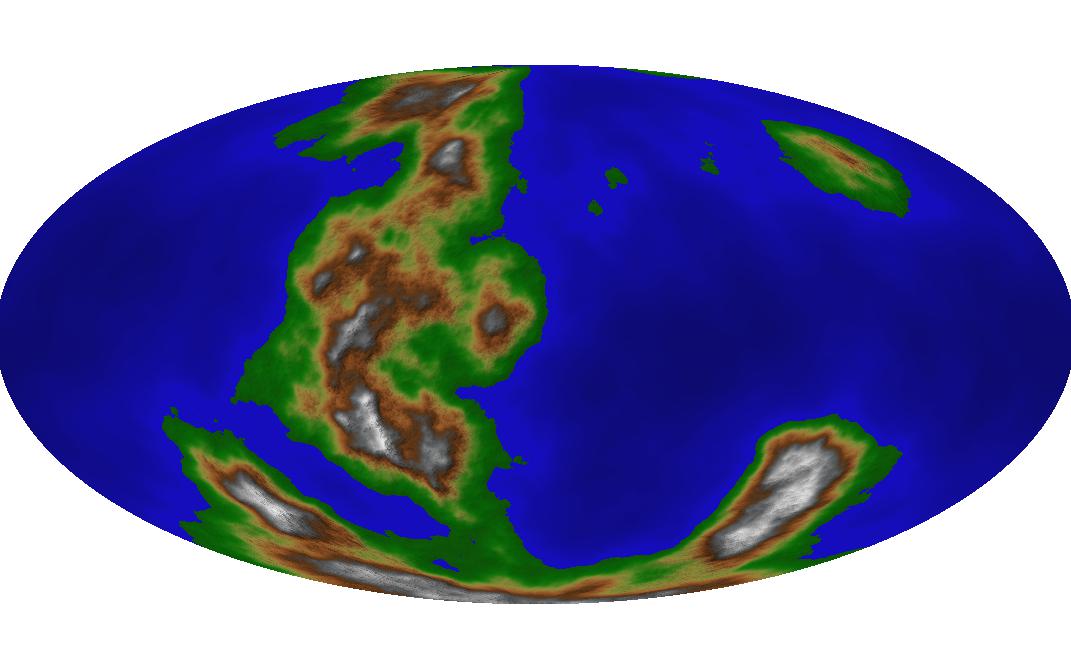 Of course, a single object might be not only a latch, lock, door, or house, but a rock, mountain, mountain range, continent, or world. Look left at this strange world. It too can be divided into parts and a whole. But from far away, someone might see neither mountains, continents, nor the planet, only a system or galaxy. Could all that be one object to them? If not, why can a door, likewise composed of parts, be one? The answer is simple: what counts as one object for whom is mostly subjective. Thinking through how a wizard works will show us exactly why. We need only follow a simple theory.
Merely speaking the magic word does nothing by itself. Are gestures required, or some material used as a focus? Is concentration enough? Must the incantation be supplemented? The questions vary between worlds, but the fact remains: it is not enough merely to know what we want to do. We must somehow define the target and, sometimes, the time. Defining directions or pointing at something may be easy, but how do we define an object? A substance? How do we affect composite objects? The answer is relatively simple: either precisely imagine the effect, or name them. Both approaches have consequences.
Precisely imagining the effect is difficult: from outside, it is hard to imagine a lock mechanism's construction and what we change into what. Knowledge of mechanics and geometry, excellent spatial perception, and who knows what else are often important. This seems the harder route in many respects, but it lets us affect parts of objects, while almost freely shaped spells can easily affect crowds. If “disintegration” affects a thin disc rather than one victim, it can decapitate armies. To avoid this, it helps if the spell affects only a smaller area from the outset. Boiling one liter of water would be just as difficult as killing three or four people.
That leaves plan B: naming the target, substance, and effect. A solution in which a magical symbol acts upon an object by naming the target and substance assumes that this name, symbol, or conception is already connected to the object. The object can be targeted through its function, name, or identifying symbol. This permits not merely targeting and identification, but “recalling” and summoning it, creating it, or shaping it from existing objects.
Naming-based magic, the gift of tongues, idea magic: we can list concepts built precisely on this. They declare a peculiar system of symbols to be magic's foundation. The focus mentioned in Mage is essentially like this too. So many systems resemble one another not because their creators lack imagination so badly, but because few other possibilities can be constructed.
There are strained attempts, of course. If Zsolt Nyulászi envisioned M.A.G.U.S. with idea magic, everyone wanting to contradict him stipulates that they do not want idea magic, thereby undermining players and game masters alike. Yet no particularly good solution has been presented so far, precisely because of this difficulty. And because a certain gift of tongues has been mentioned there from the beginning.
Of course, we can ask whether ideas describe the world or merely one possible method of spellcasting. Consider that idea magic could work even if spells were fundamentally nothing more than Faustian bargains. Whoever makes the spells work could simply arrange numerous things during experiments too. Likewise, if we discard ideas, the gap between an “imagined” effect and the real one can be bridged similarly. The possibility of a “Faustian bargain” remains ever present. But there is an important distinction even here.
Someone who does not ask questions and accepts power at an unknown price that anyone might pay at any time has only themselves to blame for the bargain. That is what a Faustian bargain means. If you have done everything possible and your own frailty did not lead you into sin, the situation differs. I know some devout but anti-science Catholic will say your mistake was precisely believing you knew everything and failing to recognize your limits. Back to the Middle Ages. In any case, many say that anyone who considers asking questions and building on our knowledge sinful has something to hide.
Can we settle this question? How much can a wizard know? We will find out on the next page.
Many say little knowledge is necessary: the world's god of magic may be good, giving everyone reason to trust that magic entails no Faustian bargain. Is this true? If even one kind of “evil magic” works in the world, more may work too, and a spell constituting a Faustian bargain may appear at any time. Someone who knows only black and white can easily be convinced that even dark gray is not black, and readily enter a very dangerous Faustian bargain.
Do we doubt it? One real-life example suffices. Someone driven by faith to send—or force—their child to a church school, without asking questions or even believing children's complaints, can easily find themselves discovering only afterward that their children were molested at the elite school. How many deeply religious parents accepted a church school's perceived or real benefits even at an unknown price? Their children paid that price. Did their faith protect them?
 A fantasy world can, of course, have priestly magic. Religion there is not merely a matter of faith, since individual gods' existence can be proved. Faith and evidence-based knowledge are not necessarily identical. Explaining what faith means in such circumstances, how a church can be corrupt—if a priest receives no power, that becomes apparent—and what a believer's or priest's faith means there is interesting. A difficult question. For now, however, let us ask differently: would this certainty rule out such Faustian bargains? That largely depends on the church, priests, and gods they honor.
If the church checks every spell every wizard learns using priestly magic, while being certain its own magic is pure, such traps can be avoided. But where is that monitoring? For every new piece of research? And surely the church's all-seeing eye and total control would hardly help create a good world. We would prefer many friendly priests who do not suspect every wizard and do not seem prejudiced. In other words, even with the best intentions, tight ecclesiastical and divine control seems unworkable. That leaves the other solution: a wizard who checks their own magic, knows magical theory, and can debate it.
We accepted that the best case makes naming the target, substance, and effect an important element of magic. A magical system of symbols grasps objects, substances, and effects through function and name. Such magic can not only target and identify, but “recall” and summon, create, or shape the named object or effect from existing objects. Naming-based magic, the gift of tongues, idea magic: we can list concepts built precisely on this, as is the focus used in Mage. The systems resemble one another, but are far from identical.
Animals mark their territories with urine. Humans give them names. Changes in place names matter for precisely this reason: whoever can rewrite a place's name also rules it. One curious feature of contemporary politics is renaming public places after major changes in power. Costs do not matter then. Even amid the greatest economic troubles, time is found for this ritual. Does a regime care about “ruling” through its own naming, or merely overwriting a name given by someone else? There are examples of both.
Naming, understanding, ruling... This ritual extends to numerous things. It is said that knowing a spirit's true name lets us rule it too. In many mythologies, every object, living being, and place has a spirit. The names used naturally depend on the particular faith's teachings. These mythological “beings” appear in many roleplaying worlds too, though they do not necessarily constitute objects' essence there; sometimes they are merely ordinary entries in a monster book. If, however, these spirits are objects' essence, and affecting a spirit lets us affect its object—its worldly embodiment—we have already reached a foundation for magical theory.
If natural phenomena also possess ideas, we obtain the primal elements and their associated elementals. There is one familiar point, though certainly not the last. We now see that shamans too speak, in some form, of “local spirits” constituting beings' essence. Japanese Shinto practitioners know them as kami (神), while Sanskrit calls similar spirits or deities deva (देव). Hinduism applies this term to all good spirits.
Does “devil” derive from Greek diabolos, or rather from deva's feminine form, devi? A good question; I have heard good arguments for both explanations. Where did Christianity encounter Indian myths? With the arrival of Roma tribes, for example. They already used devla rather than deva, and also spoke of gods as Devel and Del. To Christianity, devel represented a “false, pagan god.” Diabolus, its derivative deofol, or teufel in German-speaking areas—a name known from more than Macskafogó—often sounded similar too. And “Satan” was indeed a false god.
The site will eventually discuss the origin of the Hungarian word ördög, originally “őr dög,” a kind of guardian spirit; someone else is writing that article. Names become distorted and acquire new meanings. If beliefs and names' meanings change, does that somehow affect the spirit and, through it, the phenomenon appearing in the world? Does the practice of newer “good” religions portraying earlier “good” powers as evil have a rationale?
I must say that according to most fantasy worlds' reality, it does. Indeed, we often hear that a world's gods owe their existence and power primarily to their number of followers. How is this possible? Many say belief unites the person with the concept they embody. In a typical fantasy game, this is why one deity rules lightning and another fire. Indeed, they do not merely rule it; they constitute that thing's idea. We see an interesting aspect of possession and dominion through names.
This also explains priests' most important duty, and why most priests spread the truth about their religion. Not necessarily, though: the religion can be presented as greater, or even “the only one,” and that connection built. It will simply be relatively difficult to challenge other faiths in doing so. This makes polytheism and monotheism coexisting conceivable. Although a prayer must be sufficiently true to strengthen the god, shaping belief can also expand—or narrow—the deity's power.
This concept fits many games, and interestingly also helps explain what a good priest does for their god, why they study, and what they receive for it. Even why priestly and wizardly magic work similarly in many systems. It also explains how deities can be defeated, even through magic.
An interesting feature is that an object need not have only one idea. A latch exists independently but is also part of a lock, door, house, and even the world. The spirit giving an object its essence may be an unconscious essence, an intelligent local spirit, or a nameable, knowable deity or totem. Strangely, a latch involves not only these spirits, but its material's spirit too. If the material consists of elements, their spirits enter as well.
Elements compete with one another, while many other ideas affect matter... Many systems distinguish materials somehow and make creating “nobler” materials harder. There are two explanations: economic and magical-theoretical. Economically, I would say useful materials harder to create will also be more expensive and valuable. The other explanation is more interesting: a weaker, less powerful spirit is less able to “claim” an object exclusively, which will characterize apparently composite materials such as wood or stone. Stronger spirits may lead to purer, more ordered, nobler materials. Stronger spirits are harder to summon or recall.
Viewed this way, the relationship many systems establish between materials' value and the difficulty of creating them can be explained on this basis. Whether M.A.G.U.S.'s material groups, gold-value limits for material creation, or something else, any can derive from this concept. It may also explain why so many magical devices, religious relics, and so forth are made from such materials.
Interestingly, composite materials do not require complete dominion over the material present. Despite contamination, imprecision, and other remaining influences, wood remains wood, only a little different. With diamond, errors would have more serious consequences. That too is why a material spirit must dominate the matter more thoroughly for everything to be perfect. Stronger dominion, stronger spirit, and such materials are harder to affect magically.
But will such nobler materials also be rarer? That primarily depends on what we believe about spirits' strength. Two views are possible. One holds that, as in many places, a normal distribution applies. Most materials are average. Far-below-average “cursed” materials are as rare as those with favorable properties. Only the latter, however, cost more than ordinary materials because of their rarity. The second assumption is that all material spirits “start” equally strong, but some develop further. Basic strength is most common; every strength above it grows progressively rarer. We see not a bell curve but a pyramid diagram representing social stratification.
The point remains the same: truly good material is probably rare and correspondingly expensive. Monetary value and properties are related. Even spells “capable of creating X gold pieces' worth” have some rationality. These relationships provide the foundation a wizard needs. Questions of matter's structure can effectively be bypassed. We need only accept that the wizard affects these spirits or ideas, and the rest follows automatically. Without this, even creating a piece of wood would be difficult, would it not? Apparently this knowledge suffices. Individual spirits may nevertheless have secrets, and the wizard's knowledge may have gaps. Mysterious details may remain.
But what does the wizard know about the structure of matter? Can technology rival magic? More on the next page.
Several ideas affect an object. When we create it, all appear; we have “recalled” every spirit. If they influence one another and their surroundings, magic-users will sooner or later discover how these ideas work. Among the recognized ideas will certainly be those of numerous natural phenomena and particular properties of objects. These primal ideas, rarely occurring independently, belong to the primal elements. Most worlds' mythologies contain primal fire, air, water, and earth. They recur because they cover most properties of objects.
 Pure energy not yet turned into matter, not “under material spirits' dominion,” can appear as a single form or with two polarities. Many would connect life force to a “wood” element, which may or may not be separate from pure energy. Usually it is not, partly because the idea creating a “spirit,” and through it matter, from pure force may also relate to life. Stronger and weaker spirits can be considered here too.
We know ideas express themselves in the world. Thus creatures of nonmaterial planes acquire material forms when entering material planes. The material manifestations of primal ideas behind simple phenomena may be the “primal elements.” Heat, with all its properties, may become primal fire, and creatures of the material world experience it this way even on nonmaterial planes.
These properties and ideas appear in matter, so to a wizard matter is composed of primal elements. If we disregard deeper magical relationships and retain only interactions between spirits and ideas, using these to produce changes, we arrive at alchemy. Does chemistry exist alongside alchemy? Can alchemy exist alongside chemistry?
Many people may begin understanding matter, associating ever more concepts with it. They discover cells within wood and recognize their parts. Eventually they may reach concepts such as atoms and molecules. These concepts and ideas also acquire “power” over matter, creating modern chemistry's foundation. We organize atoms' ideas into a system, understand their workings, and try to divide them into parts. This creates new ideas. At this point, modern chemistry and magic begin to intermingle.
But we cannot “disintegrate a particular group of atoms,” because we cannot name each atom precisely or know exactly where it is. We can target only larger ideas we can grasp. Thus whole objects and modern chemistry can become compatible. The possibility exists in both Shadowrun and Mage. This allows a Sixth World alchemist to create magical materials impossible according to modern chemistry.
We must accept, however, that these ideas, like polytheistic gods and so forth, are likewise artificial and depend partly on people's generally accepted system of symbols or paradigm. Water will not consist of hydrogen and oxygen in every world. Indeed, in many places it does not even consist of molecules, but may be a continuous medium. This often makes it impossible for a wizard to create “atomic bomb,” “black hole,” or similar spells. Simply because even the “foundations” of the missing ideas are absent.
If they cannot introduce those ideas and have “belief”—interaction between spirits—support and strengthen them, they will not suddenly invent such things. Magical science too develops only gradually. Many groups shape the world in different directions, introducing different ideas and concepts. Competition among those shaping the world takes many forms. It happens differently in a fantasy world, differently in World of Darkness, and so on. The list continues. Sol's introduction to Mage explains more about the WoD example.
In any case, seeing multiple structures of matter appear is interesting. Materials and objects must nevertheless obey every structure-of-matter law characteristic of the world. Energy cannot be purer than pure energy merely because many people see the world differently. Many see it differently, recognize different elements, and try to construct things differently.
Magic faces a serious problem: it is not available to everyone. Over long periods, it changes society. Mortality becomes less troubling, people learn more, and society will not be truly medieval. This pace of development, even if catastrophes occasionally slow it or push society back to an earlier level, eventually leads to methods available to the masses.
Herbalism and medicine appear, then simple and more complex mechanics. Sophisticated siege engines are built, warships improve, and new forging procedures emerge. Peoples learning about matter can use more chemical reactions, and the world gradually changes. Everything magic cannot make available to everyone, but sufficiently simple technological tools can, slowly spreads. Conversely, where even technological means do not make something available to a broad public, less efficient new technologies appear less often. This strongly restrains technological development.
So does the brain drain toward wizard schools, which offer most intelligent people their best chance to prosper. These factors suffice to slow development considerably. A truly technological civilization therefore emerges only with great difficulty. This affects many things. It is why many fantasy worlds remain fantasy worlds for millennia, and why magi fearing technological civilizations may defeat or rule them. The world is static to this extent.
Of course, this does not last tens of thousands of years either. A world on the brink of collapse for so long is unlikely to remain unchanged in many respects. Technological development generally accompanies social change too. I know, I know: some games maintain stability despite all this, without visible reason. The world's characteristics must remain for the player's sake, since the brand promises particular values. Concepts, play styles, and so forth also attach to that brand.
Yet overall I say it is realistic to assume the world changes. Sometimes that change happens strangely indeed. We should discuss not primarily the odd changes introduced by new editions, but their consequences. Change appears step by step. Take an example without naming the game system. If someone recognizes it, that must surely be coincidence. Or simply because the observation fits the system.
Initially, the world's creators do not intend every religion's priests to be playable, believing certain priests or priestesses would make poor player characters. Combat is alien to that deity's followers; they do not learn to fight or possess knowledge worthy of adventurers. They simply would not survive or become heroes while remaining faithful to the world. But players complain that particular religions are the creators' favorites and others are unfairly neglected. Some later editions heed the criticism and change things. Followers of certain religions become viable adventurers, even excellent fighters. Even if someone says that although they wrote this, they did not mean it that way. Player characters' actions are shaped by their abilities and adventures, not developers' unwritten thoughts.
The problem is not that this temporarily sets an example, or that such characters acquire a follower or two. It is that the faith's heroes thereby become more martial, changing the religion. Along with faith, the church changes, as do the ideas associated with that deity. This can often lead to rivalry between churches, religious wars, even the pantheon's disintegration. A developer saying they did not want or imagine such a world is pointless: individual changes' consequences must also be considered. Someone unable to account for consequences is unfit to be a developer. That simple. Just as a good developer's most important characteristic is the ability to account for every consequence of their written ideas and accept them without reservation.
Just as belief creates gods in many fantasy worlds, elsewhere—for example Shadowrun—it defines idols' and totems' traits, while in other cases it influences the world differently. Even one small event or change can then initiate unpredictable processes. In this situation, a priest serves their deity less and represents it more, directing followers' belief in that way too. It matters that when followers speak their god's name, they truly think of that god and its domain.
Is this only about priests? “Gratuitously bashing” two or three creators? It is far more about the world itself changing: different ideas and spirits stand behind the same object in different eras, often requiring spells to change too. This highlights an important point: wizards' science must keep pace with changes in the world. If a wizard adapts more slowly than the world changes, their power diminishes. Wizards may consequently have been mightier in ancient times. In antiquity, this might have let one race prevail over another, while today wizards' advantage is less clear.
Much instinctive magic adapts almost immediately, but potentially stronger—or more readily strengthened—conscious magic requires serious research to develop. If wizards devote insufficient time to it, they regress despite continual improvement. Technology that everyone understands and believes in, however, does not change; progress there takes fewer twists and turns. The “knowledge of ordinary mortals” ensures stability and safety.
As the world changes, previously safe forms of magic can become dangerous; spells describing the world incorrectly may “tear holes in reality's fabric.” One system knows this as demons—CODEX—another as paradox—Mage—while elsewhere using uncertain but sometimes stronger spells is treated as a separate school. Numerous further examples could be listed. But magic's limitations are clear too. It is not especially stable. This is why studying earlier magical forms interests wizards: though they cannot be applied directly, understanding their relationships may bring a discovery still usable today closer.
An important question is how a character perceives these changes. What does the wizard see of them?
My first example is Shadowrun, using third-edition terminology but also referring to supplements from second edition. A curious concept exists: astral background count. Strangely, it is an almost perfect example even when it does not appear directly. Many say background count interferes with magicians. But what else does it do? It can strengthen other magicians, for example! Magic may even be generally unavailable in the world, yet available in particular places and at particular times precisely because of their associated background count.
Astral background count is probably simply a manifestation of the world being shaped by people's beliefs. Where people endure many horrors, they see the world as far worse and crueler, perhaps imagining “demons” behind it... Thus they place the location under toxic spirits' dominion and strengthen darker idols and traditions. For others, however, the situation is somewhat alien. Interpret magical theory's foundations as above, and background count works precisely as described. It even explains pre-Awakening magic. Or something harder still: how the Great Ghost Dance worked.
Thanks to the internet and cable channels created by market demand, news of any perceived or real paranormal phenomenon could reach wider audiences, leading more people to believe in the mystical forces behind them. Magic began to return. Native Americans in “concentration camps,” envisioning angry spirits and turning more strongly to traditional beliefs as they fought for their identity against reeducation, could easily generate increasingly strong background count and magic across an expanding area.
Meanwhile, “mining” raw materials becomes profitable even where it was previously too risky. People therefore perceive angry nature as a mystical force behind more accidents. Interest in every accident, storm, and natural disaster grows, favoring similar magic globally too. The Great Ghost Dance becomes possible. And convinces everyone that magic has returned. Belief and magic change in the blink of an eye.
I do not claim this is the only explanation, or even that the creators would explain it this way. I do claim almost every supplement and adventure story fits. We understand why Harlequin can discuss the Horrors' return, and why everything from cinema onward shapes magic. Numerous adventures can build on magical research. For anyone exploring magic's nature within a magical campaign, this approach can provide an excellent explanation.
Background count familiar from Shadowrun can therefore be a useful reference when running many other worlds, and excellent adventures can build on this concept in numerous games. It easily connects to time-related superstitions and astrology, which can create background count similarly. I mean not only comets, but monsters or ancient gods waiting among the stars until the right conjunction, kept away from our world, and numerous other things from many similar games.
Spellcasting then need not be mysterious; often it concerns understanding and deliberately exploiting interactions between ideas, spirits, metaplanes, and so forth. Of course, no magic-user knows everything, so some mystery remains. Even more remains around ancient spells and magical items whose workings and reasons are unknown. Magic, if sufficiently rare, can indeed be wondrous.
The workings of many ancient forms of magic may be unknown, bringing the Faustian bargain back into the picture. As does someone deliberately shaping the world to make their own spellcasting easier, building on fear and pain. Numerous darker stories can be built on this. Creating adventures from such situations does not seem difficult.
Religious wars in fantasy worlds primarily concern which religion's ideology should govern the world's workings, and which deity the world's “idea” should resemble. This resemblance allows the deity's power to reach fulfillment throughout the world. The deity itself may change meanwhile, of course. The ability to change the world can be the true measure of power in many settings: a natural, simple measure. In classical monotheism, control over the world means connecting the world's “idea” to that faith and its laws, extending the laws dictated by belief throughout the world.
Ideas can encompass races and peoples as well as the world, making racial or cultural pantheons readily acceptable. An object may connect to several deities, or two similar objects may fall under different deities' influence simply because they were made or located in different places.
Most ideas are partly constructed by belief. Some think primal earth consists of spectacular crystals; others think it is polished smooth like a pebble. Both thoughts affect primal earth's idea. This makes wizardly magic uncertain, but says something relatively important about priestly magic. Faith does not primarily mean believing a deity exists, but believing the deity and its influence to have a particular nature.
Important questions include how much we believe the deity is right, how good we think its rule is, and how much we want to entrust control over particular objects and ideas to it. This faith and trust often require some credibility. Since deities rarely appear directly, maintaining that image is largely the church's job. But preaching water while drinking wine does not work here. A priest does not please their god through words or mere ecclesiastical service.
Mere ecclesiastical service makes the deity impersonal. Believers would cease truly believing doctrines and principles. They would believe that if they went to the temple, the priest would help them. Instead of the god, they would try to attach influence over the world to the church's idea, and many priests would become priests of the church instead. Priests need followers to see what their god is like: which principles and person belief should connect to the world's things. Thus priests of real gods represent their deity more than they perform ecclesiastical service.
But belief can plainly attach ideas not only to deities, but to church teachings and influence. There, the priest, church, and name behind it—many naming a deity while thinking of the church—bestow favor in exchange for donations and service. A system of service and grace may emerge. Pacts with other beings and Faustian bargains may influence the church; dark secrets may exist. People may kill and sacrifice humans, sometimes to a demonic helper, in a nonexistent figure's name, turning the church into a deity functioning as one enormous mass.
Such a church instinctively fears magic-users, who might recognize the magical laws sustaining its power and expose or even replicate its fraud. Do we know such a deity from a game? Perhaps. In some, the concept supposedly “present from the beginning” describes the same religion first as a false faith with no god behind it, then invents something that exists but is not what they discuss, and finally says monotheism claiming “exclusive” power is true after all—truer than the others, even. There can be much confusion, with everyone claiming the current concept is the original.
The beauty of the concept developed here is precisely that it describes numerous worlds and answers troubling questions. It explains a false faith's possible secret and what supplies priestly magic in such cases. Why would a god's followers not fight? Make no mistake: independently of the above, two situations are possible. Either they deliberately avoid learning to fight and shun combat, their priests preferring death to becoming weapon-wielders who no longer represent their god, so almost none become adventurers viable in combat. Or they accept priests learning to fight and representing the church as fighters too. In that case, however, this example and characters becoming heroes through it affect the world.
A world's creator can take either direction. But when a writer or writer-turned-developer claims a third mutually contradictory concept is the original, offering only their own authority as its justification, I struggle to believe they are developing their world consistently. This applies equally to GMs and amateur and professional developers. And I will not call it “unimportant.” These fundamental magical laws and conceptions of primal elements, gods, and totems define roleplaying magic-users and priests. The relationships analyzed here can matter to such characters.
Naturally, we could discuss the relationship between outer planes and belief, pair magical-theory foundations with the alignment system, or ask whether Drizzt truly has a good alignment. We could discuss ideological wars in individual worlds, or explain how the disturbing contradictions players notice arise. We may reach the point where this brief introduction to magical theory helps prevent many mistakes. Of course, much remains to add. The question of age-related ideas, for example. We could discuss a consequence-oriented method of worldbuilding and many other details. But those belong to subsequent articles.