
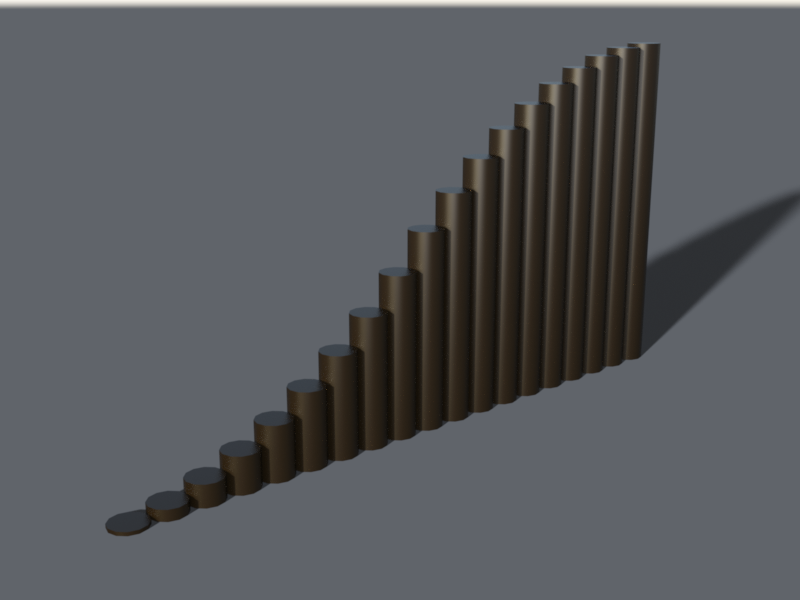
 I know, there is the “What is all this?” box, where I explain that the aim is to provide a Second Chance (Második Esély) if the d6-based solution fails, and that apparently settles whether we should use d6 or d100. Does it really? In my previous article I pointed out that, in many cases, the commercial cost of d100 is an open question. Some people, of course, think bundling dice with the book is the answer. But that solution is no solution, because I can name at least three situations in which it does not and cannot work. The first is that the rules needed to try the game could be attached to a novel or short-story collection. A few pages make little difference if there is room left on the printing sheet anyway. Bundled dice would bother many bookshops here. But the even bigger problem is that they would not reach readers of library copies. Libraries still exist today. So do secondhand bookshops.
The other possibility is, of course, any free introductory rules booklet that can be printed anywhere and picked up in lots of places. You are hardly going to bundle dice with promotional material, because then many people would take it just for the free dice, despite already having a copy and not being the new players you are targeting. The third consideration: even well-known companies such as White Wolf have now moved largely toward print on demand. And with print on demand, you do not want to stock dice. Ordering dice, which in some people's fantasy world takes two clicks, is not just two clicks either. Let us start with this: if you give something away so that people can start playing the rules that came with the book or free booklet without spending money and immediately, your first sentence will not be “Just buy something from somebody else first and wait for the order to arrive.” Oh, and hold on: have a bank card. Shall I go on?
The other consideration is that, like it or not, a roleplaying game can succeed if you reach as many potential players as possible. Because, using the shared rulebook, they too can become game masters. Good game masters, too. Your first goal is to bring the barrier to entry down to nearly zero. One important feature of roleplaying is having a group you can play with, so excluding as few people as possible is essential. Of course there are plenty of homemade tools for generating random numbers. Drawing little chits worked even in D&D's early days. I mentioned cards myself in the previous article. I have seen “where does the homemade spinner stop?” used too, as well as opening a book and taking the last digit of the page number as a “d10.” The modern solution is a dice-rolling program. But I have even seen a target used, with the observed spread generating the random number. A system designer should be creative.
A substantial share of dice-using systems, however, currently fall into three categories. There are systems in which most rolls use a single die, to which we add modifiers and compare the result against another value, or a table of such values. Every result has the same probability. Then there are systems using several dice, where the sum of the roll matters. This usually means a variable number of dice, possibly with modifiers. We see a natural distribution in the roll. But when increasing a value means going from 1d6 to 1d6+1, 1d6+2, 2d6, and 2d6+1, each increase raises the expected value by 1 or 1.5 points. Although more dice point toward a natural distribution and predictability, replacing a fixed modifier with a die points toward uncertainty, and the maximum rises quickly and somewhat disproportionately. Finally come success-counting systems, where the mathematical background is quite different.
Even in those three main categories, some dice may involve a trick, such as rerolls. Some systems put things other than numbers on the dice, and swapping dice matters too. And of course many have even more complicated tricks, such as the roll-and-keep concept. The point, however, is that some people consider D&D modern with its many types of dice and thousands of modifiers. Others point out that modern systems do not use so many kinds of dice, and that its 5% steps, high critical chances, and many other concepts make D&D less than modern. Many even point to classes. But a flame war is guaranteed if someone modernizing a fantasy game wants something other than turning it into D&D. All those dice, thick core rulebooks, and so on do create a high barrier to entry in one respect.
What is all this?
There has not been a successful new M.A.G.U.S. system for a long time. Many of us play from twenty-year-old publications that are practically falling apart. We wait for new solutions, then the grumbling begins: why does the new system roll attacks that way?
But we have often heard that the rights holder would welcome homebrew and other attempts too. It has even been said that perhaps more than one could get a chance. They waited in vain. We did not trust that there really would be a chance. Delta Vision's developers are currently working on a new system. The fans are working on grumbling about the d6.
But let us admit that four alternatives currently exist:
- We get the d6-based system.
- It fails and we get nothing.
- We deliver a finished system and it gets a chance, either instead of or alongside the d6-based one.
- A series of articles presents a method for producing a new core rulebook.
No developers of a homebrew system have been sued. And we have heard of at least four or five solutions. But there is official* permission for supplements and articles, and none for a homebrew system.
Even if permission eventually comes, the articles will not form complete “core rulebooks,” only an SRD. Let us call this the Second Chance system.
* This does not make the resulting supplement official or officially approved. Only the permission for fan material and house rules is official in the legal sense.
But that is not the only kind of barrier to entry. Money is not the only barrier: in a game system, most people become GMs only if they can understand its mathematics well enough to design a working adventure and estimate the likelihood of success beforehand. Here, however, there are at least two ways to improve the game master's chances. One is simpler mathematics: see the “single-die system.” The other is deciding that character performance should depend less on chance. They undertake things they will survive and accomplish. The degree and nature of success depend on the roll; there are stakes and something to get excited about, but it rarely decides between success and failure. There are, however, relatively infrequent “special events” that players talk about for days.
We have guessed correctly. Percentile systems have the enormous advantage of making probabilities very easy to calculate. In that respect, few systems are better than BRP, which underlies Call of Cthulhu and also handles character development sensationally well. But it too puts a burden on the game master: what do you do with the relatively frequent “special rolls”? Suppose a combat round contains ten people acting; you roll 1d100 at least ten times. Over five rounds you would expect fifty such rolls. On average, every fifty rolls there will be a special result: either 00 or 01.
An ill-timed roll—a 00 against a player, or their own 01, can easily prove fatal—is harder to handle as a game master, and it is a recurring topic. Moreover, M.A.G.U.S. was originally intended for campaign play following a character's life. On average, every hundred enemy attacks a player takes a 00, whose direct consequence in many cases, in the appropriate combat situation, is applying the moral rule. Many consider that damaging to the atmosphere. And if the goal is for stories to resemble novels and short stories, this flaw keeps resurfacing through long rounds of testing.
We can also see that, say, a character is usually capable of two attacks per round in most rounds. That is ten attacks in five rounds. Suppose they make no roll in the sixth, merely moving, so there are ten rolls per minute. On average a 01 comes up every ten minutes. Sorry, but we see fewer catastrophic mistakes than that at a junior fencing competition.
There is something worth noticing about multiple-dice systems that count successes. Usually they offer more than ordinary and critical success: several things measure the degree of success, so an extremely good result is rare. By contrast, an extremely bad result is usually tied to rolling all ones. If the character rolls a single six-sided die, that happens frequently, with a probability of 1 in 6. But this is a tremendously risky attempt by a conspicuously clumsy, untrained person. Two dice are still not really good, and for someone who can muster only that many, the world itself also helps us understand why they will blunder so often. With three dice, the chance of trouble is already only 1 in 216, less than half the probability of a 01 on d100.
With four dice the chance is already 1 in 1,296. With five, which is perfectly plausible for a professional character, it is 1 in 7,776. And we can continue adding dice, because even eight to ten is not unusual. Catastrophic mistakes become believably rare. If we consider only the mathematical model so far, it seems obvious that a multi-die d6 system can be much better than a d100-based one. Until we ask ourselves what else we can do about rare results.
Rolemaster's open-ended rolls come to mind. The mechanic worked by having us reroll on 01–05 and subtract the result from the roll, while on 96–100 we rerolled and added it. A lot depends on the order of operations, of course. Suppose I have an Attack Value of 37. My first roll is 02, my reroll 96, and my final reroll 28. It matters whether the result is 37+2−(96+28) = −85 or 37+2−96+28 = −29. Both interpretations of the rule could work. Now imagine the following rule: you can hit the wrong person if the roll's value is negative. In that case, compare the absolute value of the roll with the Defense Value of the “accidental target,” possibly yourself. And instead of 00, a multiple overhit is required, which takes several good rolls.
For professional characters with good scores, catastrophic results are suddenly rare, and the system becomes more believable. But suppose there are still too many situations where the enemy rolls too well and the moral rule would come in. In a life-spanning campaign, you do not want to “die” every two or three adventures, and you do not want to swallow the atmosphere-breaking moral rule either. You can either keep playing with the mathematical model or play a little with the interpretation of the moral rule. For example, the system can provide guidance on what saves you.
Even just the fact that M.A.G.U.S., or the Chronicles of Adventurers, refers to a work being written on Ynev. Whatever is written there passes into the world. A Ynevian hero has made use of this, and there is a literary example where it appears in connection with an apparently fatal event. Although Dragonlance has had something similar, it is rare for this to be central to a setting's concept, a fundamental premise of the game, and it forms part of M.A.G.U.S.'s flavor. Extreme rolls can be modified by a lucky amulet, special abilities, points awarded as rewards, and who knows how many other things. The effects of many such modifiers can be described in ways that enrich the game.
A conventional single-die roll, the sum of multiple dice, and an open-ended roll—even considering a single die in Shadowrun 3, for example—have completely different distributions. This also affects how the game feels to us and how we perceive its world. In many respects d20 is a lousy solution, but AD&D and D&D lovers associate it with many pleasant memories. They become excited as a conditioned reflex when they reach for the die, and this makes the game more exciting. Talking about a “natural 20” also gives them an internal language that symbolizes belonging. These “iconic” things strengthen the brand. Breaking with them for a system that “looks better” can damage that brand.
Bringing in cards instead of dice is much less extreme than switching to a different die. Of course, if many players “insist” on dice, you can manufacture special dice for them, with special dice replacing “deck building.” “Only from you, only for fans of your game”: 3D-printed dice with a special design. That just requires a very good 3D printer or some other equipment suitable for producing dice. A software-based solution that builds on the reflexes associated with a “dice-rolling program” is equally possible.
We often say that d100 lets a system express relatively small differences. Yet the gap between the Attack Value of the group's 5th-level fighter and that of the newly arrived 1st-level wizard is not necessarily too large for the dice to bridge. Luck and the will of the gods play a damn prominent role in the game. That is fine until a player's run of bad luck starts damaging the adventure. At this point the mathematician appears and suggests replacing the discrete uniform distribution (Discrete uniform distribution: In probability theory and statistics, a discrete uniform distribution is a probability distribution whose possible values form not an interval but a set of separate numbers, all occurring with the same probability. A familiar example is rolling a perfectly fair die. The possible values are 1, 2, 3, 4, 5, 6, and on every roll the probability of any given value is 1/6. If we roll two dice and add their values, however, the distribution is no longer uniform, because the ‘results’ of rolling two dice no longer have equal probabilities. Source: Wikipedia) with something else. Mathematics knows quite a variety of distributions. Many rules applicable to cards or dice can produce distribution functions different from these more regular solutions. Open-ended rolls are one example.
The question is really how large we want the differences between players to be, and how far we want dice to bridge them. The other day, in the M.A.G.U.S. Facebook group, the question arose in connection with finding secret doors: how much chance should an untrained person have? We can already see a concept entering the design that is not about dice. “How much difference do we want?” and “How much should dice affect it?” raise a whole series of questions. Many homebrew systems start with “I want to use die X.” In D&D's case the brand made d20 a given. In most cases, however, it is sensible to decide on the basis of our goals what we want and why, then approach the ideal die from that direction.
Considering many rational arguments, we would almost certainly not choose d100. Let the fanatical devotees of d100 stone me, but I do not like discrete uniform distributions. In life we are accustomed to getting results “close to average” much more frequently than results relatively far from it. Many kinds of multiple-dice system can easily achieve that. But in a d100-based system it is difficult because of the discrete uniform distribution. The more tricks we use to try to achieve it, the easier it is to lose such systems' advantage of being easy to calculate. This is much harder to influence than extreme events. There, since we are trying to make an already relatively rare event even rarer, few things would shift by more than 1–2%. If we tried to do something about this property of the system, we would immediately be in trouble.
But life is not that simple. We have discussed how d20 stayed in D&D despite all its disadvantages. And a hundred-sided die has a damn lot of advantages over a twenty-sided one. Tradition, the language that has developed, and many other things come to mind. But so does something more important, which we often need to remind ourselves of: freely creating a good roleplaying game is different from creating M.A.G.U.S. I would like to say that M.A.G.U.S. is defined by its supporting literature and the value of its novels, and that the roleplaying game approaches that from one direction or another. I would very much like to. Really. I just cannot, because it would be damnably untrue.
There are several reasons. One is that, initially, roleplaying Ynev and literary Ynev were separate. We could be glad of that, because it gave us both a free hand and the opportunity to use the novels' stories freely. There was not one canonical Ynev, but many independent ones, and we did not have to think “If I run a game here, who would the characters run into?” Perhaps according to a novel coming out the day after tomorrow. Then a lot of water flowed down the Danube, publishers came and went, and quite a few novels and short-story collections appeared that made many fans tear their hair out. After a while, many of us began not buying them. Ynev increasingly meant the world of the game: the place where the opportunity for us to write about it bought content and a future for the setting.
When discussing contradictory writing, I remarked to someone how strongly I associate its beginnings with the Summarium project. Of course the reply was that this was not obvious to everyone. But the earlier picture of the world was mainly an outline from which everyone could make what they wanted, and conflicting pictures could fit within it. The Summarium project, by contrast, tried to establish a unified, strong, developed view of the world that could also provide a much stronger canonical foundation. That shift also changed the role of contradictions. But then Summarium II never came.
It never came because the more mature world concept as such failed. That does not surprise me much. My first step, being interested in magical theory, was to take a look at ancient magic. Then I saw the assertion, consistent with what we had heard about the gift of tongues: ancient magic could express anything. Then I saw the implementation: there are intelligent aquir who cannot say “May all your bones break” in their native language. The distinction between using the aquir language and using one or two words of power picked up by imitation vanished, as did the fact that in many places where words of power exist, people study spellcasting to gain greater magical power. Moreover, the picture would have contradicted the stories of many adventurers who defeated aquir; the concept of Ynev would have changed.
I would like to say that M.A.G.U.S. is defined by its supporting literature and the value of its novels, and that the roleplaying game approaches that from one direction or another. I would very much like to. Really. I just cannot, because it would be damnably untrue. Because after all that, Ynev is defined by how we play it. That includes people whose style of play I agree with and people whose style I do not. We only need to retain a few fundamental premises defining the world, so that we do not end up with just a generic fantasy roleplaying game in the style of D&D. Many things cannot be retained because of irreconcilable differences. But d100, linked to iconic elements and the internal language that has developed, can. So can our familiarity with how chaotic its results are.
And somebody probably says, “You are an idiot, TheElf; you ran this badly twenty or twenty-one years ago too,” while somebody else says that back then I was twenty or twenty-one years younger, had that much less experience, and knew far fewer tools. The system was relatively new then, too, with many different attempts to improve it. That is why I explain that even my own earlier online material is not automatically authoritative when I run a game. But the fact is that I still run sandboxes today. And I still say that pace and many dramatic considerations are much less important than freedom. Films and video games can provide drama, pace, and so on. Few things offer the freedom of running a sandbox. And I will honestly and manfully admit that sometimes weeks pass between two rolls. There is little combat, and even less combat that depends on a roll rather than preparation and tactics, requiring me to call for one.
With few dice rolls, it is much easier to explain why they are still chaotic. But it is a fact that anyone who likes lots of rolling and fighting, and adventures reminiscent of D&D dungeon crawls, will want me nowhere near them. Still, I have an answer to d100's flaws. And if I called for lots of rolls because a tournament or some other situation required it, I would have an answer then too. Just as I attribute the moral rule to the monastery's monks, I would explain the dice's oddities by noting that adventurers are such history-shaping forces that the gods more often try to meddle with luck around them. A description drawing attention to this would turn an “unrealistic result” into something a little more atmospheric. Often we can describe something for which a beginner would instead request a rule change.
Blade Dance 1: The Arena's Sand
Alina circled cautiously in the arena. She knew perfectly well that this time she faced a dangerous opponent. Drisqar the orc was not only bigger and stronger than the slender girl, but an experienced gladiator, champion of many contests. The crowd roared. They liked Alina's style, but the champion had plenty of admirers too, so the slow opening only heightened the excitement. Then Drisqar's eyes narrowed, and with a tremendous shout he hurled his battle-axe at his slight opponent. She dodged out of its path with lightning speed, and the weapon buried itself in the arena wall. Many angry spectators cursed the champion for throwing away his battle-axe so recklessly... And Alina cursed him too, for the skill of the throw. She would not have… Continue the story
A wound worth a few FP from an orc attacking with a heavier weapon is another thing that makes many people say, “This is not right. Let us switch to a more realistic system and use different dice.” In reality, the only question is whether an FP wound represents a “clean hit” or any situation that causes harm, even indirectly. A glancing blow can account for a few FP either way. In return, introducing mandatory ÉP loss weakened the concept behind FP, caused balance problems, and made combat a little slower, with division and multiplication to do. We expect the opposite from a modern system. In truth, I would already have said this in 1997. In 1993 it was still a goal to communicate that this was a serious roleplaying game, with a core rulebook comparable in thickness to the AD&D books. By 1997, people already knew M.A.G.U.S.
For those accustomed to it and expecting it, d100 has advantages, and D&D's example is before my eyes. But it remains a foundation I would be reluctant to choose rationally. We often say that d100 lets the system express relatively small differences. Even if we do not allow percentile skills to rise above 100, there are still 101 possible values: alongside 1–100, there is 0 in this case. But it may occur to us that you cannot build a strategy on something that succeeds only a few percent of the time, and we rarely call for rolls for knowledge that is virtually certain.
Yet the gap between the Attack Value of the group's 5th-level fighter and that of the newly arrived 1st-level wizard is not necessarily too large for the dice to bridge. We do not want it to be, and if it becomes so, that is not necessarily good for the game. Because dice can bridge large differences, luck and the will of the gods play a damn prominent role. That is fine until a player's run of bad luck starts damaging the adventure. We can even enrich the descriptions by referring to it.
But many other things belong to the concept of M.A.G.U.S. Here too we are talking about adventurers' power to shape the world. The wizard's dagger is a deadly weapon as well. The first few editions of M.A.G.U.S. included a section giving Non-Player Characters' combat values, and we soon learned that even a wizard could be dangerous in melee. With a dagger. Priests, with their basic priestly combat values, are already better fighters than many battle-hardened soldiers. We have heard many concepts explaining this, starting with the adventurer's affliction...
What Exactly Is Adventurer's Disease?
Looking back at the beginnings of M.A.G.U.S., I remember a strange expression: adventurer's disease. Something that, if you catch it, turns you from a respectable family man into an adventurer. Could such a disease exist? At first glance it seems thoroughly unrealistic, out of place even in Ynev's reality, so different from our own. Many newer development teams tend to forget this concept entirely, though Csanád Novák mentioned it so often back then. But let us forget the name, keep the symptoms, and make a diagnosis. Adrenaline addiction. After all, a person's own hormones can cause addiction too, and here too the dose must increase to… More about the adventurer's affliction
The quotation above points out that we have written about this too. But while adventurers can compete with veterans in combat, they apparently are no good at finding secret doors or at skills in general. And not only at those: in most cases they were weaker at using magic as well. If a fighter's combat values are “through the roof” and opponents against whom those extra values matter are rare, while increasingly powerful spells open up new possibilities for magic-users, making a level gain more valuable to them at high levels, that leads to strange situations.
Against that background, I am a little bothered by how often we hear that an adventurer is “only first level.” At that point they possess relatively many skills and have learned a great deal. In many respects, they are already seen as chosen as an adventurer. But it is a little troubling when the wizard, partly thanks to abilities better than the average person's, can outperform many city guards in melee, yet has no chance of using magical power to boil water and make tea. For the thief, defeating a soldier, perhaps several, is routine, but routine pickpocketing gets them caught several times a day. We understand the problem, do we not? There was a picture on the first page. Let us look at it enlarged:
If you read many of our articles, you may recognize it: the graph was originally about 2d10, and about replacing an ability check that rolls d10 under the portion above ten with a check that rolls 2d10 under the full ability score. Compare the graph above with the table below. Look beyond the numbers to the “pyramid shape” in the Possibilities column. The triangle has straight lines, while the graph above traces a softer curve. Some mathematically minded people mention differentiation and integration (The relationship between two pictures: The probability mass function is the first derivative of the cumulative distribution function... Looking at the relationship between the functions in the other direction, we will of course integrate.) in connection with the relationship between the two pictures.
| Value | Possibilities | Chance of this roll % | Chance of a successful check % |
|---|---|---|---|
| 2 | 1 1 | 1% | 1% |
| 3 | 1 2, 2 1 | 2% | 3% |
| 4 | 1 3, 2 2, 3 1 | 3% | 6% |
| 5 | 1 4, 2 3, 3 2, 4 1 | 4% | 10% |
| 6 | 1 5, 2 4, 3 3, 4 2, 5 1 | 5% | 15% |
| 7 | 1 6, 2 5, 3 4, 4 3, 5 2, 6 1 | 6% | 21% |
| 8 | 1 7, 2 6, 3 5, 4 4, 5 3, 6 2, 7 1 | 7% | 28% |
| 9 | 1 8, 2 7, 3 6, 4 5, 5 4, 6 3, 7 2, 8 1 | 8% | 36% |
| 10 | 1 9, 2 8, 3 7, 4 6, 5 5, 6 4, 7 3, 8 2, 9 1 | 9% | 45% |
| 11 | 1 0, 2 9, 3 8, 4 7, 5 6, 6 5, 7 4, 8 3, 9 2, 0 1 | 10% | 55% |
| 12 | 2 0, 3 9, 4 8, 5 7, 6 6, 7 5, 8 4, 9 3, 0 2 | 9% | 64% |
| 13 | 3 0, 4 9, 5 8, 6 7, 7 6, 8 5, 9 4, 0 3 | 8% | 72% |
| 14 | 4 0, 5 9, 6 8, 7 7, 8 6, 9 5, 0 4 | 7% | 79% |
| 15 | 5 0, 6 9, 7 8, 8 7, 9 6, 0 5 | 6% | 85% |
| 16 | 6 0, 7 9, 8 8, 9 7, 0 6 | 5% | 90% |
| 17 | 7 0, 8 9, 9 8, 0 7 | 4% | 94% |
| 18 | 8 0, 9 9, 0 8 | 3% | 97% |
| 19 | 9 0, 0 9 | 2% | 99% |
| 20 | 0 0 | 1% | 100% |
We could draw many similar diagrams for 3d6 or 5d4, or even 6d4−4. Indeed, for 11d10−10 too. There we would see a bell curve rather than a triangle or pyramid. And what the other diagram shows would become even more pronounced with more dice. Moving from a discrete uniform distribution toward a natural distribution, we see that at truly high values the character “gains less and less.” A small departure from average, upward or downward, is significant, while at extreme values a change is much less pronounced. Advancement and the first few points of modifiers that establish the character's basic abilities can deliver great gains; after that, less. The 6d4−4 mentioned above also produces random numbers from 2 to 20, just like 2d10. In that case, however, we would roll a 20 not once in a hundred cases, but once in 4,096.
The mathematics of success-counting systems is a little different. They may have a variable target number, not just a simple modifier. In Shadowrun's 2nd and 3rd Editions, both published in Hungarian too, a six is rerolled and target numbers can often exceed six. There, probability depends on both the number of dice and the target number, and even a single die's distribution is “more interesting” because it is not entirely regular. And of course I remember that sometimes even that system does not have us calculate a target number, but look for the highest target number rolled instead—for example, for Impact under Shadowbeat. It matters that even here, having “more dice” makes you feel in advance that you are good, and that conditioned reflex shapes the play experience too. An extra die remains an advantage for a very long time, but each extra die offers a diminishing advantage here as well.
Interestingly, in Call of Cthulhu, the “check” received for advancement also leads to a roll deciding whether we improve. As our skill rises, the chance of improving falls, so each advancement roll is worth less. Here, a graph of the number of checks rolled against the skill's expected value might be interesting. Oddly enough, you can rarely use low skills in a way that earns a check, while at high levels a check is worth little. Thus the rate of advancement can initially accelerate there too, because you are the one performing those tasks, then begin to slow.
The problem mentioned in connection with traditional M.A.G.U.S.—characters being very good at combat but not at other things—can only be resolved once we have made a decision about the world concept. That decision also concerns what a beginning player character should be like. And whether there should be a level where you say, “All right, I gain a level, but what for? I already always made every roll I needed.” Before some clever person pipes up, “You could not always have made them, because 01,” I would point out that at such high levels a lucky amulet may appear, directly modifying the roll. Critical failure disappears, while critical success happens twice as often as normal. And your gaining levels does not make every opponent in the world higher-level too...
Some say that if each point of improvement eventually yields less benefit, players will develop their characters in other directions instead. Many point-based systems charge more to buy each point at high attribute levels. Plenty of other considerations may enter character advancement too. Having goals for longer is beneficial in a life-spanning campaign. And it is a legitimate aim for the “above-average adventurer” to have good chances while preventing the overpowered character from dominating.
Above, I have listed various problems, tricks, and possible solutions, without attempting completeness, chiefly as food for thought. They show how the decision about which dice to use and how to roll them affects everything from character creation to many elements of the world concept. There are many ways to fix the flaws of particular rolling methods with a few optional rules, so a d100-based system can also be improved to some degree. The questions are how difficult those fixes are to implement for the designer, how complicated the improved system becomes, and how many flaws remain afterward. The second of those three questions is particularly worrying because we want to use relatively few rules.
A possible multi-die d6 solution would provide an excellent foundation with few additions, and many new possibilities. We know the d100-based system. People who play M.A.G.U.S. have long compensated for its flaws and like the resulting form of the game. Potential new players, however, have no tried-and-tested recipes for compensating for d100's flaws, and would be happier with a system built on a better foundation. But many existing players flatly reject that, leaving new players with a smaller player base and fewer opportunities to play.
Let us look at a non-exhaustive list of ways to mitigate d100's many disadvantages:
- Roll less often, making extreme results less frequent too.
- Use larger modifiers so the die plays a smaller role.
- Explain the oddities within the world.
- If even insects are kept out of an inn by runes, magical items can influence the dice, such as a lucky amulet.
- Reserve critical successes for adventurers and critical failures for their opponents.
- Use a “card-based solution and deck building.”
- Use an electronic die with a nonuniform distribution—a physical device.
- Use an app whose distribution, memory, and so on can be adjusted.
- Make a d10 from a die with more sides, with a nonuniform distribution, perhaps optionally or tied to an ability or magic.
- Require many unusual results to be confirmed by another roll.
- Introduce open-ended rolls.
- Create a system based on rerolls that can be “bought” with points.
- Use tables to determine the result associated with a roll and thereby fix the problems.
- Allow many different unusual events for extreme results.
- Reinterpret the moral rule to change the form of the game.
- Alongside outright failure, allow “partial success at a cost,” and several degrees of success.
- Apply some form of “roll and choose.”
Clearly, we can try many methods to reduce d100's disadvantages. But while manufacturing a cheap electronic die might make sense for a boxed board game, it is not good for a fantasy roleplaying game—often playable from free introductory material—to rely on either that or, say, an app. We do not want to lug tables around either. Open-ended d100 rolls have already appeared elsewhere. An in-world explanation and fewer rolls are not enough. So, little by little, we rule out most of the possibilities we identified.
Solutions 3, 5, 6, 14, 15, 16, and 17, however, can be combined to a degree. Special cards and deck building are optional, but could supply variety in extreme cases. Explanations involving adrenaline, the will of the gods, and the written chronicle, along with a moral rule brought closer to them, also help. In fact, option five can be added to the picture too. If we make high rolls worthwhile for skill checks as well—say, skill + roll + modifier > 100 means success, with several kinds of “better success” above that and a few kinds of partial success below—we can say that we rarely roll in situations without stress. In a live situation, however, the adventurer rolls several d100 and takes the highest, the non-adventurer rolls only 1d100, and some of the more accursed creatures must use the worst of several d100 rolls.
That lets adventurers readily defeat creatures and opponents who would normally be stronger than them. The quality of success and many other things provide “something to get excited about”; the d100 feel is there, and you can roll lots of dice. Even low skills can have a chance, especially when we roll many such dice. Some may come from “adventurer status,” while others are bonuses “purchasable for particular occasions.” Yet higher values continue to improve the odds for a long time and let the character perform even better. Even lower skills can now have value.
The result: a system that can be summarized in a few sentences, supports heroic achievements, longer life-spanning campaigns, and adventurers victorious against superior forces. Yet there is still something to get excited about, and we have made low skill values useful too. Multiple dice used this way can easily be incorporated as an optional rule into the traditional system, and indeed something similar is possible for almost any other d100-based system. In Call of Cthulhu, for example, we would simply choose the lower roll, except on advancement checks.
The beauty of it is that the system is easier to calculate at the beginning, when there are few dice. But we can arrange for players to develop skills freely while “an adventure bringing a major turning point”—achieving an important goal—grants a level, and an extra die usable either all the time or occasionally, with only the best counting. Character development can thereby become multidimensional: alongside improving skills, the “wealth, power, and influence” gained through achieving goals, and possible magical items, we have gained a new kind of level. Multiple forms of advancement support both frequent small rewards, which are useful, and rarer large rewards, which are memorable and get talked about.