
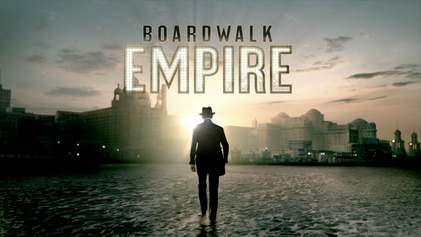
 A million and one stories take place during Prohibition: Lovecraft was alive, writing and experiencing much at the time. If you enjoy Call of Cthulhu, you probably read his work alongside many other works set in the period. You have likely watched numerous iconic period series to death too. Books struggle to communicate some things their authors take for granted, while television creators research them and put them on screen. If we named HBO's hugely successful Boardwalk Empire among the essential portrayals of the era, most would probably not merely reply "seen it", but recall iconic quotations. They might even explain how it shapes their descriptions of entertainment venues and many adventure characters' attitudes towards morality.
As it should. Not merely because even videos comparing fashions across eras provide no street scenes and do not explain what particular clothes meant then and there, while better period series help us imagine characters' clothing, speech and natural behaviours most writers would leave unmentioned. Also because one thing has changed since Lovecraft's time. Back then, this era was the present, and characters in weird fiction, "Lovecraftian horror" and its many details showed us deviations from ordinary life: who was strange. Knowing the era only through Lovecraft would mean never finding the baseline against which the protagonists compare things. Moreover, today we do not choose this period merely because, unlike many others, it suggests itself as the present day. We specifically want to play in it among history's many interesting eras.
Nor was Prohibition the period's sole defining feature. There was the Ford Model T, by then available second-hand too, widening the world even where trains did not run. Radio appeared and challenged print for the title of principal news source, transforming advertising and cityscapes as well. The League of Nations stood as a serious international community against the nationalism dominant during the First World War. Female voters were another novelty, bringing a change in democracy in which politics leaned particularly heavily on one voting group. Women's votes led to Prohibition and, contrary to expectations, unleashed violence. Nyarlathotep's joke, many Call of Cthulhu GMs would remark. Not entirely without foundation.
Motorisation and post-war reconstruction accelerated the economy, whose growth encouraged migration, including "foreigners with strange customs". Communities of different nationalities then contributed to "ethnic mafias" as organised crime spread. Some distilled kosher plum spirits, others whiskey... Films and series set in the period show abortion as a subject, and women's changing social position. Characters could encounter a million strange things and readily suspect something behind them.
Everyone is wise after the event
Everyone is wise after the event. Roleplayers especially. The first half of Prohibition coincided with the economic heights of the Roaring Twenties, but we know the economic collapse and Great Depression came towards its end. After motorisation, progress and intensified migration and trade came a turn inward too. These were no small social or economic changes. On an old forum I once raised the first serious speculative bubble, surrounding Dutch tulip bulbs. Most users said they would never invest in such circumstances. Everyone is wise afterwards; they had heard what followed. But an important force behind most economic crises is that people do not foresee their actions' consequences. We understand what this means, surely? Someone making clever tactical decisions through foreknowledge is not playing their character.
Nyarlathotep's joke: Towards the crisis
Lovecraft himself knew less then about the route to the crisis. But he could be certain that alongside the twenties' boom, the world had badly deceived a substantial part of the population. I could explain that the economy then worked so that depositing one dollar let the bank issue nine dollars in loans. But the deposited dollar and what you received as a loan were not identical in many respects. Today, some of a deposited dollar becomes mandatory reserves, and the bank can lend only the remainder, less than one dollar. Yet it gives you "the same kind of money" you deposited. While you hold "bank money", the borrower can spend the money too: this is how the banking system multiplies money. Many point to banking and monetary and fiscal policy as causes of the Great Depression, explaining why it became more than a severe recession. There is truth in that, but some things are worth knowing: the road to recession is interesting too.
That economic boom did not have a happy sequel. Prohibition was preceded by women's economic and political independence, arising from their production responsibilities in the wartime economy. Labour shortages attracted immigrants too, contributing much to the early twenties' economy. Two earners in a family meant more things could be bought, while more efficient production made more available. A used Model T was an example. The trouble was that reconstruction eventually ended. Less labour was needed, unemployment rose and consumption fell.
Prohibition, the Roaring Twenties, the era's small sexual revolution and the processes leading to the Great Depression occupying the same period also make it easy to build minor storylines around them. The following plots can be combined or work as independent adventures.
The seer who stayed out
An adventure immediately suggests itself around someone foreseeing the crisis and how much will lose its value. They avoid joining the preceding boom, forgoing its available benefits. All so that they too can "lose everything", only from a lower starting point. Owning a house, car and so on at the crisis's beginning would have left them much better placed during it. But someone "whispered the sure-fire tip" to them, and foreseeing so much made them sink further into trouble instead of avoiding it. Nyarlathotep naturally laughs at the whole thing.
The story is even better if the seer misleads the players similarly. They are clever and stay out of the bubble, because nobody can fool their characters... Only this makes them lose far more. They would probably approach things differently next time. Another interesting possibility is someone specialising in exposing frauds who deliberately does the opposite of the seer's advice and weathers the crisis better precisely by disbelieving the seer who foresaw it. This leans towards "weird" stories; the "murderous suicides" of many people can add horror to an economically focused plot.
There will always be demand
Whether Chicago or Atlantic City, most people sense an era more "permissive" than many before it, and many assumed there would always be demand for sex. But as money runs out, people obtain it more cheaply elsewhere instead of at a "successful entertainment venue". Someone once trusting a sure business prospect might, on the rockier road of "women's financial independence", end up forced to live by selling her body. Since occult matters and much else attracted interest, the former venue could have an Egyptian theme, with depictions even of the Black Pharaoh. That ever-present demand may eventually supply work for a prostitute with a Cleopatra haircut diligently plying her trade in the decaying building nobody really wants.
In the rundown place where few questions are asked, some cater to all sorts of strange wishes, while much darker things may happen in the formerly successful venue. An interesting possibility is that its madam escapes much only because groups seeking younger, perhaps virgin victims do not target her. A suitably oppressive atmosphere, hopelessness, blood and many other ingredients can be established. Women and girls in desperate situations may turn to the occult and charlatans, as many people do today, bringing a group of cultists into the story too.
The female vote
Prohibition also arose because much of politics focused on the female vote and granted requests in the hope of "guaranteed votes" without thinking through the consequences. Those consequences and further vote-winning efforts then absorb the politician's attention, leaving unnoticed the problems leading to the Depression and political downfall. Personal consequences may follow, and supporters and advisers raise the question of who persuaded whom to do what, and why. Politics based on winning votes and the mechanics of power can again be portrayed as largely Nyarlathotep's joke.
It is interesting to build in how cultists foreseeing much and helping cause trouble operate so effectively because Prohibition drives many into hiding and illegal activity. How package deals devised to circumvent it sometimes encourage exploitation of women and violence against them, making the brave new politics focused on women's votes backfire on every front, and how much authorities hunting beer, wine and spirits overlook. That last point readily supports a bloody horror subplot. Someone optimistic and preoccupied elsewhere despite visibly worsening problems would notice neither serial killers nor monsters.
A society turning blind and monsters going unnoticed provide foundations for many horror stories.
The ghost dollar
A dollar long gone brings trouble to everyone connected with it. A failed bank and defaulting borrowers all feature in a curse's story. A curse that took hold, whose destruction works through everyone involved in a loan. Unless broken, its devastation reaches more and more people, and the characters may be forced to realise it will never stop. Yes, it reaches the party too. Follow the money in a case, and the story can touch an entire city: depositor, borrower, merchant, banker, anyone.
Behind the case lies the curse of someone who lost everything, but whose story unfolded over decades. Only understanding the whole would lift it. That requires discovering who uttered the curse, why, and what really happened.
A good deed at the wrong time
This story mainly concerns struggling people seeking help from almost anything. An exploited worker is easily exploited again by someone selling money-attracting magic. In Lovecraft's world, sufficiently dark magic has some chance of working. We begin there. After a sacrifice and a darker bargain, the pay rise requested in the spell arrives. During the crisis, though, that very pay rise drags down the company where they worked, then the town. Hopelessness and the guilt of former ritual participants suffice for a wave of suicides, whose news attracts dubious figures to a settlement slowly becoming a ghost town.
If the characters uncover the roots, many families' older dark secrets emerge, and numerous dark things lurk in the town.
As I said, the stories can be combined or merged. Building a small town's history from these five threads, then adding more, creates a sandbox setting. Others would miss a prewritten adventure, focus and the pace dictated by the GM and urgent events. Separating events while keeping them easy to fit together remains part of a middle way. They can also be separate adventures in separate towns.
Pullman cars: An adventure location on the move
Although private motorised transport had appeared, rail remained the most important means of travel, with good reason. A Ford Model T was not much slower than a train, but shook its passengers far more on contemporary roads. Over long distances, with lower speeds more practical on poor roads and cars neither especially reliable nor maintenance-free, the alternative was luxurious trains reflecting the period's fashions. Who has not heard of the legendary adventure aboard the Orient Express? A fairly famous work. But overnight rail travel, and trains getting stranded, existed elsewhere too. A sleeping car meant both confinement with strange, suspicious people and isolation from the rest of the world.
The beauty is that others know this too, and know how hard it is to verify many passengers' true backgrounds, leaving a murder motive undiscovered. A helpful doctor, for example, could readily misdirect an investigation, particularly when some witnesses talk nonsense after hallucinating and the scene suggests horror-story monsters rather than murder. Anyone beginning to suspect something about the staged death could become the good doctor's next target. For an extra twist, the second victim could have been the original target.
The victim may have several enemies, and the doctor could hire actors, so even the characters might witness a curse promising that shadows and monsters will tear the victim apart. Naturally, the diagnosis is strikingly similar.
If cases like these make journalists realise how perfect a railway carriage can be for murder, others may feel inspired. Similar murders can then "conceal" acts involving at least cultists, or worse, supernatural horrors. Many trains are similar enough that location descriptions, maps and so on can readily be reused between adventures. But Pullman cars matter beyond being adventure locations: characters may accidentally or deliberately overhear information leading to further adventures.
We know the old saying: Sir, a sleeping-car attendant is discretion itself; he only gossips when a valued passenger asks. "Valued passenger" includes journalists just as much as a businessman or politician contemplating an affair and asking about discretion. Fellow passengers' secrets can foreshadow later adventures. And speaking of news sources...
Newspapers in different sizes
On the first page I mentioned the struggle between newspapers and radio as a defining feature of the era. In fairness, many contemporary horror stories were embellished first by witnesses, then by people who "only heard it from someone" and repeated it to a journalist, after which the hack added colour to boost circulation. But remember that newspapers came in different sizes: the large broadsheet and the somewhat smaller but much more popular tabloid.
You would say size is not what matters? Volume, perhaps? The newsboy's volume, that is, and the street noise through which even the least informed could hear the news. Or at least which interpretation of which news was being used to persuade people to buy the latest special edition.
Get your paper!
Sensational special edition!
Bloody murder in Harlem!
Newsboys broadcast many sensations to the world. These were aimed not at important gentlemen smoking cigars in their clubs, but at the people. Such mass-market papers were smaller partly because they could be read while seated on the period's transport. Carefully described, thoroughly investigated news did not sell them: sensations did, and news was embellished accordingly. Horoscopes, occult topics and guest contributions all found room, and anyone seeking a sensational murder story rummaged elbow-deep through blood and tears.
Embellished stories, local gossips' opinions and so on inspired local literature, but also potential murderers.
The press helped widen the world too. Reports of occult happenings might bring susceptible readers rushing to the location or trying to acquire the secret knowledge involved. Much was fraudulent, but some could be truly dangerous knowledge, another excellent adventure foundation. Competing newspapers also let player characters, regardless of profession, join the struggle between publications: as informants, amateur contributors, writers of published readers' letters or journalists themselves.
Of course, besides blood, the other obvious subject is sex. An affair could still create a serious scandal then, while many other developments were beginning too.
 It is familiar to the point of boredom that isolation restricts horror protagonists. They are alone. But if newspapers explain an act's sexual background in detail, such as a cruel murder, many people fantasising about similar things can feel they are "not alone". When accounts appear in tabloids, even as readers' letters, it becomes easier to believe a supernatural force is responsible and might "call to you too", making many acts "contagious". Sexual paraphilias, serial killers' methods and occult nonsense spread similarly.
Remember that newspapers published literature as well as news, just as radio broadcast dramas. Imagination, deliberate deception and truth often blurred. People mistaking fiction for reality could become targets of conscious fraud, or follow a dangerous example on the basis that "I am not alone".
Needless to say, this tendency continues today and readily becomes an adventure's focus. But then and there it was more novel; today it no longer surprises. Some newspapers are naturally pleased that it produces more news and sensations. A reporter adept at steering interviewees towards actions generating later stories and sensations could make an interesting subject.
A series of articles about drugs, presenting them as "excellent alternatives" to alcohol in many respects, likewise provides a model to follow. This too can spread more widely and become a local problem for the characters. With the drug may come traditions using that particular mind-altering substance. Prohibition can be dangerous from this direction too.
Another factor worsened the trend: many believed almost anything in newspapers or on radio. A fine example came a few years after Prohibition, when a radio drama was mistaken for news and many seriously believed in a Martian invasion. Before mocking them, remember one detail: many today believe "the internet" in exactly the same way. Unkind tongues say some think online supplements are good tools for persuading a GM too. Yet to a game master, your word can be as valuable as that of anyone writing a supplement. Providing ideas and pointers can, however, make the game master's work easier...