
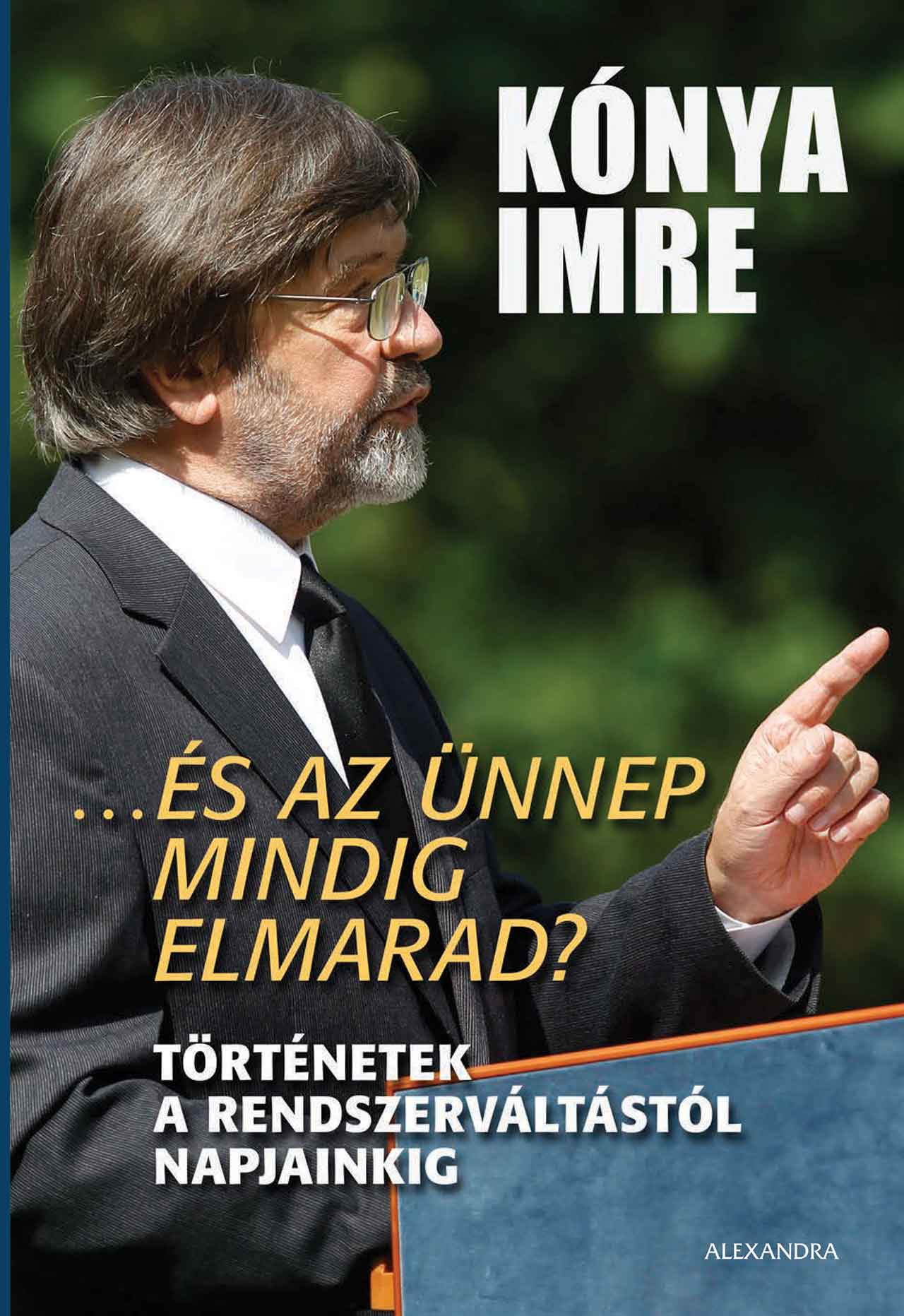
 Anyone who knew what worked in the West could try to import it. Whether small religious denominations or UFO magazines, freedom after the change of regime was almost unlimited. During the transition itself, however, there were a few interesting things. Politics matters in this period, so unusually I also need to touch on political content. In that connection I can confidently recommend Imre Kónya's book, which presents the process from the inside: from the perspective of a politician working on the change of regime, rather than a disappointed ordinary person. Because the latter group's memories are rather different.
It would be difficult to run games in the period without mentioning many people's disappointment and its causes. There are many reasons why those awaiting change and justice never received their catharsis. We did not have a revolution like Romania, or Solidarity like Poland. Here, the Independent Lawyers' Forum and the Opposition Round Table initiated by the lawyers involved in it brought about the change of regime.
In Call of Cthulhu, the danger is not only real madness but also a character being considered mad because they think differently. Likewise, leaders capable of manipulating people are equally useful resources to political parties spreading ideology and to cults. Many aspects of the change of regime can be explained on that basis too. It is easy to say that tracing the new Hungarian democracy back to Stalinist leaders might be Nyarlathotep's joke.
It was not only 1956 that went without justice
My fellow editor began the second part of the article on the 1990s with a personal story and an observation. In Call of Cthulhu, there is the USA and there is the USA. And Horror on the Orient Express, which he did not mention. So it is not only translations turned distortions and Hungarian fan-made material that have Hungarian connections.
The lack of European material cannot be traced solely to Lovecraft, however. It also comes from the fact that we have a different culture here. After its brief introduction, the article on the 1990s immediately began with historical background. Producing a good supplement for the American market would be a very difficult undertaking: even more would need explaining, making it long and cumbersome.
At Imre Nagy's reburial, the proposal arose that the revolution's non-communist victims should be rehabilitated too. The book by Imre Kónya, who brought the Opposition Round Table together, points out that this goal could not be achieved. The great national reconciliation the politician expected never materialized. The issues left untouched then lead some people to question whether the change of regime was “real,” while others speak merely of a “lawyers' change of regime.”
Viewed legally, there is no disputing that Imre Nagy's trial was unfair. An unfair proceeding condemned him to death; he was executed and became a martyr. Viewed from the other side, he did not choose the death sentence. The chant at the start of the revolution, “Imi Bolshoi, idi domoi,” wanted to send him back to Moscow. From there he played for his own escape, sacrificing everyone. Those who died because of that deserved redress too. And the Nuremberg trials were politically commissioned as well; the Nazis were not tried under Nazi Germany's laws either.
If we make him a hero, we glorify dishonesty and a former communist murderer. That decision alone can undermine the moral foundations of the brave new Hungarian democracy claiming to be 1956's heir. What if we build a democracy where the norm is to judge politicians and leaders not by their backbone, integrity, and honor, but to make them heroes according to how many people on the other side attack them? We can see the consequences. If the site still exists in twenty or thirty years, we can write an article about that too, because young people then will no longer remember it.
The lawyer and politician who worked on the change of regime can rightly say that electoral law and the constitution changed, there is a multiparty system, political crimes no longer exist, many guarantees of press freedom entered the law, anyone can start a newspaper, and so on: countless legal considerations show the transition to be complete. The other side says it remained a system run by corruption, backroom deals, and cronyism, concealed by a carefully constructed personality cult around communist leaders who were hardly innocent lambs.