
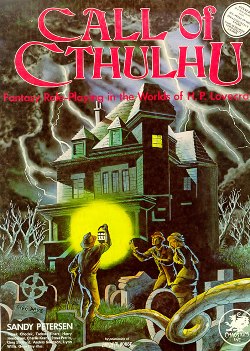
 1981: the Call of Cthulhu roleplaying game was published. In Hungary, the Kádár regime was still in full swing. Obtaining the boxed set would have been nearly impossible, if only because an ordinary person would have struggled to acquire a passport valid for the West, the appropriate foreign currency, and much else besides. Even if somebody brought it in, most people did not know English: Russian was compulsory in school. Children were Little Drummers and Pioneers, preparing for Pioneer camps and construction camps, not RPG parties. When we talk about modern rules being simple, fast, and small, it is worth knowing that the BRP rules booklet in the box was sixteen pages long. But rebellious teenagers did not know about it, so the typewriters acquired here and there produced political samizdat rather than rulebooks.
Instead of exploring mazes, dungeons, and caves, a new concept appeared, compared in the specialist literature to the layers of an onion: characters dig deeper and deeper into the story, step by step, making ever deeper discoveries. Narrative works on an entirely different basis here. Of course the truth is a little more complicated: if adventures have one kind of structure, it is natural for the next to have it too. Once there are two kinds, it is natural to wonder whether a third path is possible. Surely it surprises no one that by 1984 AD&D also had Dragonlance Chronicles, showing another possibility with a story following the novel cycle. But the new structure brought new challenges. To let characters notice what was strange in many situations, it helped if players understood how the world worked. It was natural for Call of Cthulhu to begin opening toward the then-present day.
Not many European supplements?
My fellow editor began the second part of the article on the 1990s with a personal story and an observation. In Call of Cthulhu, there is the USA and there is the USA. And Horror on the Orient Express, which he did not mention. So it is not only translations turned distortions and Hungarian fan-made material that have Hungarian connections.
The lack of European material cannot be traced solely to Lovecraft, however. It also comes from the fact that we have a different culture here. After its brief introduction, the article on the 1990s immediately began with historical background. Producing a good supplement for the American market would be a very difficult undertaking: even more would need explaining, making it long and cumbersome.
Surprisingly, this era was also the last when the isolation that helps horror stories was still natural in many places. The Internet and mobile phones changed many things, as did more modern investigative methods. The 1980s and 1990s are a period for which we can obtain firsthand information to build on, but where numerous new developments have not yet disrupted the workings of investigative adventures. Moreover, the world order was changing, so in many stories a character had to decide why something was strange: was it a clue, or merely a change in the world order? And here at home in Hungary, we were effectively sitting in the middle of it all.
Although you appear not to be in Hungary, you are reading an article about Hungary in Hungarian. Hungarian reality is probably not unfamiliar to you. Whether you run games in Hungarian for Hungarian players or in a foreign language at a local club or online, a Hungarian setting offers you a good opportunity. You know the situation where a caller has to be kept on the phone so we can find out where they are? That film cliché is nonsense today. Modern telecommunications systems have to know the exact route to the caller. IP-based geolocation has also been around on the Internet for a long time. Many websites can offer conditional content accordingly. But in Hungary at the time of the change of regime, voice was not transmitted digitally, and many telephone exchanges were electromechanical.
There was no Caller ID, so it was difficult for the recipient to determine who had called. All right: the caller could be traced. At the exchange nearest us, someone could check where the call connected to us had come from. A local line? Or another exchange forwarding the call? In the latter case, on a circuit-switched network you saw that the call had come from another exchange on cable X, wire pair Y. Fine, then you had to check what exchange X had connected to wire pair Y, and where that had come from. Often even manually. If attention was paid to it, there was a definite time needed to trace a local call or a long-distance call, providing the basis of the film scene where the caller must be kept talking for a while. Of course, even then the timings in films were presented so that the police would succeed.
But as more people reached the West, some sort of computer became available to more people too. In computer gaming, individual games referred to roleplaying games. And of course the Cthulhu Mythos inspired many games. Novels slowly found their way into the country as well. And, according to the cynics, so did AD&D. More and more adults faced the problem that young people these days behaved very differently from the way they themselves once had, and they could not decide whether many things were dangerous or harmless. As the change of regime approached, many ideological debates also gained space that would not really have been possible before.
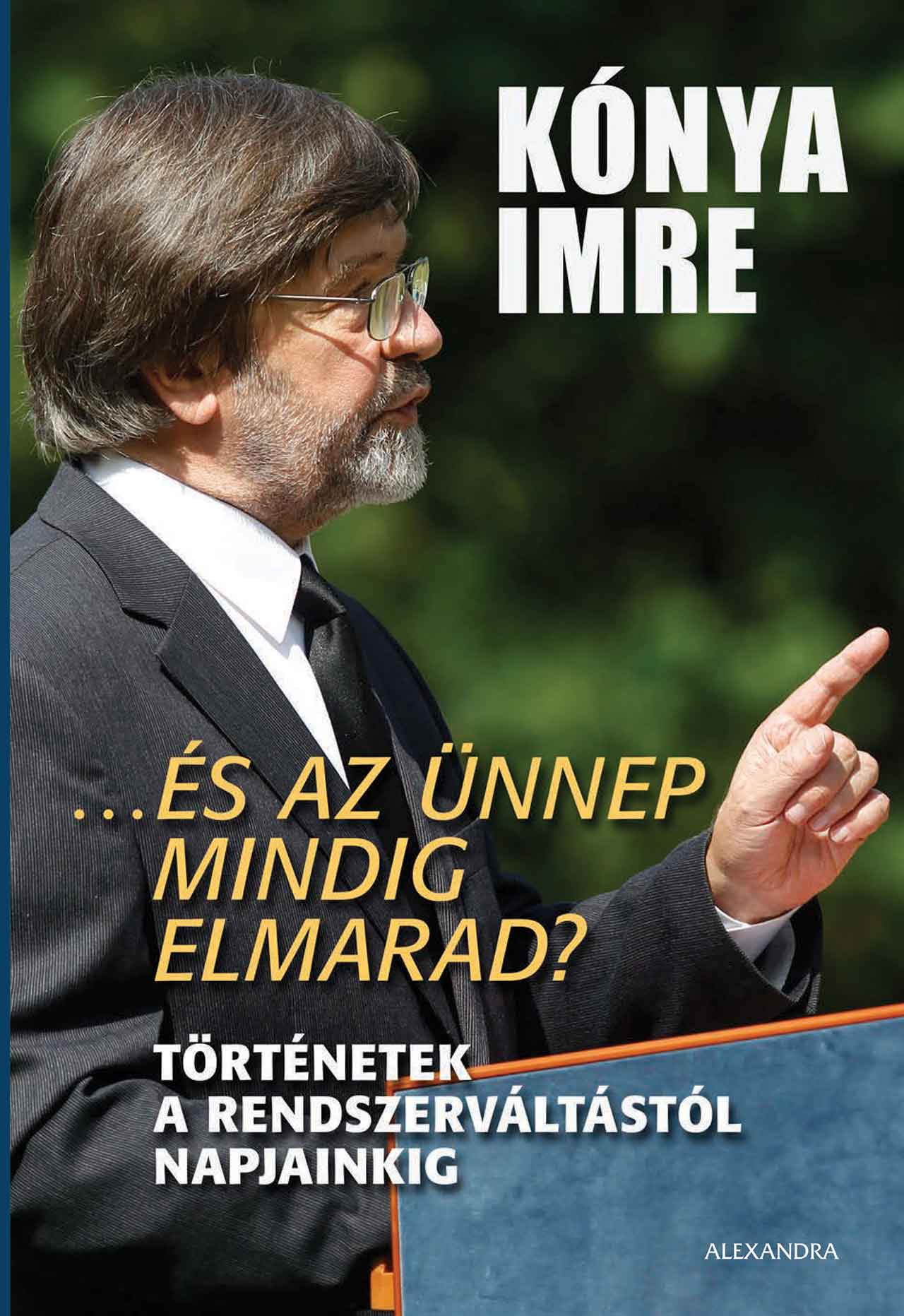 Anyone who knew what worked in the West could try to import it. Whether small religious denominations or UFO magazines, freedom after the change of regime was almost unlimited. During the transition itself, however, there were a few interesting things. Politics matters in this period, so unusually I also need to touch on political content. In that connection I can confidently recommend Imre Kónya's book, which presents the process from the inside: from the perspective of a politician working on the change of regime, rather than a disappointed ordinary person. Because the latter group's memories are rather different.
It would be difficult to run games in the period without mentioning many people's disappointment and its causes. There are many reasons why those awaiting change and justice never received their catharsis. We did not have a revolution like Romania, or Solidarity like Poland. Here, the Independent Lawyers' Forum and the Opposition Round Table initiated by the lawyers involved in it brought about the change of regime.
In Call of Cthulhu, the danger is not only real madness but also a character being considered mad because they think differently. Likewise, leaders capable of manipulating people are equally useful resources to political parties spreading ideology and to cults. Many aspects of the change of regime can be explained on that basis too. It is easy to say that tracing the new Hungarian democracy back to Stalinist leaders might be Nyarlathotep's joke.
It was not only 1956 that went without justice
My fellow editor began the second part of the article on the 1990s with a personal story and an observation. In Call of Cthulhu, there is the USA and there is the USA. And Horror on the Orient Express, which he did not mention. So it is not only translations turned distortions and Hungarian fan-made material that have Hungarian connections.
The lack of European material cannot be traced solely to Lovecraft, however. It also comes from the fact that we have a different culture here. After its brief introduction, the article on the 1990s immediately began with historical background. Producing a good supplement for the American market would be a very difficult undertaking: even more would need explaining, making it long and cumbersome.
At Imre Nagy's reburial, the proposal arose that the revolution's non-communist victims should be rehabilitated too. The book by Imre Kónya, who brought the Opposition Round Table together, points out that this goal could not be achieved. The great national reconciliation the politician expected never materialized. The issues left untouched then lead some people to question whether the change of regime was “real,” while others speak merely of a “lawyers' change of regime.”
Viewed legally, there is no disputing that Imre Nagy's trial was unfair. An unfair proceeding condemned him to death; he was executed and became a martyr. Viewed from the other side, he did not choose the death sentence. The chant at the start of the revolution, “Imi Bolshoi, idi domoi,” wanted to send him back to Moscow. From there he played for his own escape, sacrificing everyone. Those who died because of that deserved redress too. And the Nuremberg trials were politically commissioned as well; the Nazis were not tried under Nazi Germany's laws either.
If we make him a hero, we glorify dishonesty and a former communist murderer. That decision alone can undermine the moral foundations of the brave new Hungarian democracy claiming to be 1956's heir. What if we build a democracy where the norm is to judge politicians and leaders not by their backbone, integrity, and honor, but to make them heroes according to how many people on the other side attack them? We can see the consequences. If the site still exists in twenty or thirty years, we can write an article about that too, because young people then will no longer remember it.
The lawyer and politician who worked on the change of regime can rightly say that electoral law and the constitution changed, there is a multiparty system, political crimes no longer exist, many guarantees of press freedom entered the law, anyone can start a newspaper, and so on: countless legal considerations show the transition to be complete. The other side says it remained a system run by corruption, backroom deals, and cronyism, concealed by a carefully constructed personality cult around communist leaders who were hardly innocent lambs.
In any event, if that is the standard, the system itself is not honest. It therefore cannot fight corruption present at every level of the state. Fuel laundering went on with corrupt customs officers and officials: illegally turning lower-taxed heating oil into motor fuel. Organized crime appeared with it. And if many people were unhappy with the change of regime, along came a Socialist victory. That did not end fuel laundering; it merely arranged things so that it was only worthwhile on a large scale and required bribing somebody higher up.
Those who made a great deal from it multiplied their wealth by buying up compensation vouchers and exploiting the abuses of privatization. They became life's emperors. But this story, the real Hungarian Wild East, deserves an article of its own. What is certain is that the new petty kings contributed to disappointment just as much as the fact that informers' names mostly remained hidden. Just as the supposedly democratic system behaved this way, many voters did not consider the MSZP–SZDSZ government socialist either. Fuel laundering and predatory privatization were what it took.
Many even point to the GDR and the DPRK—North Korea—and remark that back then, too, those calling themselves democratic were anything but. And that personality cults still surround many self-appointed leaders. Instead of a democracy based on responsible choices between programs, many did not experience a system based on personality cults and shady deals, with its petty kings, as an improvement in quality. There were still plenty of people alive whose loved ones had become victims of the communist system when Imre Nagy was deeply involved in its crimes. Nobody concerned themselves with those victims; Imre Nagy was made a hero.
Coming, coming, coming: M.A.G.U.S., the book pirates
A “lawyers' change of regime,” concerned with legislative work. As long as most of the economy belonged to the state, there was far less need to deal with considerations such as intellectual property and protecting brand names. During the transition, however, laying the foundations of a fair market economy mattered. Yet some new ground rules still took a long time to emerge. For example, “new Star Wars novels cannot be written without permission.” Just as not everyone paid for such licenses, not everyone paid for software either. Honest people who accepted the extra costs were placed at an almost insurmountable competitive disadvantage.
Two old lines from Hofi come to mind: “My elder brother was an Arrow Cross man,” “My younger brother is a Communist.” Everybody knew what went along with that duality, and which brother got ahead under communism. Many say the system favored turncoats after the change of regime too.
For you as GM, however, disappointment, though an unavoidable subject, is nowhere near as significant as the changes that really did happen and their effects. The border opened, after all. Many things came in, including many strands of esotericism, and with them one can say “the cultists arrived.” There were many new kinds of things to investigate, and many adventure opportunities you could not have run well in Hungary a decade earlier. The country changed; even police cars acquired “We serve and protect” stickers.
But there was more. If you remember the beginning of the article, I mentioned the absence of Caller ID and the electromechanical telephone exchanges. And there were no mobile phones at all. There was VHF radio and CB, however. Telex too, for example. Even telegrams. With the latter, dictated text was transmitted electronically and printed by a machine at the post office, from where the postman delivered it much faster than a letter. The price depended on the telegram's length. There were also decorative telegrams, printed on something other than a plain sheet. The device used “resembled a typewriter in many respects”: text went onto paper one letter at a time.
You also had to wait for a telephone after ordering one. Yes, this situation appears in Imre Kónya's book too, along with an interesting anecdote about perhaps the most expensive telephone line. But more important than a politician's telephone is the story of what slowly happened to everyone's telephone. In many respects we were behind neighboring countries then. They already had coaxial-cable backbone networks, while we still had conventional telephone cables with numerous wire pairs, often using paper insulation combined with a lead sheath.
Because modernization was urgent here, we quickly switched to fiber-optic cables, while those with better networks fell behind. Later, the more expensive but better infrastructure and higher expectations also influenced competition between telecommunications providers. This affected the spread of mobile phones in Hungary too, with consequences still visible in today's telecommunications market. But back then, alongside landline telephones and conventional terrestrial television, the most one could consider was a satellite receiver brought in from the West. Oddly enough, the loud advertisements of the Western world represented a dream to aspire to then, rather than something to change the channel away from.
Part of the change and the Wild East situation was that, although there were reasons to speak of a “lawyers' change of regime,” legislation lagged well behind events. One of the sidebars mentions abuses in book publishing, some piracy, and old networks of connections. The law left room for those too. And, for example, for television shows where ten minutes of programming contained fifteen minutes of sold advertising time, thanks to all the product placement and direct advertising of the products shown in exchange. The then-popular TV series Kisváros was one of the best-known examples of that latter method.
I mentioned the series Kisváros. It is continuously available on YouTube and sometimes on the public broadcaster's website. What comes to mind about these productions? Some say they were good by the standards of the time, awful by today's. Others say advertisers dictated what happened and when, instead of dramatic considerations, and alongside that the makers never worked out whether they wanted to shoot a weak comedy, a soap opera about local life, a crime series, or perhaps an action series. The depths and heights of the acting recall, and approach, the 1980s action stars who could express exactly one emotion. From below.
With a wish list along the lines of “put some life in it, some action, and who knows what else,” no subject made it into the series in a credible form or at an acceptable standard. But there are a few things even its creators could not mess up. In costumes, hairstyles, and so on, they neither wanted nor were able to depart from the fashions of the time. Some advertisers reflect the contemporary market. We see restaurants, hotels, and even a car showroom considered fashionable then. Admittedly, we now know that despite sponsoring public television's series partly about “law enforcement,” Conti Car was one of Hungary's centers of organized crime. Still, the series lets us see the showroom, and a local heavy chasing away an actor playing a petty criminal.
In the series, almost everyone is protected by the border guards working with the police. The company entangled with organized crime is protected by its own heavies. Reassuring customers worried about the showroom's security was not why the advertiser demanded that message. An MLM network of the time appears too, along with contemporary televisions, travel opportunities, and at least one contemporary band. All of those can serve as sources even if the series itself is weak. And its weaknesses also indicate the standard of Hungarian television at the time. Of course, during the series' last few years, commercial competitors were already present.
Viewed from another angle, however, the television landscape was about more than quality, dubious financing, excessive product placement, and the products appearing through it. Or the way Kisváros became visibly cheaper when that was banned. It also included the nationwide commercial television channels that appeared in 1997, the Hungarian-language satellite broadcasts that preceded them and entered cable providers' offerings, and, a little earlier still, the era of satellite receivers and video players brought in from the West, offering alternatives to state television.
The emerging supply created demand for similar productions. Just as Bud Spencer's films were followed by Bujtor and, with him, Ötvös Csöpi, the Hungarian Piedone dispensing slaps in the spirit of socialist morality, Western action films created a demand here for productions featuring at least pistols and assault rifles. Foreign telenovelas also had to be copied, grandly dubbed “tele-novels” with a little Hungarian pretension. The latter was Szomszédok. True, episodes arrived less often, and it could sometimes be so boring that even my “nonexistent sense of drama” would have been more likely to improve it than worsen it, but at least we traveled from the newest socialist housing estate, Gazdagrét, to the point where Feri Vágási “got into the Internet.” An even greater catastrophe: the Internet got into Feri Vágási too and made a meme of him.
Alongside the terrible memes, it matters that Szomszédok tried to address a great many current issues, whereas in the somewhat identity-confused Kisváros, crime plots mixed with advertising. Szomszédok stayed on the housing estate. In Kisváros, even the setting was gradually written out. One episode followed a policeman transferred from the fictional town of Végvár near the western border—the filming took place in Szigetvár—to Nyíregyháza. Naturally, that left out the border guards, despite a people smuggler being involved, their local action company, and even the regular cast member Chief Sergeant Hunyadi, later a lieutenant. Even the chief policeman, instead of sampling the whole menu, seemed now always to choose a small Wiener schnitzel. Sometimes in a bun from the local snack bar.
By then, however, the series had grown flat for another reason too, connected to an important step in the history of the change of regime. As I wrote on the previous page, the story is about heating. Many people heated their homes with oil stoves then, using so-called household heating oil. In practice, this was diesel fuel that had been marked and that the authorities tried to make unusable in diesel cars. Many people converted it back, of course. This was the biggest corruption story of the 1990s. At first it operated on a small scale, but everywhere across the country. Then, under the MSZP–SZDSZ government, things were arranged so that people had to be bribed at a much higher level, allowing larger groups to sweep up the criminal market. The gangs strengthened this way soon controlled everything, from protection money and whores to drugs. Their takings could buy compensation vouchers below face value, immediately multiplying their ill-gotten wealth.
That provided excellent material for Kisváros's crime stories, as did the wholly new kinds of crime appearing after the border opened. What that series resolved through investigation and action, the heroes of Szomszédok could express horror over whenever there was no other current political issue. But there were always other political and public affairs issues, precisely because of the change of regime: a new tax, pension-system changes, copyright reform, examples of various businesses and the risks involved, and changes affecting life in apartment buildings.
Until 1990, the problem was understandable. From 1990 to 1994 the situation was strange, because even the public media was not really pro-government. The subjects had to be addressed. Feri Vágási got into the Internet during the 1994–1998 period. Alongside mentions of topics like that, government propaganda fitted perfectly well. Day-to-day political propaganda and the shameless self-promotion of numerous state institutions, all crammed into Hungarian TV series. If we take that period as a model, I would not be surprised if TV2 decided to show in its daily series “a woman raped by migrants,” “a garden ruined by migrants hiding and passing through,” or “a driver getting into trouble because migrants force their way onto his truck, and his family left without an income.”
(To be continued)