
Much has changed since the 1920s, and most people never even think about what air travel brought. The fastest widely available means of transport then was the railway. Trains could reach 130 km/h, although average speeds were lower. Yes, we saw greater speeds in motor sport, but suitable roads were not widespread, and in 1920, for example, cars were not a mass-market product. In the 1920s, being able to reach someone by telephone at the right time was not a given either. Radio, however, already worked. It was just difficult to encrypt, and not everyone had a suitable transceiver. Crossing the ocean took weeks, so even looking at a truly rare work in a library was no trivial undertaking.
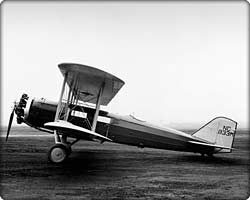 In the early 1920s, aircraft were not widely available as a means of transport either. Air travel existed, of course. But a Boeing 40, primarily intended to serve state-subsidised airmail, carrying two passengers alongside half a tonne of post was hardly transport for the masses. The Boeing 40B-4 already had four passenger seats. Add up every variant and eighty were built. A few similar aircraft were on the market too. A cruising speed of 169 km/h was not much faster than a train could achieve, while aircraft ran less frequently. The Ford Tri-Motor appeared in mid-1926. Yes, Henry Ford's company was behind this aircraft. It had ten seats and 199 were built, but its cruising speed was only 145 km/h.
Of course, airmail and photography also meant photographs could quickly travel great distances, and photos requested from elsewhere could reach the characters. A telephone discussion was another interesting option. Need I go on? These things certainly made the world smaller for the characters. But for Lovecraft this was normal, and he could readily portray isolation in that environment. That it would have been even easier under gaslight in the 1890s? That in the Middle Ages even the next village could count as "a long way away"? He did not need to concern himself much with that.
If you GM in this period: Railway timetables may matter for travel: connections, waiting times and types of train. We can mention buses too, but many were slower and less comfortable. If the characters try flying, the two- to four-seat aircraft, infrequent schedules fitted around the postal service's needs, dangers and uncomfortable journeys can play important roles in an adventure. If they want to contact someone, the questions are where there is a telephone, who answers it, and whom they can reach and when. Of course, the world's most important locations have telephones. They did even earlier.
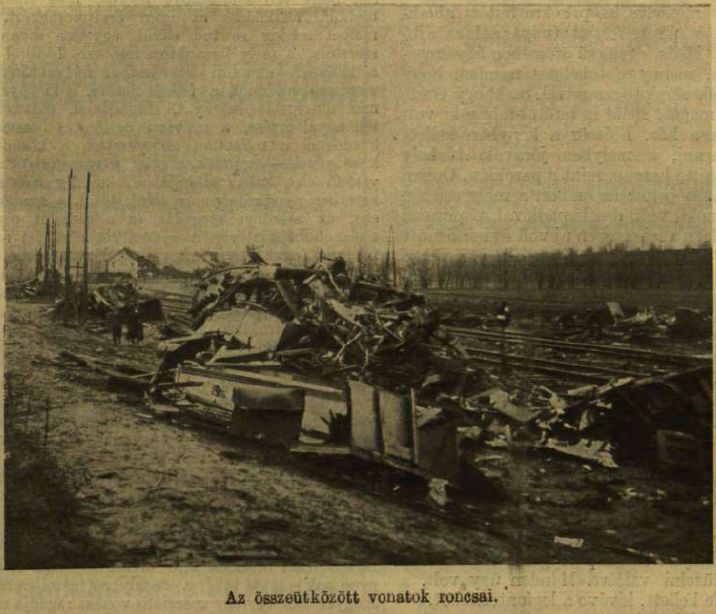 Rail travel was still far from safe in this era. What does that mean? Rail traffic was already substantial, but steel-framed carriages only began spreading in earnest after 1930, and major progress in signalling and interlocking also came afterwards. A substantial proportion of accidents are absent from the English Wikipedia article for lack of English-language sources. Among slightly earlier accidents, neither the Dorozsma nor the Herceghalom disaster appears on the relevant list. The first was in 1907, and we know that one passenger had survived another railway accident two days earlier—that one is missing from the list too. The second was in 1916. I do not believe the list for the twenties is complete. But I do know that wooden-framed carriages were still widespread then.
Those could be completely destroyed in an accident. If you narrate a similar crash, even witnesses can be severely shocked, losing Sanity. Incidentally, such an accident can interrupt a rail connection for days. And if we start from novels, we soon notice that, although railways withstand weather better than carts or contemporary cars, weather can stop trains too. Getting to a destination is uncertain, and telecommunications are often unreliable as well. There is still material to build on here.
By 1930, the Junkers Ju 52 appears. Early versions could manage around 160 km/h; later versions could reach 222 km/h. The American competition? 1933 brings a somewhat different situation: cruising speeds above 300 km/h. That is clearly faster than a train. The DC-2 was still a slower competitor, while the DC-3, still in use today, offered a cruising speed of 333 km/h and could carry as many as thirty-two passengers. Meanwhile, Boeing was developing too.
Alongside this, flying began to become a mass activity. Production figures now ran into the thousands, making aviation more accessible. An entire party can get tickets on a thirty-two-seat aircraft. Many things change in this period.
Down on the ground, the Ford Model A in 1927 and later the Model B laid the foundations for mass mobility. Telecommunications developed too. Cynics say bootleggers created steady demand for ever faster and more powerful cars. The fact is that this was the era when, alongside the "motorised cart" and Model Ts made identical out of necessity, large numbers of stronger, better cars appeared. Many other manufacturers could be mentioned, of course, but Ford brought mass production, and the Model A was already popular with hot-rod builders.
In the 1930s, streamlining appeared alongside aviation's growing reach, metal-framed trains became widespread, and yesterday's top speed soon became an average speed. Travel became faster and safer. A little snow was less likely to stop it.
Shipping grew faster too, making the world considerably smaller. After that, of course, preparations for war and the many precursors of the Second World War created a new situation. In Germany, the autobahn and many other projects were under construction. Like most dictators harbouring megalomaniac dreams, Hitler wanted to create something lasting. But history does not remember him as the father of the autobahn or as someone who built his country's economy with many ingenious financing tricks. His dreams soon became nightmares.
Telex was an achievement of the 1930s. Its network still had to be built, of course, and it mainly served businesses. Even so, the world became smaller for anyone with access to a telex machine somewhere. All right, I know: you could just as well dictate text over the telephone, which was more widespread. But a telex message arrived even if nobody looked at it until hours later, and the answer could arrive in the same way. At most, of course, the novelty lay in not needing trained staff to operate a telegraph or sending a telegram with uncertain delivery and having to consider what could be entrusted to the operator. Instead, messages were easy to send.
Isolation, once an everyday situation, increasingly became exceptional enough for characters to notice in its own right. When such situations were still commonplace, they did not prompt extra caution, and any ordinary or supernatural attack exploiting that vulnerability drew attention to human helplessness. Once isolation no longer represented the everyday norm but an unusual, ominous situation that established the atmosphere and warned characters to be careful, the world had changed.
In the immediate run-up to the war and during the war years, war itself could be the source of isolation. But in this period, Hitler's occult experiments and many other things also attracted governments' attention, so characters were rarely left alone with a discovery. The world had become more alert.
After the Second World War, the Cold War and the Iron Curtain became sources of isolation... Yet technological progress in telecommunications and transport did not stop. Indeed, civilian applications of wartime developments once again enabled fairly rapid progress. Reconstruction was the other important factor. With road networks, railway lines and many airports needing rebuilding, and much equipment needing replacement, the opportunity to use the latest technology was obvious. The DC-4 had originally been designed as an airliner, but during the war only its military transport version, known as the C-54, was built. After the war, series production of the civilian aircraft could begin. An important point is that it is not a tailwheel design, allowing the fuselage cross-section to remain constant over a longer length. This is the shape of the modern airliner, and it made longer versions—the DC-6 and DC-7—possible.
Cruising speed is also 578 km/h, clearly faster than other forms of transport. The DC-7C could cross the ocean, making a transatlantic journey considerably quicker. We could call this decisive, but in many respects it was already the threshold of the jet age, since numerous wartime projects had worked on jet propulsion. We have already discussed the story of the Comet and its rising American competitors. After the 1950s, the highest transport speed available to the public no longer increased significantly. But how many routes offered it, and how frequently, remained an area of continuous development. And yes, the Boeing 737 became available relatively soon too, making flying cheaper. Modernised versions remain in production today.
With cars, it is no accident that we have to single out models based on pre-war designs. Many new vehicles were considerably more modern. Examples of pre-war designs, however, could sometimes be obtained very cheaply. The Citroën 2CV, the "Duck", intended as a "rolling umbrella", really did make it possible to take eggs into town by car even from smaller country villages.
Radar, introduced in the Second World War, also changed air traffic control's work, while aircraft transponders descend from wartime identification-friend-or-foe systems. Much has changed since, but this still matters today. It remains decisive in allowing airspace to stay sufficiently safe while accommodating so many aircraft.
Following the characters' lives, the innovations of the 1960s are more apparent in telecommunications. The fax machine, operating over telephone lines, appears and spreads widely. We do understand that individual pages of old books can be sent from place to place this way? In another area, it matters that a human first reached space in 1961. The space age had begun. From then on, talking about undiscovered islands would have been much harder. Yet new horizons opened for isolation and distance. In horror, extraterrestrials increasingly appeared alongside the supernatural.
From the 1970s onwards, the world rapidly grew smaller and smaller. Some point to ARPANET. Others to the practical application of space research's results. Others analyse changes in the media's role, and this is when we begin looking towards computing. But the 1970s also bring a decisive innovation in aviation: wide-body aircraft appear. Two passenger aisles seemed more promising than even two decks in many respects, at least from the standpoint of evacuation, though the first twin-aisle aircraft also had a partial second deck. One reason for two aisles? People then believed supersonic flight would soon become widespread and these aircraft would become freighters. A wider hold able to accommodate containers would also have been a great advantage in that case. It did not happen. Although supersonic airliners were built—two types, Concorde and the Tu-144—supersonic air travel never became widespread. Instead, the L-1011, DC-10 and A300 suddenly began competing in this segment.
But Concorde belongs to the 1970s too...
In the 1980s, the spread of computers and data transmission mattered, and this was also when the Iron Curtain loosened. We rapidly approached the situation we know today. After all, the first half of the nineties already had not only the Internet but smartphones too; the commercial Internet spread, we still see cars from that era on the streets, and aircraft built then still fly. Which year did digital cameras begin spreading? When did camera phones, to be promoted to the public, appear even on public television shoots? That is a subject for another series.