
Few roleplaying games have no role for combat. Most players expect their characters to resolve conflicts that way. That is no problem in, say, a fantasy or cyberpunk world, but the question is how it works in Call of Cthulhu. This is, to a large extent, a special kind of roleplaying game, one that raises interesting adult questions, rather than trying, as Summarium did, to make M.A.G.U.S. “more adult” by forcing big monsters into it. Among those questions lurks this: how does the human mind respond to the “incomprehensible”? The Sanity system is not about copying together scientific descriptions of a few mental illnesses with a mediocre system; it puts the character on a downward slope. Similar “as you advance, you also lose yourself” slopes have since reappeared in many other horror games. There is a reason the scientific basis is limited: these are forms of madness no real psychologist or textbook could know, something grounded in certainty. And it looks damn bad if a group plays through several months of decline in five minutes, but spends hours on five minutes of combat. Focus matters, proportion matters, and gradual progression matters even more.
Is someone who loses Sanity points really mad? Well, some PTSD does enter the picture. But that is not the main reason they are sent to psychiatry. It is because the character's real experiences are also identified as delusions. Because their fears and “delusions,” not entirely without foundation, push them out of society. Because after so many truths they believed in have been questioned, and things wilder than their wildest suspicions confirmed, it becomes hard to know what to believe. Departing from the rational person's world view is a problem. They cope with society less and less well, increasingly feel that people want to lock them up, and increasingly will be right. But we know that already provides the basis for a diagnosis, do we not? The ground slips out from under the character, who truly becomes unplayable. But how many kinds of madness does a psychiatrist know in which the patient has seen and learned many things whose existence a rational person reasonably rejects? Where what looks like delusion is actually knowledge? In Call of Cthulhu, this is a bigger problem than PTSD.
Let us go a little further. This knowledge is very easy to connect with other dangerous things. Perhaps an almost forgotten, apparently unjustified requirement of culture or tribe X has a supernatural reason, and a seemingly unjustified cruel custom actually protects society. If the character explains this, they are declared insane. If they do not, and do not even try to establish the appropriate protection, they will be dead. If they act against a threat, they may be a serial killer, a xenophobe, or anything else. If they do not, but know about it and that makes them a target? Dead. One day you are sure something does not exist and anyone believing in it is mad; within a year or two, you not only know it exists but can say you have met it. Your former self would call that madness; you might even seek a psychiatrist yourself.
The above chiefly approaches the issue through the character of play, asking what the player should remember. Next comes the justified point that good horror is about tension, not exciting, balanced fights. Combat is not good for that, because a fight scene can be a way of releasing tension. Another point is equally simple: when characters confront opponents, they can assess the balance of power. If the opponent can be defeated, there is little to fear; if it is unbeatable, there is little to lose. An opponent you never confront and do not know, however, can easily be frightening. Fear of the unknown is also a fundamental tool. So far, numerous arguments have spoken against combat.
I have to admit that when, on the site's earlier version, a girl wanted to start a character in 1980s Hungary who was good with a shotgun, but whose statistics gave her a large Size “for lots of HP” despite her description saying she was small—and chosen, not rolled—I smiled and began to understand why her play elsewhere was the way it was, and what a fellow editor who knew her from another site had warned me about. There was only one problem. She had no chance of fighting in that adventure, and the completely unrealistic character stood out badly, even after corrections with the GM's help. Almost everyone pointed out that combat skills are worth little in this game. If the situation is survivable, you do not need much skill; if it is not survivable, skill is pointless. Most people therefore do not optimize characters for combat, most players will not necessarily demand fight scenes and rattling dice, and we can safely set combat aside.
The problem is that, despite every argument above—and indeed in service of that very goal—a fair few gunfights can be useful, though not against supernatural opponents. The antechamber of a dangerous cult may be a group loudly proclaiming drugs' cultural roots, their connection to shamanism and contemplation, and their religious role. Before them stand many others: users, dealers, gangs, and the street conflicts that come with them. Combat matters here. Not only as part of the world or the path traveled. Much more important is the contrast between those situations where combat and ways leading to it arise quickly, and those where there is no chance of it. No chance, so we cannot gauge how dangerous they are, but we can see victims, hear sometimes exaggerated accounts, and let imagination and fear fill the void.
Do we need good combat skills against these people? No. Even a police officer whose previous firearm experience consisted of accidentally discharging his weapon into his office floor could survive this. Most characters have better chances, either because they are less hated—not a White cop in a Black neighborhood—or because they are more skilled and capable. Combat-monkey characters have little future, while fighting ordinary opponents offers an excellent contrast to fear of the apparently unbeatable supernatural and the tension it creates. In that case, however, we are not thinking of a D&D-style half-day adventure. Investigative adventures are easily compared to television crime series. Consider CSI, where one hour-long episode covers several cases and the characters' roles in the team provide continuity. An adventure series can be run on that basis. But look at a crime series like True Detective, where one season covers one case... Many others could be mentioned. At the other extreme is The Wire: five seasons examine the same case, and even if killing so many characters apparently closes the story, it could readily sustain another five seasons.
That latter pace matters for establishing this contrast, and fits the fact that Lovecraft did not write only horror. Here the characters have things both to fear and to lose, and players can invest work in them. It simply breaks the consensus that a Call of Cthulhu adventure must be one particular kind of supernatural horror. Uncertainty matters much more. And there is a small point about uncertainty: even a positive event can become a source of fear. If a previously committed materialist police sergeant confronts the existence of anything supernatural, even a small, insignificant positive event calls everything he believed into question. If positive miracles exist, supernatural evil might too. Files and suspicions can build an image of a monster that never existed. The character can read anything into the files even if their experience of the supernatural was itself misleading.
The information a medium dreamed was really an inference; their brain simply worked during sleep. The miraculous recovery after visiting a weeping statue is a placebo, and the statue's tears could also have a natural explanation. Yet you can make the character believe in the supernatural. The horror emerging from the files does not stand alone: it suspiciously echoes the experiences of drug users seeking contact with the supernatural. Those are only bad trips, but can reinforce the officer's nightmares. Add Lovecraft's monsters, which you may or may not encounter. The opponent is elusive and unknown, sharply contrasted with a tangible, defeatable world. The contrast between files leading to combat and files outlining a nightmare can matter.
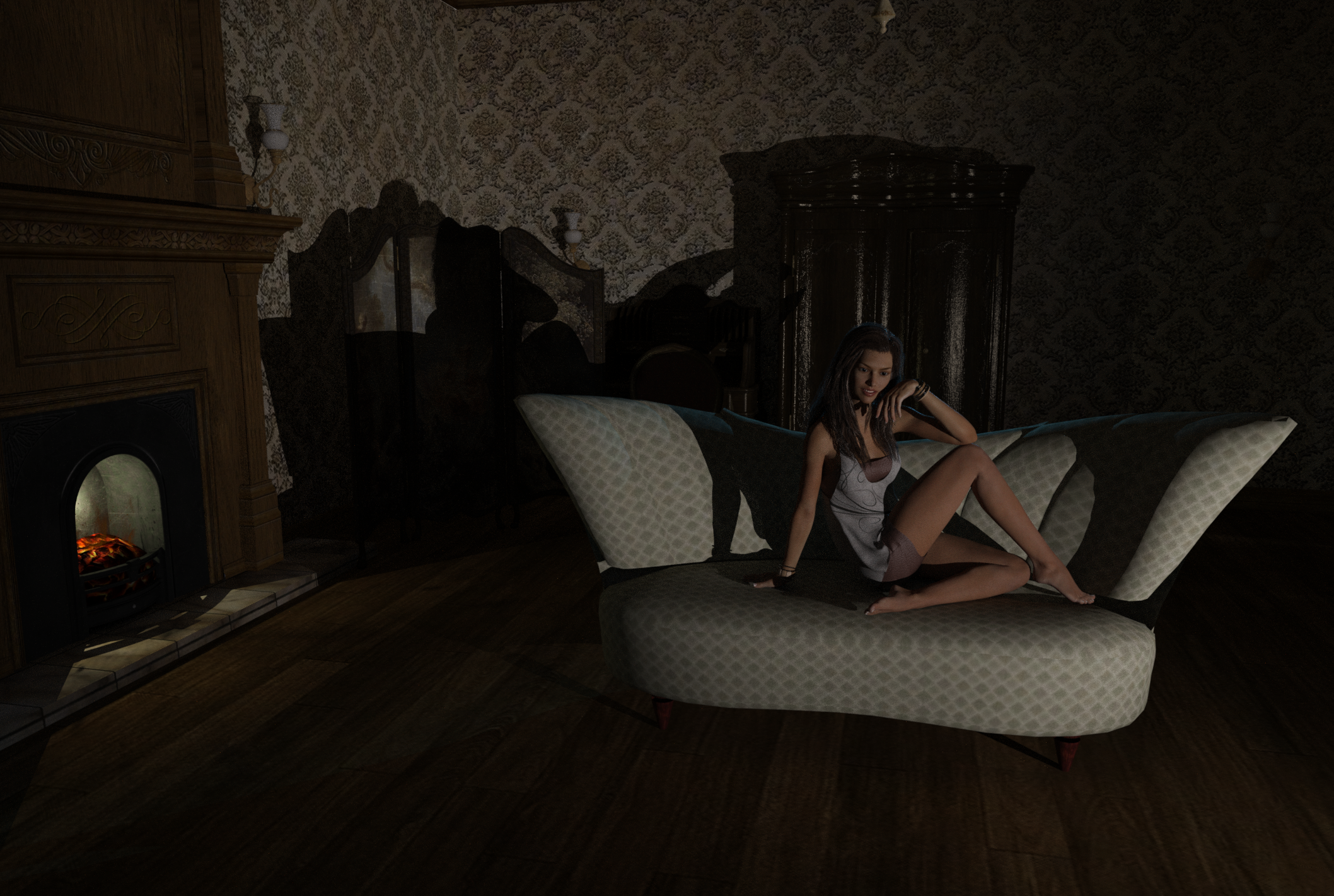 Another excellent case could be “dreams sometimes come true in an old castle hotel.” Not long-term ambitions, but what you “dream up for yourself” there: a new phone, laptop, car, special breakfast... Or even a dead wife. In reality, an unknown designer drug and numerous tricks affecting the subconscious help direct dreams, and people remember them. A contract killer takes care of the dead wife. He leaves clues pointing to many others, some people recur, and he is hard to find, while police face the problem of dreamed deaths. One or two people who asked questions have disappeared too, almost without a trace. The “miracle” and a few other details attracted self-appointed seers as well as advocates of drugs' spiritual role. Some statements come from people who struggle to distinguish a bad trip from reality.
The story's “main enemy” would be easy to defeat and no combat challenge at all, but the characters will probably spend a very long time battling their own fears. The path to a solution exists, but given some freedom, the characters take a much longer, more interesting route, struggling with their fears and imagination. While they cannot see the opponent or know what it is, while they investigate, fear, and even achieve successes in related matters large and small, the adventure shows a sharp contrast between those they can defeat and the one they have no hope even of fighting. Having no chance of a battle of any significance against an opponent, “let alone winning it,” is fundamentally one of Call of Cthulhu's characteristics.
Of course, a cunning game master depicts three poles: the one you fight, the one you fear, and the one lurking unnoticed throughout, an additional supernatural threat. Supernatural horror can therefore be present all along while characters waste time useful for survival on a horror existing only in their imagination. Sustained fear and tension, and the scares that complement them, are thus part of the story, as are the many horrors seen and experienced before and afterward. With combat or without combat? The solution lies chiefly in this particular middle path. If the group insists on fights where they can worry about their characters, they can maneuver themselves into more dangerous situations while confronting worldly threats. Although a realistically played character wants to survive, the player often exposes them to many dangers because the player enjoys that excitement. Give characters room to overcomplicate the case and tilt at imagined opponents, and you also give them opportunities for gunfights with flesh-and-blood people.
To “with combat or without combat,” this modest amount of combat seems an intermediate answer.