
 When the first edition of D&D appeared, even the earliest reviews talked about unlimited possibilities. Since then, many systems and editions have made this promise their main banner. They promise enormous freedom and a system that appeals to everyone. It is easy to wave that promise away: I know how advertising works, this is just marketing bullshit. But fans encounter it repeatedly, and for them it is a constant refrain. If a system is advertised with a promise that is not really true, they may also have reason to rationalise it. So fans of certain systems turn up even in discussions about other systems to explain that in system X, edition Y, you really can do absolutely anything—and everything else too. When this harmful behaviour comes from a system's publisher and fans, I find it hard to let go of the question of how badly the system fails to deliver on its promises. I will defend Anthem and Mass Effect: Andromeda, despite the other marketing bullshit surrounding them, but I will not defend systems like these. And it is no coincidence that I bring up Anthem.
Because Anthem is one of the past year's biggest disappointments in many people's eyes. But there is a small problem. Or perhaps not such a small one. With Anthem, I could say that Origin Access: Premier was still a better deal than Netflix. And that was despite expecting roleplaying and a story because of BioWare, and being hugely disappointed on that front. If, with D&D, I am irritated when someone says I should not mind content that does not belong because, you know, maaagic, wooonder, whatever, then I could also swallow Anthem's many nonsensical muddles. Here it even looks spectacular, and we are not just playing chess. We kill other, "unexplained" monsters on the surface, only here we get the feel of combat instead of the feel of chess.
But when the promised freedom turns out not to work, while the system's fans spam it everywhere, that adds another irritation. And if that already makes me resent the system, it will give me a worse gaming experience than it would in a neutral situation. There are, however, several ways out of this situation. The worse one is when those people stop spamming and making pronouncements and say they will try to GM in a way that accommodates the character I come up with and supports the style of play I ask for. And of course they will help turn the idea into a character sheet, because they can definitely manage that. The better one is when they can immediately add a few mechanical considerations that actually work.
Case study: D&D turns on its head
 I know many DMs do not use it, or use it for something else or in a different way, but in the PHB, Inspiration can also be used so that... If I think in terms of the Fantasy Grounds or Roll20 community, there are far more players and DMs than I could reach offline. Admittedly, that requires enough English to chat reasonably well. If the DM continually rewards playing out the character's background and building on things in the backstory, even when there were not enough points for them, and Inspiration is not a rare reward but a state to maintain, a great deal changes. I will not have a 1-in-20 chance of rolling a one, because I will almost always have advantage. If an ability fits my backstory, I will be better at it than someone whose background does not include it, without having to fit everything into a points budget. Instead of out-of-character tactical talk that undermines roleplaying, the system rewards sustained roleplaying.
The optional rule in the PHB is perfect for this. It only weakens a few abilities, because you have advantage without them; that is harder to solve at the story level, but everyone can make up for the disadvantage with a clever backstory. In effect, we have an optional rule that could be worth transplanting into any other edition of D&D, one that could make the game much more focused on roleplaying and allow it to serve other preferences. All right, many setting descriptions are not like that; all right, plenty of abilities are not like that; all right, I have plenty of concerns about ability-score distributions and maximums that are hard to resolve, which is why we let D&D 5 go. There were problems we found difficult to solve. But the final result is not negative.
- We will play something else together.
- By their own admission, they improved a great deal too.
- If D&D 5 is needed for some reason, it bothers me less.
- I got practical experience with optional rules that can be used elsewhere.
- Despite the flaws, we basically had fun.
At the moment, it also turns out that they absolutely love a concept I came up with for another GM who wanted to prove D&D 5's merits. Interestingly, though, that will not be 5E either: we have agreed on another system.
Case study: Vampire, but not 5E
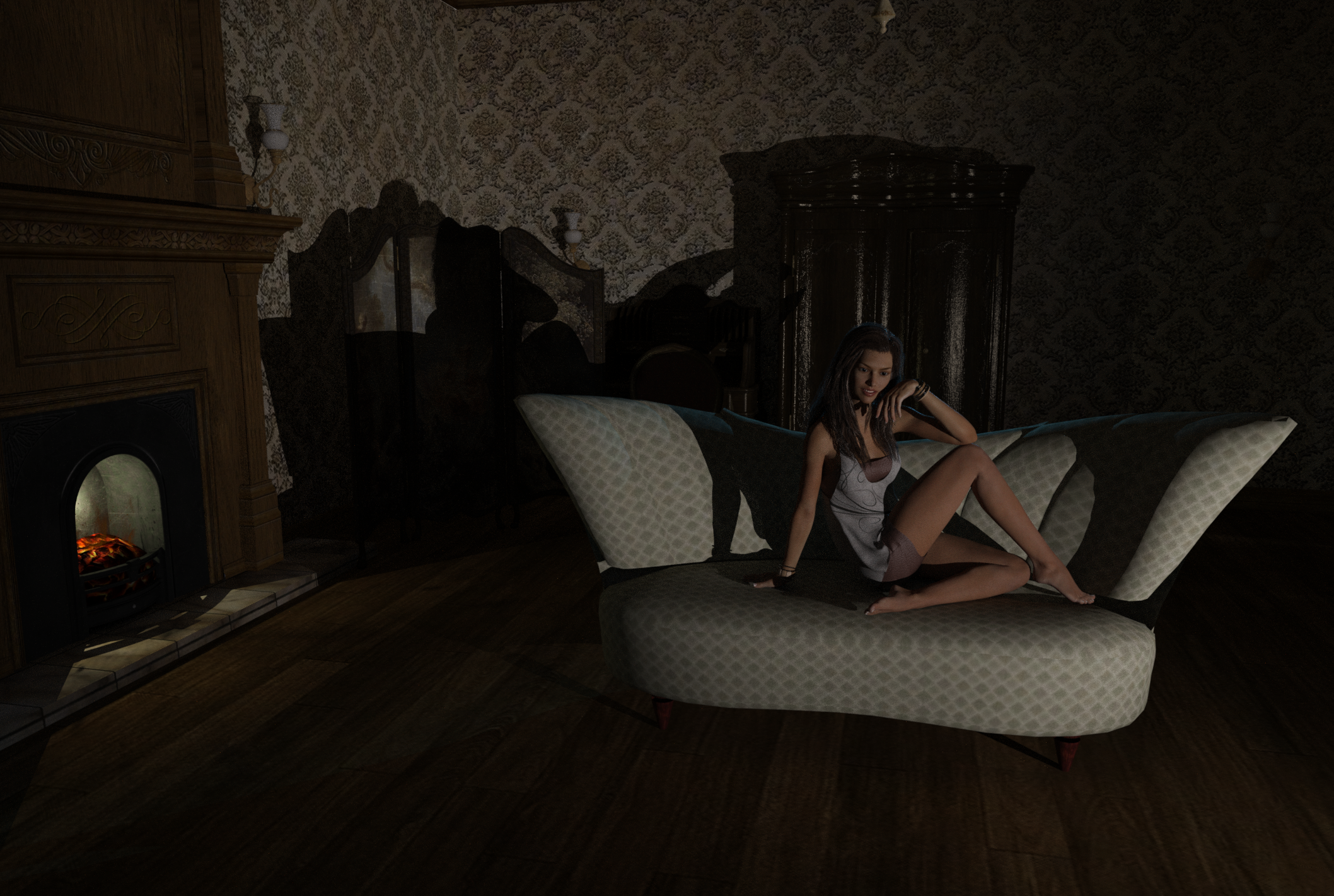 When a fan of a system gives the simpler answer, and we reach the point where they insist they will try to GM in a way that accommodates the character I invent and supports the style of play I ask for, that leads to a character concept. Let us call this character Angelika. The situation here is a little more complicated. We know the situation where someone says, "Think up any character you like; you can make it in system X." We know it, because behind that claim lies the experience that when their players pick "from the menu", nobody ever complains about being unable to build what they want. A troll would now look for abilities and traits that the system has good reasons for making mutually exclusive, write a brutal combination of them on a piece of paper, and insist that this is the character they want.
I did something only slightly worse. I said that in that case I did not care about the system; I would approach the character purely through the setting. And to minimise the chance of including too many incompatible statements—especially unavoidable ones—the backstory would be flexible. Even though this was Vampire, I did not mention a clan. Even the Embrace only appeared as, "This is one possible point in the story for an Embrace." In other words, I did not even establish whether the character was a ghoul, a permanent ghoul, a vampire, or something else with a Merit that stopped ageing. A reasonably plausible backstory within the setting, from a player who did not know that setting in depth: nice and long, and rich in detail.
This is the point where the smile freezes on the face of the seasoned old hand behind the message that he will show me how anything can be done, and everything works when he GMs. The problem is not that the "newbie" cannot work out which clan or Discipline they need. It is that the old hand who said with absolute certainty that his help would get the character made has not been given any guidance on that either. Meanwhile, the points will fail to add up somewhere completely different. Whether there are too many or too few almost does not matter, because when I simply ignore the points while writing the story and write a consistent story instead, I will almost certainly not end up with the number of skills the system says I should take.
And then comes the familiar situation: it cannot work out that way because we need balance, yet we do not really get balance either, because that is more or less impossible to achieve. And I say that they ruined roleplaying and freedom in the name of balance, but we do not even get that. Even here, though, the result is not pure failure. For one thing, I acquired a character concept I like, one I would enjoy playing and want to play. For another, these arguments began before 2000, and Angelika is connected to the nineteenth century, which I researched because of her. That won me over to several AD&D publications suited to exploring the nineteenth century. And of course the next point follows...
Case study: Which way is North?
Since we were discussing this situation in connection with D&D, we also mentioned Mage, among other things, and how a campaign idea would be easier to realise even in that. This was where Sol told a story about how, if many Mage characters reject the Union's paradigm, then when finding directions, for example, they should not rely on compasses and similar inventions either. A compass or moss is a poor guide, because these are not relevant to many paradigms, whereas they are to Technocrats. Wherever astrology or astronomy is an option, the Pole Star is obviously available. Obviously, I cannot say what does and does not fit any other character's paradigm. But the question soon arose of what fits Angelika's paradigm and what does not.
The concept originated in Vampire, so a paradigm had not come up directly. But the relationship between faith, science and technology was fundamental to the concept. While these have been—and still are—set against one another, there is a period, as we also see in Dracula, for example, when they are on the same side. Behind this might lie Saint Thomas Aquinas's view that "at the bottom of the glass of science you will find God", or equally the idea that the capacity for scientific and technological progress is a talent that one of Jesus's parables calls on us to invest and put to use, keeping in mind, of course, the good purpose expected under the greatest commandment. Many such thoughts shape the character's views on faith and science, and from those a personality. But this immediately establishes the paradigm too.
She certainly cannot hate the Technocrats, because they are her neighbours. She can be angry with them, but then she is "angry for their sake", and motivated by improvement and a solution that is good for everyone, including them. At the same time, she considers the development of paradigms, and the openness and constructive debate involved in it, important. Why should she not use a compass? The problem is that North has several definitions. North as defined by the axis of rotation, and magnetic north, to mention just two. Depending on which definition we accept as North, the compass will be problematic to different degrees. It approximates magnetic north, but things can interfere with it. Simply accepting this as North would lead to problems.
For example, because someone would challenge many of the results. More accurate instruments are needed to determine direction, along with various corrections and calculations. Technological development, planned obsolescence, the right to repair, favourite shops, daily habits and many other details came up. And that led us to realise that even an experienced Mage GM can be pleasantly surprised when a player has thought through this much about a character and her paradigm. Fans often do not think this much through, particularly those arriving from Vampire.
And the lesson is...
If this is where the best characters, campaigns and adventures come from, it would be useful if we could think in at least a similar way and produce similar characters and gaming experiences at other times too. But when a system we know and like is our starting point, we tend to choose from the menu instead of tackling the potentially harder task of realising an idea that fits the setting. That is why persuasion of this kind can provide unusual inspiration. And that is not a particularly good state of affairs.