
 Whether discussing a new system or an old one, one of my important claims always begins with the fact that someone for whom M.A.G.U.S. is roleplaying, or fantasy roleplaying, evaluates a system entirely differently from someone for whom M.A.G.U.S. is merely one of many games they play. And I often have to repeat the same fundamental truth: expectations differ greatly in these two cases. Of course, the counterargument immediately flies: they play for the world. The M.A.G.U.S. project started from no worse a position than The Witcher; today, the two are very much in different leagues. Enthusiasm for the world, story, and narrative also brought increasing numbers of female players. Alongside roleplaying and computer games, they express their enthusiasm through cosplay, for example. In fact, the changing target audience defines the modern system. But the world and narrative matter.
The world and narrative immediately raise the relationship between the literary background and the roleplaying game's world. And straight away we arrive at three serious problems. One is that, alongside questionable rulebooks, literary works of questionable quality introduced canonical elements that gave many game masters gray hairs and harmed the game, because many writers decided they did not want to abide by a few of the game's basic premises or its technological level. And players, not entirely without justification in many respects, want to play characters like the heroes of the novels. So the worlds of the game and the literature must somehow be brought closer together. The promise duly arrived, and so did the responses...
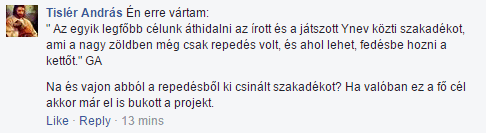
The strange situation is that, knowing the creative team, I would largely agree with András Tislér's assessment, yet knowing the possibilities, I would also argue with it. Fundamentally, three entirely different answers can be given to the question above. The obvious answer seems to be that much of what has been written is canon, and played Ynev must be brought closer to it. Often risking even more contradictions and illogicalities, forcing every mistake in sometimes questionable writing into the game as a canonical world element. Some people try this, including well-known Ynev scholars on major sites, and if someone believes this is a good direction, they can take it with the new system.
Anyone troubled by Ynev's inconsistency and by often retroactive changes making life-path campaigns harder will indeed find this precedent difficult to swallow. And Andris Tislér is right that while the people making the decisions remain unchanged, we have no reason for optimism. András Gáspár and company have not cared much about the need to handle things when they happen in the game. I remember an interesting example. We can quibble over details of how well a priestess of Ellana fights. She does not have a witch's combat values; hers are better than an average person's or average soldier's, and she receives weapon use beyond the compulsory priestly basics... All arguments untouched by errata. If we start from the fact that the book says master proficiency, and not everyone hunts down errata, we get a different picture.
Certainly not one in which priestesses of Ellana do not learn to fight. Yes: a character who cannot even learn weapon use, for religious or other reasons, could be interesting, but that is not what the system shows. Yet there is something more important: the system intends player characters to be adventurers who develop and can defeat numerous opponents in combat regardless of class or faith. Whether defending a temple or their companions. In that case, they too would receive their titles and ranks; founding an order and much else could follow. But when asked about this, the answer is not, yes, if it happens in play, here is how to support it. The answer is that we imagine things differently. In other words, let the girl in the player group be the one excluded from the common reward. Not because of the described world or the logic of events, but because of the creative team's writers' whims.
Beyond the fact that, although I loathe SJWs whining about sexism, this discrimination is too sexist even for me, and so infuriating that the authors concerned lost the minimal respect they retained after all their other destruction... Beyond their inability to grasp that a published system has consequences... It signals at least three things. That they do not care whose game they ruin. That describing something according to their ideas, with combat values and background, does not mean they will abide by it or prevent a gulf between the basic description and the latest manifestation of authorial whim. And third, that they do not understand publishing a game is about serving players, not stroking their own egos.
That is why the M.A.G.U.S. franchise is not where The Witcher is. Starting from this, moving the system closer to “written Ynev,” to authorial whim, really could, because of the attitude and inconsistencies, be a sufficient mistake to justify rejecting the system being developed. And yes, we can say you have no reason to assume these creators' opinions would improve the game either. They carry no greater weight than István Veér's online supplement.
But written Ynev can also be brought closer to played Ynev, through a reboot and a quality assurance system guaranteeing novels' fidelity to the world. Clearly, moving in this direction could even eliminate the problems above, making the entire matter one of credibility. The creators are still doing bloody terribly on that front, but it is easier to improve: by keeping promises, for example, and demonstrating quality consistently. Admittedly, it restricts authorial freedom, which is hardly advantageous with writers who are not especially productive anyway. Moreover, many people would want to build on what has already been published.
The third approach is that authorial freedom produces several independent literary Ynevs, making numerous inconsistencies less troubling, but there are likewise numerous played Ynevs, differing from one life-path campaign to another. And since Ynev's history in a life-path campaign concerns player characters rather than novel protagonists, anything an author permits themselves in a novel is also an available option in the game. Not everyone can have a bolt machine gun, because that would undermine the world, but a chosen, world-shaping player character may be distinguished by using a similarly unrealistic, magical weapon. Written and played Ynev can operate on equal terms, building on an equal shared foundation.
In other words, instead of something suited to destructive “canonical lore” and “we will tell you what happens because we are the almighty gods of Ynev,” written Ynev can become a collection of optionally followed examples, independent even of one another. You can realize an example and play through a novel's story... Indeed, the novel and adventure module are often created together. Making this approach a fundamental premise of the system, thereby making both the system and even parts of the world description modular, is an interesting possibility.
I will go further: plenty of writers often lack good ideas and are not productive on their own, but can write up a largely finished story. If they build novels on stories requested from players, with those who laid the story's foundations sharing in the profits, the publisher can organize a creative circle from the players. If they also build on visual works from players and game masters—drawings, renders, even cosplay photographs, and so on—and other contributions, they can create a game genuinely belonging to the community relatively cheaply. The gulf between written and played Ynev disappears in this case too.
The system's success or failure does not depend on whether they want to eliminate this gulf. It depends on how they attempt it, if that is their goal. Returning to the example above: if some players see that the creator's wishes matter more than making the game enjoyable for them too... and that, against the published rules, the girl would be excluded from rewards, or someone else on a “we hate migrants, so let the Dzsad suffer too” basis, then the system is awful even without closing the gulf, and its creators deserve to be considered shitty people. But if they respect and serve the community sustaining the system—the customers—and uphold the principle that anything achievable through fair play and a reasonable story receives proper support instead of exclusion and contradictory writing, then there is nothing wrong with literary Ynev supporting that too.