
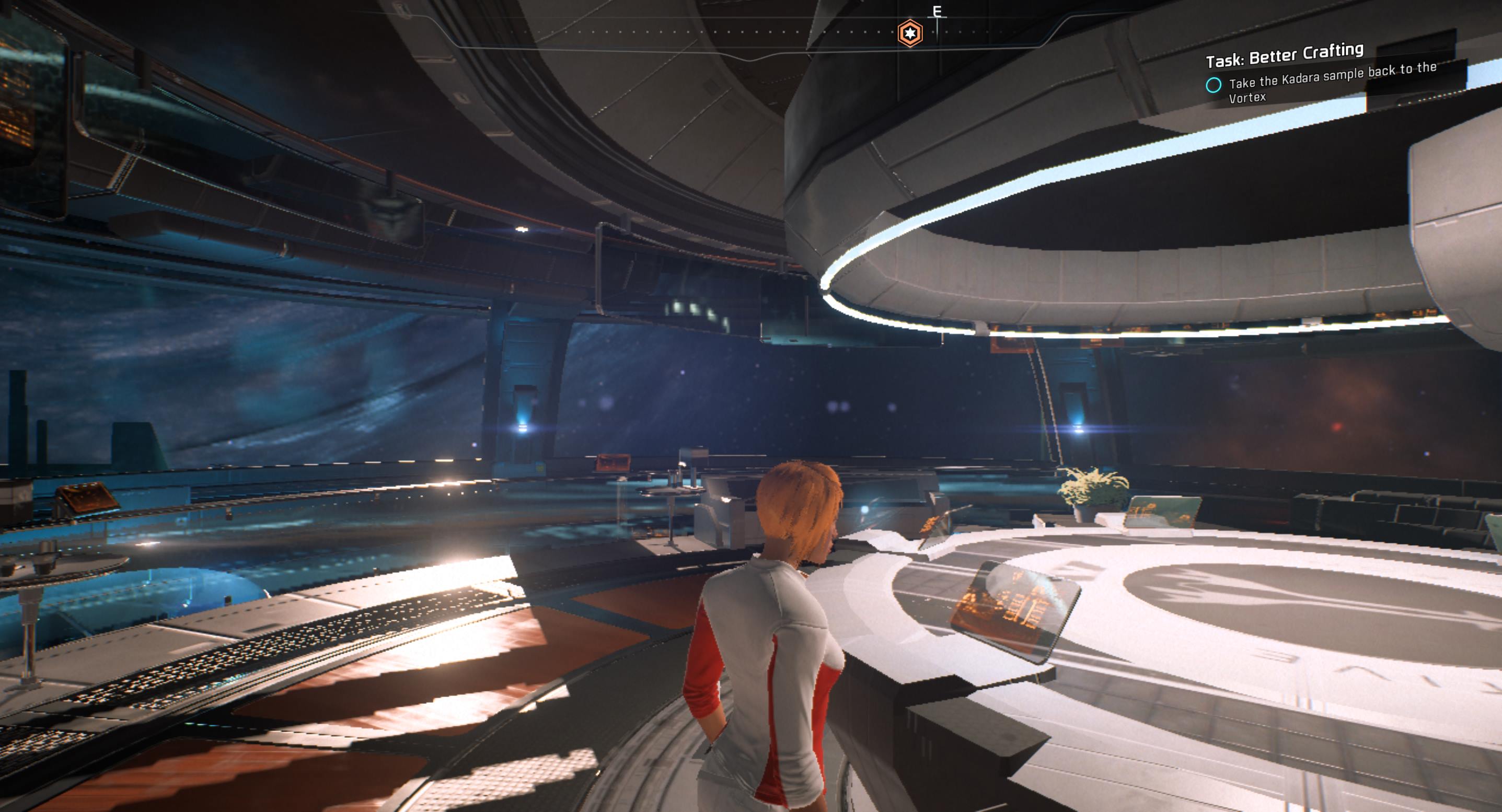
I would like to believe graphics are not what matters in an RPG, because our imagination supplements what we see anyway. I would like to believe it... I can see that MUDs and MUSHes are still alive, and those are entirely text-based. A MUSH is roleplaying, after all. Yet I also see so many things moving and distracting from the text on many forum RPGs that it hurts. Because "it should look beautiful, and that creates atmosphere". D&D Beyond should look beautiful too, while nobody minds buying the same book again simply to play online. Meanwhile, BioWare announced there would be no more updates for Mass Effect: Andromeda. Something that began as an RPG failed primarily because its graphics were not good.
Neverwinter Nights does not come out, however good its adventure editor and DM client, however much it is among the computer RPGs most suited to roleplaying: people avoid it. Even with a chat-based RPG, what often matters is not functionality or the quality of play, but the surrounding design. This is not good. Not even if Mass Effect: Andromeda's death was predictable. And not because its graphics and facial animation were poor. You get used to them, your brain compensates, and in fact the flaw could have become an advantage, since SAM and its required implant thoroughly interfere with Ryder's perception. If, instead of correcting a quarter of the flaws, BioWare gave an in-character explanation during the first few hours, the disadvantage could become an advantage.
It is an ancient cliché that the mind can process little information at once. It selects, discarding what is unimportant. With SAM, enormous amounts of data become important, and thanks to our implant, the brain begins dropping "interpretation of facial expressions", less important to the AI. Many details convey the "alienness" between a human-machine hybrid and a human, and SAM makes us perceive not only gestures but other things "strangely" too. As Ryder gradually gets used to it, so do we, compensating. A bug can become a feature. It takes imagination and creativity. It is a major criticism of a game studio when a problem easily solved through creativity remains unresolved while its attempted fixes cost enormous amounts.
Why did many expelled groups succeed at colonisation on their first attempt when the Nexus could not? That is harder to explain, a story-level bug. But gaps could have been filled with DLC or a related mobile game telling those colonies' stories, including why the Nexus overlooked the available locations. Everything could have been explained. Except one thing: surprisingly little changes aboard the Nexus. After its dark, run-down state, almost everything becomes accessible. Then a warehouse becomes the Pathfinders' home, and that is it. Yet we were promised customising the Nexus and considerable freedom in doing so. That was deception and grounds for disappointment just as much as Mass Effect 3's ending. This is certainly not a case of the trilogy being good and Andromeda bad.
Today they announced no more patches, DLC or anything else. The next news will be its arrival in Origin Access's Vault. Something may still happen with multiplayer, which improved considerably over Mass Effect 3. But most complaints are not about being deceived again. They concern graphical issues we could get used to, which could be explained and, with an adequate explanation, could even add something to the game. If an illustration accompanies an article, someone will surely focus not on its content but on the illustration being a 3D render rather than a drawing. And a quickly assembled render serving one particular purpose at that.
I like playing tabletop RPGs through chat and other online platforms because you imagine the character instead of looking at the player. We can debate whether players should play characters of the opposite sex, but someone unable to imagine this with a PC will also struggle with NPCs. In chat, seeing the character's name immediately changes things. You can imagine them as when reading a book. But then I remember how many forum RPGs build on television series, with books generally appearing only when at least adapted for the screen. Instead of imagining a character, they cast an actor under "played by". This too signals that the basis is not a book and imagined things, but a film and a role embodied by someone visibly present.
Of course, many games run in Facebook chats and groups, or through Skwyre, Roll20 and other virtual tabletops without paying so much attention to graphics. Some still trust imagination and creativity. Unfortunately, that is increasingly uncommon...