
 Who cares about all the explanations if that is not what we play for? I have run into this problem a million and one times. Let us look at an example instead, even if it covers fewer considerations. Our story begins with the M.A.G.U.S. group on Facebook. I was not planning to check it just then, but someone let me know: a few posts had broken one of the rules. Hey, chief admin, are you sure this is all right? Well, I can report that it was not. It is a practical rule: if you are looking for a group, post a comment in the dedicated thread, because it will be easier to find there than if it keeps pushing other topics down, or other topics keep pushing it down. It was not all right, but I did not moderate it or ban anyone. If enough people sign up, it will die down on its own. And one of those groups even interested me at first. It managed to appeal to me despite not having managed to follow the group's rules.
Why the idea came about
It promised roleplaying and a serious approach, and required a backstory. This was shortly after earlier reports had concerned people mocking a game master for wanting to run things connected to the calendar and its events. Has all the conflicting writing increasingly screwed up Ynev's calendar? Yes. Have a few of András Gáspár's more recent statements had me tearing my hair out too? Yes. But throwing the baby out with the bathwater is not the answer. On the calendar, festivals, omens and many other questions, the game master has to decide, and reaching a consensus and a good compromise with the players matters here. So does accepting that you are responsible for deciding which of the writers' solutions to bring into your game world. Because it was made clear from the outset that the two are not identical.
So instead of mocking people while demanding and promoting low standards, you can offer advice. And if low standards are not what someone needs, each of us can help as far as we are able. If they are looking for people, we can join in. We can try playing or running games there if the group happens to be one person short; as long as there is a demand and someone enjoys taking the hobby more seriously, we can help one another. In this situation, making a fuss about how the rules say you should advertise for a group or players is not necessarily a good idea. If they get a group, there is no problem. If they do not and their advertisement gets buried, they will learn from it. So signing up is the smarter move.
Choosing a class from the menu...
You start thinking: you would be the first to create a character, in secret from the others. Looking through the list of players, there is a definite lads' night vibe. It is no secret that one of my favourite adventures is Harlequin's Back for Shadowrun 2nd edition, and in that context the point often comes up that you need a female character even if there are no female players. Besides, M.A.G.U.S. has one terrible flaw:
- Bringing a wizard is only a good idea if the player and the GM have very similar views of magical theory. And even then, the concept needs to be discussed at some length.
- A warlock uses a relatively large amount of black magic even during training.
- A fire wizard is rather one-dimensional in several respects, with little to contribute to many magical questions.
- Although bards, priests and paladins also use magic, there is a reason they do not belong to the spellcaster class group.
- That leaves the witch.
The witch: often the safe bet for a manageable spellcaster. Someone who can use her magic freely, conduct research, and of course be any of a thousand kinds of character, depending on what sort of witch is needed.
Since M.A.G.U.S. takes us back to the 1990s, I hope nobody minds my bringing in a music video that evokes the nineties:
Well, just as Geri Halliwell, having shed her Ginger Spice costume, can show so many different sides of herself, a single witch could be similarly versatile. And if we imagine witches with different interests, we could even build an entire party out of them. So if a spellcaster is needed, the witch is an obvious choice; but rather than recycling an old character wholesale, it is better to come up with a new variation.
Laying the foundations...
If the task is to invent something new within that established framework, it is worth defining several basic traits. Traits that underpin the character's situation, behaviour and abilities. I identified several foundations for the concept:
- An earned title of nobility.
- She earned it defending a town.
- Despite the looters' "apparent" numerical superiority, she only had to face a few at a time.
- She could have inspired others.
- Even a witch can hold her own in combat against a drunken soldier or looter.
- The North.
- We can have ties to the Pyarronian faith.
- Dark practices are out of the question.
- If she makes no secret of being a witch, many forms of manipulation will not work either.
- An estate to rebuild almost from scratch.
- Being good with people is a major advantage.
I can imagine a witch of the Pyarronian faith in several ways, staying within that religion. She could be devoted to the pantheon; there is nothing very surprising about that. But witches could also be among the followers of Ellana, who embodies beauty, frivolity and pleasure. And if knowledge in all its forms is sacred, then Krad must surely be interested in witches' knowledge too; likewise, some followers of the god of magic would want to study it. I would also say that there are probably witches among the "underworld figures" and spies who follow Arel, while the rivalry with Ellana could provide another justification for such a character. Dream-controlling spells might even suggest a follower of Noir, or perhaps...
What was too specific...
One important element of the concept was not particularly complicated. A witch's sexual magic includes a way to recover mana without the Potion of Power, and there is also the Amulet of Power, which can be "passed around within the party" when someone lacks enough mana for a spell. Beyond this, however, the spell known as Teaching also raises the possibility that someone who acquires the witch class this way does not depend on the Potion of Power. Draining life energy and using it, and many similar things, count as black magic even when we are our own victims. The Teaching spell, however, is interesting.
Its use comes up in at least three or four situations:
- Making a bargain with a demon.
- Someone forces a demon to teach, then destroys it.
- The knowledge passed on by the demon includes this spell, at which point the circumstances are different. An order can use it too.
- Finding a source for it independent of demons.
That last possibility reminds us that, back in the day, the emissaries of almost every good and evil god alike taught humans magic. Just as priestly magic is uniform even in the cases of the demonic Tharr, Domvik and Adron, much of the other magic they taught may also have been uniform. In that case, the "angels" and emissaries of many gods, and other similar beings, are probably capable of this magic, which would explain how similar traditions of witchcraft arose on different foundations and in different cultures. And if this is true, and many such possibilities remain available today, the various orders serving Yllinor could use a similar solution.
Whether through the magic of the embrace or through the situation described above, it is possible to gain mana through sex without serious black magic.
It is not hard to see that, when we were talking about ruling out the warlock because of its excessively dark direction, this was a fairly fundamental point, supported by the spell in the ETK, the source in the Bestiary and a great deal else. When the game master insisted that this was impossible, that only one order could do it, and that this made it too specific so we should forget it, he was not merely striking out the ETK spell and the method described elsewhere without a spell—two separate things. He was ruling out a witch who did not rely on the dark practice built into the Potion of Power.
Why this really bothered me
In truth, the situation is a little worse than that. In the early editions of M.A.G.U.S., witches have Master-level Sexual Culture. The ETK, however, dumbed this down to Basic level. The trouble is that a witch also has to practise her sexual magic. Including that use of the Repository of Knowledge which lets her permanently acquire her partner's level in the Sexual Culture skill, without spending skill points. Many details tell us that, if we take the training seriously, Master level would be realistic here. The difference between the two is 25 KP, or skill points. If we have to spend skill points on this for realism's sake, there are no points left for the character's interests, other training and so on, and the character concept is finished.
It does occur to us, though, that if the character acquired the witch class by magical means, this practice was skipped. There is no expectation that the Basic-level skill should have improved, and skill points remain for the concept. And if we consider that the many kinds of angels serving many different gods could accomplish this, and that certain Yllinorian groups probably can and do make use of it, then we have another successful way of saving the foundations the concept requires.
One of the witch's intended advantages is having lots of skill points, something the ETK did not intend to change either. But introducing the contradiction above, while insisting that a character cannot already have completed this extra, free skill-point learning "in their backstory", means that an oversight in the system's reform creates a serious problem. And you can ask why the fuck I am thinking about training and backstory; we can rattle the dice and only write the skill down later. But a serious game centred on roleplaying, where a backstory—a considered backstory—is required, is not a situation in which the default question should be why we are paying attention to this at all.
| Recognising that experienced magic users can invent new things and pick up practices from one another—sometimes copying them in slightly different forms with weaker effects or weaker side effects—we might consider that witches could have picked up the Potion of Power from warlocks. Simply because witchcraft otherwise probably traces back to the Teaching spell. With the direct initiation provided there, gaining mana through sex was natural. When humans passed the knowledge on to one another, and the secret knowledge received from the gods' emissaries became rather ordinary worldly magic, that element was missing. It is easy to see why they would either imitate gaining mana during sex with a spell, or imitate the warlocks and their concoction. |
And I repeat: the ETK spell, and the approach of having someone else hand over an item charged with usable mana when you lack the strength even for that, are fundamental core-rulebook concepts in that edition. If he does not ban magical teaching itself—which would have been something to debate—removing mana acquisition from its consequences disables yet another basic source. Every game master is of course entirely entitled to do that. But when he crosses out the foundations of a concept to this extent, he should not say that everything is fine apart from one minor detail, or that he has no need to talk anyone out of their concept.
In reality, he had ruled out the witch who learned this way. He had also ruled out the option with far fewer skill points, forced to buy Sexual Culture. And he had cast serious doubt on the possibility of correcting the system, restoring the skill and fixing the problem: if he also bans a core-rulebook ability that does not manipulate life energy or Health, he has overturned the foundations of several concepts. That is a somewhat more serious problem.
More serious because the concept the party ultimately retained was that it was a good party. If someone uses dark practices against herself whenever she pleases, however, it becomes much easier to find a goal that might also justify darker means at someone else's expense, which is not necessarily desirable in a party intended to be good. We might also need to reconsider how this fits the character's principles, alignment and much else. We could say that perhaps the game master was being diplomatic, and did not really want a witch or a female character. That would have been no problem, but it reasonably raises the question: if not this, then what?
The game master's suggestion
The game master's suggestion raised the idea that a spellcaster would be useful. After we agreed on ruling out the wizard and the warlock, and now the witch was out of the picture too, I automatically pointed out that the fire wizard was also out. Not even because I simply dislike the class itself. But because, if we need a magic user, the point is not merely to have someone who can deal damage with magic. The fire wizard is a little one-dimensional, in exchange for being no slouch in combat. This was where he said that it could work regardless of religion, you know. Even a female fire wizard came up.
After that, somehow there was no point in asking how different a priest is from a spellcaster. The priestess of Arel he also offered made it clear that he was not indirectly rejecting a female character—because a priestess of Arel would otherwise have been fine. Instead, I began to suspect that we meant quite different things by taking it seriously, roleplaying and backstory. One problem with the fire wizard is that training this complex requires a school, and it really is taught in very few places. Religion really does matter there.
And although an exception to the ban on women is imaginable, they have no reason to compromise on religion. If we envisage the characters' longer journey, the character must also learn spells with higher mana requirements, so the school and its expectations cannot be bypassed. This clearly has not been thought through. Why did he tie something to a single place when several sources provide other possibilities? Probably because the online description of Order X said something. Well, I can write online descriptions too, and this is not the only place I can post them. I can even cross-praise them across several websites. Great. But an unknown person on the internet still does not outrank the player's needs or the official source the player has shown. You can build a consistent world together with your players on the basis of arguments. Throwing contradictory rubbish at the contradictions already there only leaves the result full of contradictions.
If we throw out a backstory that also covers education, do not imagine how and what the character learned, or why and how she applies it, and are perfectly happy with a fireball-flinging manga girl called Ms Hablasta Pyromancutie, then there is of course nothing wrong with that. It is just not what I would have expected after keywords such as serious, roleplaying and backstory. And while putting in the work as a player to meet a less common preference can be helpful, if that is not what is happening after all, there is a bigger problem: I would not enjoy the game much, but I would take a place away from someone who wants a Poppy clone with a huge blast. A lose-lose situation. One in which even the best, most interesting character would no longer have convinced me. Nor would the game master reading up on mana gathering, thinking it through and changing his position.
I was left holding the loot
 When a character needs thinking through—and so far I have only scratched the very top layer of the surface—the gears soon start turning. Not just because I had a few hours to spend on it, but because the time I spend now is not the only investment that comes into play. There is Inspiration Pad Pro, the many add-ons for Campaign Cartographer 3+, and so on, with all their possibilities. We have the earned noble title and the estate to rebuild from scratch. Great: the map we have imagined needs making even if the same person GMs throughout. But if that person would also like to play, there could be an adventure in which my character is the patron, and I need to GM in this area.
So besides an overview map of the estate, it helps to think up ruins, a potential bandit hideout, a bridge to rebuild, a puzzle and so on. While I rest, DAZ Studio or Carrara can work, perhaps rendering a location like this and producing content. In other words, the invitation, the concept initially agreed on and the inspiration arising from the situation gradually lead to content. Some of that involves work and time; some involves only rendering time. In other cases, all it takes is a little luck, asking Inspiration Pad Pro for a bunch of random things until it produces a useful idea that can be copied into the concept.
That game falls through, but there is a new player who might bring someone else from their circle of friends, and there could be another group with rotating GMs. If the other characters arrive with similar backgrounds, and rotating GMs provides lots of options like these, then the maps, adventure ideas and varied locations work well, and the campaign is already half ready. It is easy to throw together a few initial locations. I suggest that plenty of people get the Fantasy Grounds demo client, or something similar. Three players already have the Standard edition. And there is some chance that the others will have it soon too.
And a great deal of content could come together because I was not satisfied with defining the character by her class and perhaps her race. A character played with only that much to go on would be neither male nor female; it is simply easier to notice with a character of the opposite sex. Instead, I tried to establish who she was, what roles she could play in particular stories, and what could be built on that. This meant I was not thinking, here are X skill points, what should I spend them on? I was thinking about which skills followed from the backstory and would also be needed later in the story. And that is where the bug involving the Sexual Culture skill becomes easy to spot.
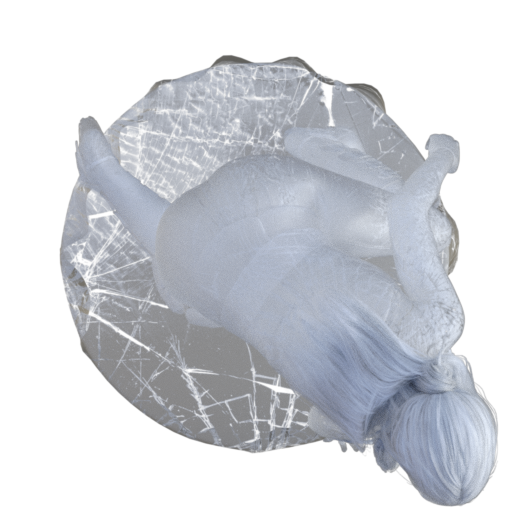
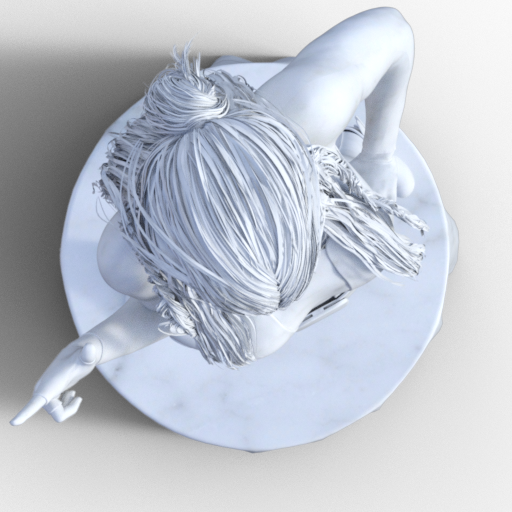
As more and more traits come to define a character, and more details matter, those things can matter in the world too. While it is easy to get by with every statue being identical in a few programs aimed at roleplayers, sometimes we at least begin to want several different statues of a particular hero, character or deity. Depictions made in different materials, poses, sizes and styles. From a shattered glass statue to classical marble. Because if this gives us far more variations and far more kinds of character, we will not need to download the supplement New Class: Powergaming Munchkin just for the sake of variety and a more interesting game.