
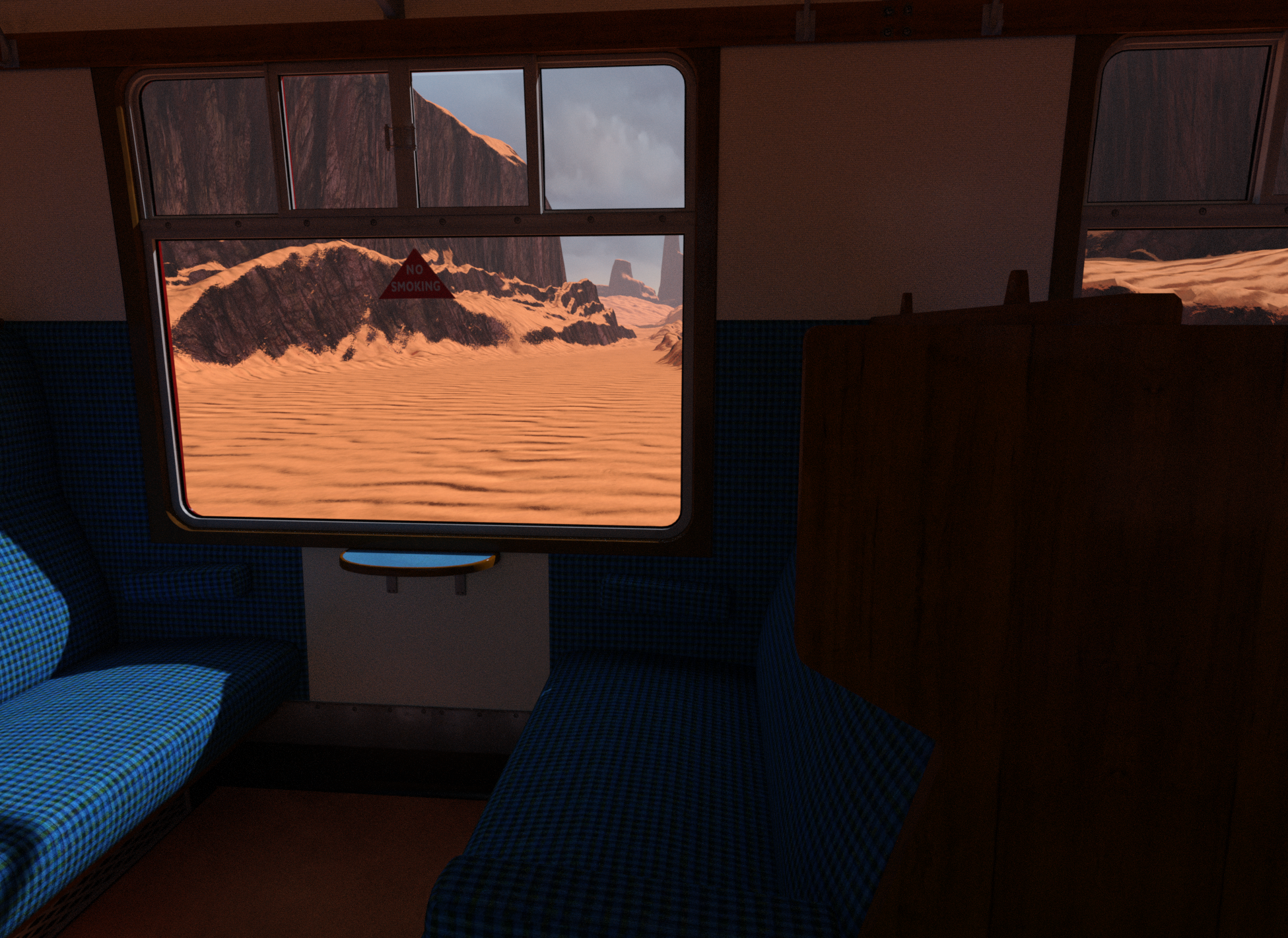
 A small thing, I know, but several articles in recent days have discussed when a train makes a splendid adventure location. I needed a picture, and as usual would have turned to DAZ Studio, had it not emerged that this required spending money. I needed to buy a suitable railway-carriage model, and the environment too. When several things must be purchased, it means reaching into your pocket. And of course I could not promise pretty pictures, for several reasons. The first that springs to mind is the obvious truth: I did not want to. I did not want to, for precisely the reason you turn on film grain or another noise-based effect afterward in some games. Sometimes to make the image evoke cinema, and sometimes...
Watching the second season of Aranyélet, I saw differently photographed scenes set earlier alongside the “perfectly photographed” contemporary scenes. If I want something to evoke an 8 mm camera, witnesses' “amateur footage,” and so forth, it is questionable whether perfect composition and waiting for a noise-free completed render are desirable. I roughly position the camera to show what matters, then stop the render while it is still uncertain. A simple recipe. Indeed, because the landscape is timeless and similar railway carriages have relatively long service lives, I have not yet pinned down the overall image with characters either. Unfortunately, however, there were lessons to learn. One is that although we receive quite a few tools, the possibilities are not infinite. We cannot build a good sleeping car, saloon car, dining, bistro, or buffet car; we do not even receive truly good ready-made tools for an open-plan AB carriage. In a combined-class open-plan coach, the aisle is central in second class and slightly offset in first, and the two could use a transition that is impossible here.
I know the layered image editor: graffiti and clothes suggesting another period can appear, and other models can cover the lamps to modernize the overall look. One should be creative, even when using such tools “only as much as the game requires.” So instead of a clean carriage, there could be a graffitied train, litter here and there, and who knows what else. In fact, scattering a larger tabletop, a tablecloth, dishes, and food about could produce “almost a dining car.” But a sleeping car is difficult. So is making the background landscape something other than deserted. The Terradome 3 package, offering almost unlimited freedom, lacks the option of vegetation. Editing terrain with the available morphs is sometimes cumbersome too. The attractively designed landscapes supplied with the product are beautiful. Deserted, but beautiful. And that is all. Creating countryside with farms and so forth would be damned difficult. Yet sometimes that is what we see out of a train window.
If we wanted to create freely and imaginatively from what we have, this would be more than enough. If we wanted a specific illustration for a specific story, it might fall short. DAZ Studio is developing in the right direction, but its big brother Carrara seems to have been forgotten. It could handle vegetation, but many new products are not really compatible with it. DAZ Studio, meanwhile, lacks many tools available in Carrara. Let us hope a solution combining the two tools' current strengths becomes available soon.