
Ynev is an adventurer-centered world, and the characters wield considerable power. At least, that was the case when the original M.A.G.U.S. appeared, and it is what many new editions want to change. Those changes have rarely succeeded, for many reasons. Largely because so many of us chose M.A.G.U.S. for a reason: this was the kind of game we wanted. In many cases, we had good reason for wanting it. But the question arises: can we run a good horror adventure, for example, with this worldview? Especially when a large part of what makes an adventurer an adventurer is that fear affects them differently?
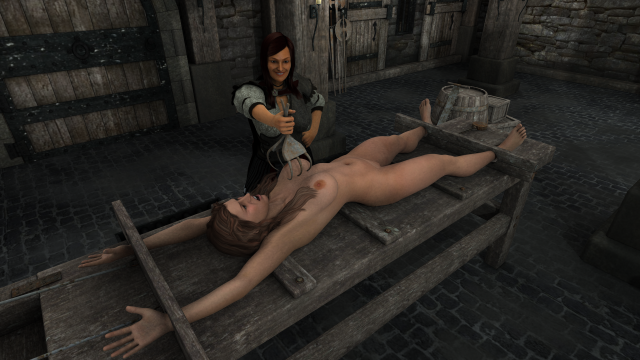 That essentially depends on what we consider the hallmarks of a good horror adventure. Many people primarily enjoy blood and shocking scenes. For them, it is enough to mention the Dea Macula order, the executioner-poets and a few similar groups. There is almost certainly scope for that, provided someone seriously wants every stomach-turning detail to appear in play. It is true that playing such a character makes scenes like these inevitable, though in that case the horror story could also be seen from “the other side.” And it is also true that on Ynev, where torture is considered an accepted investigative tool, even an executioner skilled at it could become an interesting adventurer. That is why the executioner class appeared here.
But let us leave gore, splatterpunk and similar genres behind. Horror can be approached from other directions too, and carefully measured tension offers many possibilities. Of course, only if the monster remains a monster instead of becoming an everyday adventuring accessory. The characters see strange tracks, hear strange noises, glimpse a shadow belonging to a creature with enormous tusks... Many screams can be heard nearby. Moonlight ought to illuminate the streets, but as the wailing wind stirs the treetops, the shadows move, making the night unusually dark... And the characters keep noticing strange movement, now here, now there.
By describing that situation skillfully, adding a little background music, playing by candlelight in a dark room and so on, we can build fear. Especially if it is the first time in months the player has seen us with the Bestiárium. They do not know what we have prepared or what is happening, but their fears are playing tricks on them. We can intensify it as little details recall a horror story from childhood, or a bard's song or poem about similar terrors...
Creaking shop signs, playing with time and the adventure's rhythm, a little background music... And we have built fear, even of a creature that is easy to defeat. If there are no orcs in the region, this story could even concern a friendly court orc adventurer. The fear works. Of course, traces of a Ynevian ripper or a “vampire” prowling the city—actually a wier—can also be more than enough, especially if we play skillfully on the characters' nerves. If they start wondering, “Do the dogs howl like this at other times too, or is there really a monster beyond the gardens?”, we can quickly build an image in their minds.
So the story works. Regardless of the fact that the wier might have a Life alignment, kill only dangerous villains and even then only in dire necessity, the characters cannot know that. The rumors might speak of a vampire thousands of years old. And why should legends not spring up around them? A wier bard, for instance, could be a follower of Uwel for whom style matters most even in revenge, including revenge on others' behalf. That can be developed effectively, of course. I do not think the characters could feel particularly calm.
Of course, this is nowhere near as horribly overpowered as the Summarium's aquirs or similar monsters. But remember: treating the Summarium's stories as mere legends does not mean they cannot feature in an adventure. A Nightmare, True Dream or similar spell a witch casts upon the party can be an “adventure within an adventure.” A dream like this, in which the characters' sense of time also goes awry and ominous signs can follow one after another, can make an excellent horror story.
Since magic prevents the characters from distinguishing dream from reality in such cases, the dream itself is a separate adventure and the story works. We can freely refer to the SUMMARIUM or other sources and recount the legends. And if the character does not know they are dreaming, we can simply begin the adventure with the characters already inside the dream. The player then does not know that what the character sees is merely a nightmare either.
Making the world more dreamlike in many respects, allowing an exit they knew was behind them only moments ago to vanish, is an excellent opportunity.
The characters may be afraid. Ideally, however, they will not feel insignificant or utterly helpless, for two reasons. One is that Ynev is an adventurer-centered world. The other is simple: a good horror adventure requires the player not to expect it. Designing the character to be helpless from the start gives away that we are preparing horror. And that has already spoiled our game. Of course, this obsession with “anti-powergaming” has other problems too, but those are worth returning to later.
So we have the tools for a good horror adventure at our disposal. It is worth using them now and then. And it is worth remembering that the foundation of all this is the world's depth, variety and almost limitless range of possibilities. That is something we could call a more adult worldview.