
I am not a graphic artist, and neither are many other roleplayers. If we want a picture of our character, we either find something, ask someone to create it, or use programs that help make up for a small part of our missing expertise. It is no secret: our favorite in that last category is DAZ Studio.
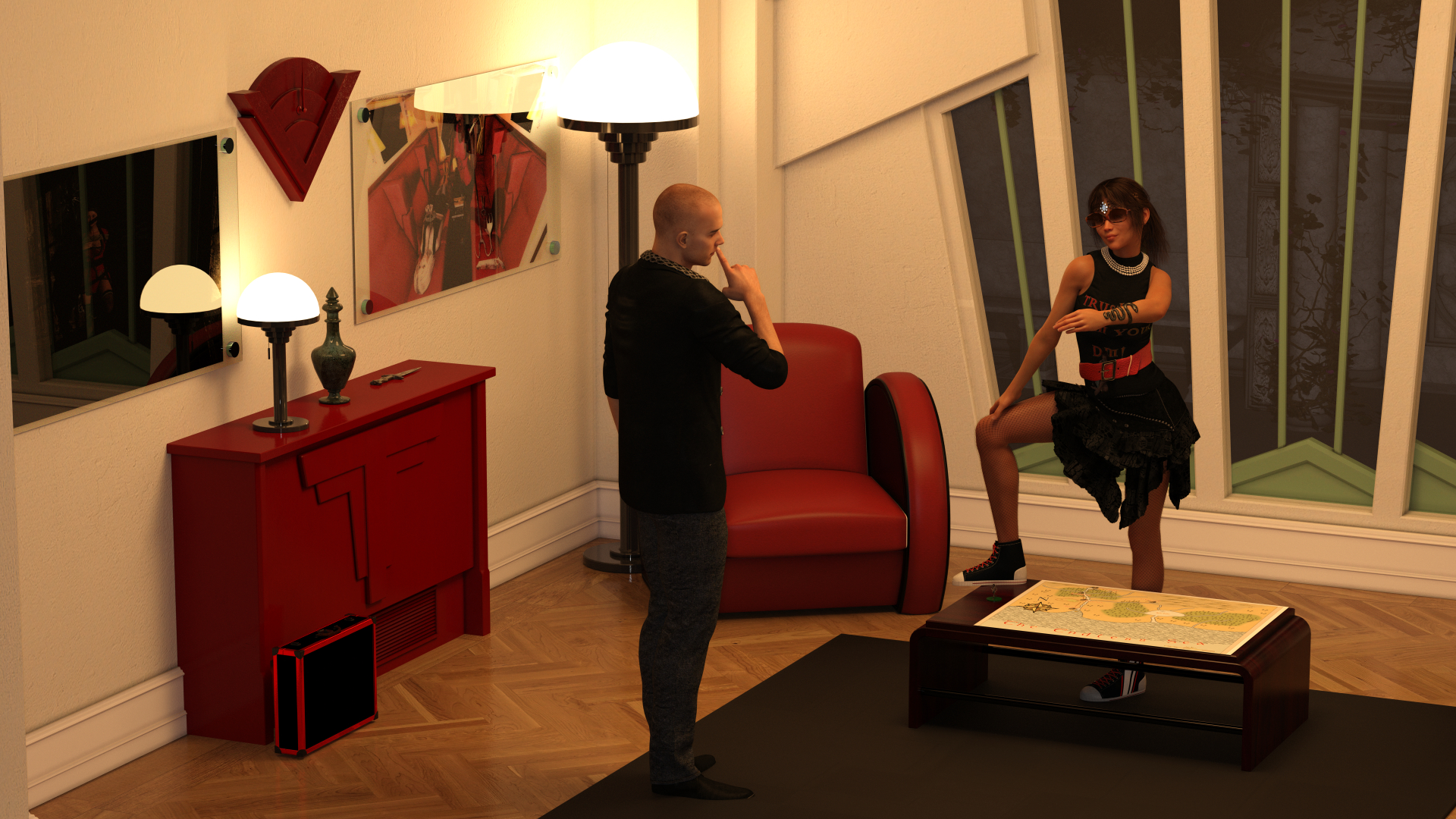
My first reaction to the picture above would be to say: another ordinary DAZ Studio render. All it took was placing a few objects in the room, adjusting a few settings for the characters' physiques, builds, and poses, pressing the render button, and collecting the praise of people who think it looks good and know less about it. This time, however, some people familiar with DAZ Studio also began with praise. They noticed that the two pictures on the wall and their glass frames were not an available model. They consist of cubes scaled into glass panes, metal cylinders, and planes bearing previously rendered images. The map on the table was also made in Campaign Cartographer 3+.
In the purchased content, the lamps were not yet light sources; here they illuminate almost the entire picture. The T-shirt did not originally look like this either, even in color, and originally had no lettering. Across two versions of the scene, you can see the instruction on it: Trust me, I'm the GM! And of course I managed to change a few other colors too. For those familiar with the process, this picture is also part of a series. There was a demonstration of what I use to assemble picture frames and how, and an image showing how to turn a character into a figurine or statue easily.
And then, of course, came a little something like this:
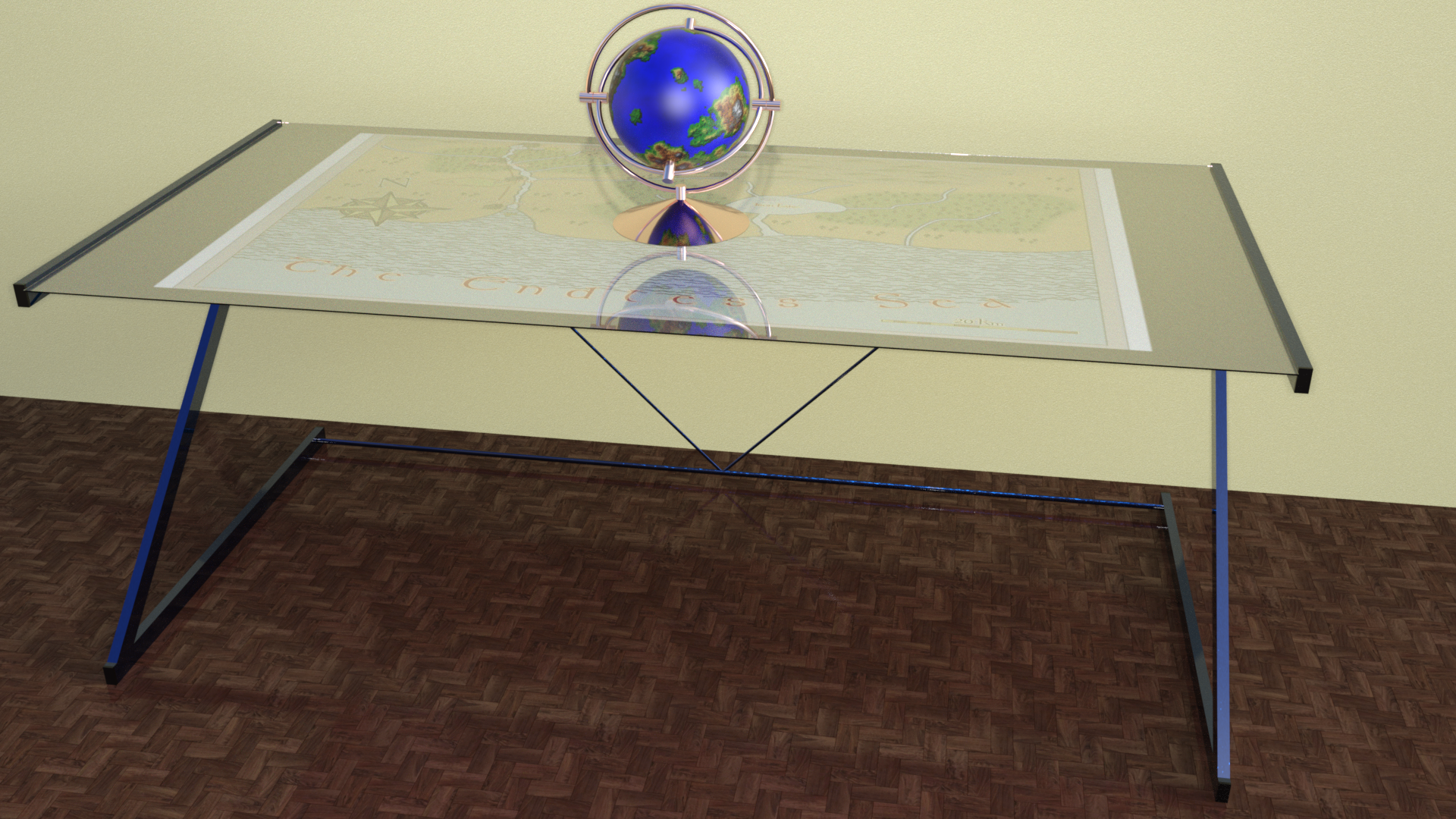 Naturally, I could experiment with less reflective glass and a different finish on the table legs, and I did not pay attention to the join between the wall and floor. But people recognized that neither the globe-like object nor the table came from the store. The maps were made in Fractal Terrains and Campaign Cartographer. The picture itself, however, consists of primitives: simple geometric shapes.
And of course I explained that, just as you can draw on clothing, you can add a cut to it simply by putting an image into its transparency layer. Tattoos can be added. A cylinder can become a coin using a displacement map. Collision detection and various other little tools—D-Form, Push Modifier—can help deform some models slightly, for example to show the effect of a blow.
Even if we cannot alter hairstyles and many other things because we lack the paid plugin and are not graphic artists, building from these simple shapes is still easy. It is just like assembling a scene, like building with Lego. Putting together terrain arranged for a battle scene is not very different either, so many roleplayers have a talent for this. What is often missing is not talent but time.
Even if we cannot fine-tune many details, small objects, symbols placed on existing objects, and numerous other touches can make a rendered image reflect our character better than a picture hunted down online. The models we can assemble ourselves using these simple methods often matter a great deal here. We need to notice these possibilities too, not only the limitations.